Farewell Tribute to a Dear Friend – Dr Yap Chin Fah

Dedicated By P Chong                                                                        Friday, 2 September 2011

 The late Dr Yap Chin Fah

Known among his friends as the “Singing Doctor”, he prescribed

medicine with a smile, and sang with his heart. His deep melodious voice was soothing to the ears and more so to the hearts of women who literally worshipped him with sheer admiration. He rendered both Mandarin & English songs with ease & charm . . . that handsome look with his boyish smile ever so radiant & bright!

 Sadly, we shall no longer have his company nor to have him entertain us with rendition of songs by Michael Ball such as “Love Changes Everything” or his favourite song on Shanghai Bund in Cantonese. He passed on some days short of his sixtieth birthday defeated by that dreadful cancerous disease of the colon.

 He sang as though there were no tomorrow . . . impressing on the importance of the present. In all the years that I have known him, he never turned me down to be present to sing, whether it was a home karaoke dinner or a public charity performance. All the time unknown to me he was fighting to beat this dreadful disease.

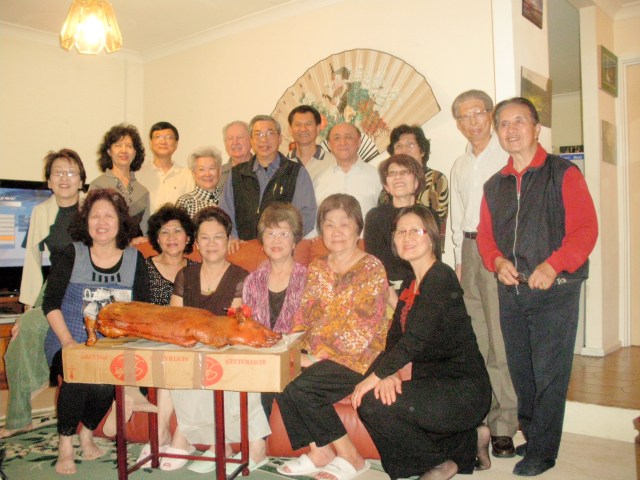
Below: A happy Dr Yap at our party to celebrate Tom’s birthday (1 October 2010)

At the last function (29 September 2010) attended by him in my house, he was in real high spirit, giving no indication of his being ill as you can observe from all the illustrated pictures. We had a roasted suckling pig and nobody was handy with slicing off the crunchy skin of the pig. He rolled up his sleeves saying “No problem” for in his father’s house in Ipoh, Malaysia, they always had this three times a year.

Dr Yap exhibiting his slicing skill with the pigling (Picture: Above & below)

A shock to all of us, he was in China when he passed away . . . seeking his last hope of living.

Gone but not forgotten, In Heaven he lives on. No longer forlorn, he’s telling us that life’s still worth the living, and living it to the full. Sing with a merry heart & make others merry! Don’t be sad when life is bad. Sing unto Him with a merry heart. Play your part out with a mighty shout: “Glory be to God!”

http://www.facebook.com/v/108283182609286

China vs. America: Which Is the Developing Country?

Before you begin to read this transcript, let me urge you to drop any pre-conceived ideas you may have about China. Have an open mind, otherwise it would be likened to dropping off a plane or cliff with a closed parachute – and it can be dangerous.

To quote the words of Martin Jacques in our preceding presentation of “Understanding the Rise of China” that:

This is China, a civilization state rather than a nation state”

and

“China is not like the West, and it will not become like the West as its economy expands over the next decade.”

Here below, Robert Herbold presents a most enlightening concept on the differences that separate China from the United States and how the differences make them grow apart.

Bob Herbold, Former COO of Microsoft

 (Robert Herbold, a retired chief operating officer of Microsoft Corporation, is the managing director of The Herbold Group, LLC and author of ‘What’s Holding You Back? Ten Bold Steps That Define Gutsy Leaders’ (Wiley/Jossey-Bass, 2011).


”Recently I flew from Los Angeles to China to attend a corporate board-of directors meeting in Shanghai, as well as customer and government visits there and in Beijing. After the trip was over, in thinking about the United States and China, it was not clear to me which is the developed, and which is the developing country.


 Infrastructure: Let’s face it, Los Angeles is decaying. Its airport is cramped and dirty, too small for the volume it tries to handle and in a state of disrepair. In contrast, the airports in Beijing and Shanghai are brand new, clean and incredibly spacious, with friendly, courteous staff galore. They are extremely well-designed to handle the large volume of air traffic needed to. In travelling the highways around Los Angeles to get to the airport, you are struck by the state of disrepair there, too. Of course, everyone knows California is bankrupt and that is probably the reason why. In contrast, the infrastructure in the major Chinese cities such as Shanghai and Beijing is absolute state-of-the-art and relatively new.
 The congestion in the two cities is similar. In China, consumers are buying 18 million cars per year compared to 11 million in the U.S. China is working hard building roads to keep up with the gigantic demand for the automobile.
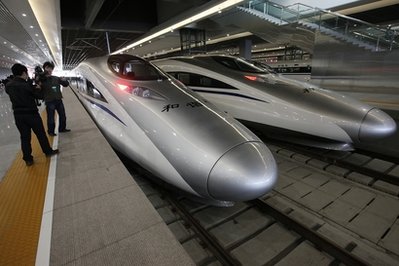
 The just-completed Beijing to Shanghai high-speed rail link, which takes less than five hours for the 800-mile trip, is the crown jewel of China’s current 5,000 miles of rail, set to grow to 10,000 miles in 2020. Compare that to decaying Amtrak.


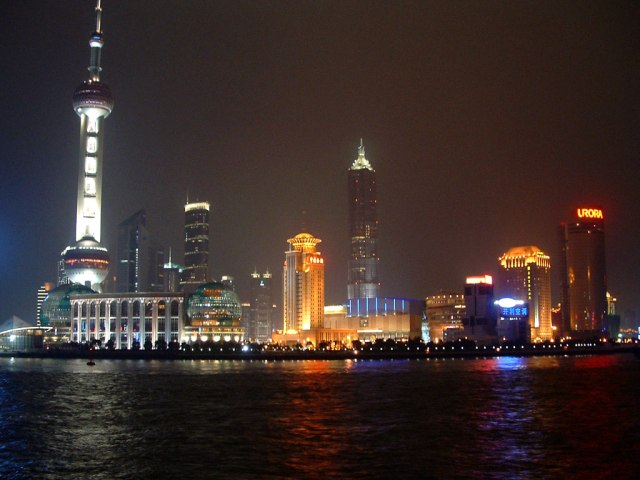
Shanghai-Pudong Skyline At Night

Government Leadership: Here the differences are staggering. In every meeting we attended, with four different customers of our company as well as representatives from four different arms of the Chinese government, our hosts began their presentation with a brief discussion of China’s new five-year-plan. This is the 12th five-year plan and it was announced in March 2011. Each of these groups reminded us that the new five-year plan is primarily focused on three things: 1) improving innovation in the country; 2) making significant improvements in the environmental footprint of China; and 3) continuing to create jobs to employ large numbers of people moving from rural to urban areas. Can you imagine the U.S. Congress and president emerging with a unified five-year plan that they actually achieve (like China typically does)?
 The specificity of China’s goals in each element of the five-year plan is impressive. For example, China plans to cut carbon emissions by 17% by 2016. In the same time frame, China’s high-tech industries are to grow to 15% of the economy from 3% today.


Government Finances: This topic is, frankly, embarrassing. China manages its economy with incredible care and is sitting on trillions of dollars of reserves. In contrast, the U.S. government has managed its financials very poorly over the years and is flirting with a Greece-like catastrophe.


Human Rights/Free Speech: In this area, our American view is that China has a ton of work to do. Their view is that we are nuts for not blocking pornography and antigovernment points-of-view from our youth and citizens.


Technology and Innovation: To give you a feel for China’s determination to become globally competitive in technology innovation, let me cite some statistics from two facilities we visited. Over the last 10 years, the Institute of Biophysics, an arm of the Chinese Academy of Science, has received very significant investment by the Chinese government. Today it consists of more than 3,000 talented scientists focused on doing world-class research in areas such as protein science, and brain and cognitive sciences.

We also visited the new Shanghai Advanced Research Institute, another arm of the Chinese Academy of Science. This gigantic science and technology park is under construction and today consists of four buildings, but it will grow to over 60 buildings on a large piece of land equivalent to about a third of a square mile. It is being staffed by Ph.D.-caliber researchers. Their goal statement is fairly straightforward: ‘To be a pioneer in the development of new technologies relevant to business.’
 All of the various institutes being run by the Chinese Academy of Science are going to be significantly increased in size, and staffing will be aided by a new recruiting program called ‘Ten Thousand Talents.’ This is an effort by the Chinese government to reach out to Chinese individuals who have been trained, and currently reside, outside China. They are focusing on those who are world-class in their technical abilities, primarily at the Ph.D. level, at work in various universities and science institutes abroad. In each year of this new five-year plan, the goal is to recruit 2,000 of these individuals to return to China.


Reasons and Cure: Given all of the above, I think you can see why I pose the fundamental question: Which is the developing country and which is the developed country? The next questions are: Why is this occurring and what should the U.S. do?
 Let’s face it, we are getting beaten because the U.S. government can’t seem to make big improvements. Issues quickly get polarized, and then further polarized by the media, which needs extreme viewpoints to draw attention and increase audience size. The autocratic Chinese leadership gets things done fast (currently the autocrats seem to be highly effective).


What is the cure? Washington politicians and American voters need to snap to and realize they are getting beaten and make big changes that put the U.S. back on track: Fix the budget and the burden of entitlements; implement an aggressive five-year debt-reduction plan, and start approving some winning plans. Wake up, America!”


China’s Engineering Might: Bullet Train

By P Chong                                             Thurs. 28 Oct. 2010

AP/Eugene Hoshiko

The image of a powerful modern China in all its mega-engineering projects simply staggers the mind of the Westerners especially the British who first initiated and engineered the Industrial Revolution. In a matter of three decades or so, China has acquired Western technology & set new heights beyond all past human innovative spirit. Even the American standards have been surpassed. This is China’s era.


With the closing of the Shanghai‘s Expo by 31 October 2010, China is rolling out its new high-speed trains, shaped like bullets, linking Shanghai & Hangzhou, the Three Gorges Dam which is already working & generating hydro-electricity at full capacities.


More mega projects are still in the works: nuclear power plants, a gargantuan project to pump river water from the fertile south to the arid north, & a $32.5 billion, 820-mile (1,300 kilometre) Beijing-to-Shanghai high-speed railway link scheduled to be opened in 2012. China’s engineering triumphs & the nation’s growing ambitions are in line with its economic boom. (Read by same author: “If You Stall . . . Others Roar”).

Completely New Railway Station

On the railway front, its technology is second to none. “We are now much faster,” Railway Ministry spokesman Wang Yongping said at Tuesday’s inauguration of the super-fast line from Shanghai’s western suburb of Hongqiao to the resort city of Hangzhou. “Now other countries are hoping to cooperate with us.” The train will cruise at a top speed of 220 mph (350 kph), making the 125-mile (200-kilometre) trip in 45 minutes.

Pretty Rail Stewardesses At Your Service

Although China holds the patents on the technology, design and equipment used by the CRH380 train, some in the industry question the degree to which China is justified in claiming the latest technology as its own. In a recent interview, Michael Clausecker, Director General of Unife, the Association of the European Rail Industry said, “Everybody knows that a lot of the core technology is European”.


The benefits of high-speed railway are obvious, but with speed costs soar and people are reluctant to pay higher fares particularly on shorter routes. However, the government has embarked on upgrading the whole national network.

A Female Construction Worker Watches As Train Passes By

World’s Ten Amazing Subway Stations

London's Familiar Underground Sign

By P Chong                      22 April 2010

London Underground, known commonly as The Tube, has the distinction of being the first such railway system in the world with its first section opening in 1863. It is a rapid transit system serving a large part of Greater London and neighbouring areas of Essex, Hertfordshire & Buckinghamshire in the UK. In 1890 it became the first to operate electric trains.


The name “Underground” in London can be quite misleading as some 55% of its system is above ground. Nonetheless, it was an awe inspiring experience for me when using it as a fresh young man coming from an under-developed country in 1959 & 1960.

In my recall, I still remember Madrid Metro, as a system situated right in the centre and has train doors opening at both sides to improve passenger flows. This was a real bonus considering its congestion particularly on bull fight days.

Hong Kong MTR (Mass Transport Railway) is perhaps the most busy of the systems I have seen. Its quick, frequent & efficient and for most times it’s packed to capacity with only standing room.

The world of rapid underground travel, named invariably as Underground, Metro, MTR or MRT, is most fascinating. Herein below is a pictorial presentation of the World’s Most Amazing Ten Subway Stations:

The Bund Sightseeing Tunnel in Shanghai, China. The 647-m long tunnel is a surrealistic fantastic public transportation system with its walls featuring hi-tech geometrical optics of various colors. (Below)

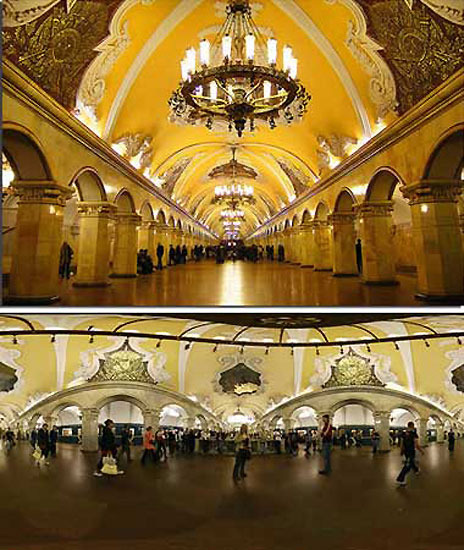
The Komsomolskaya Metro Station in Moscow, Russia. The metro station has become one of the landmarks in Moscow partly because it is located at the city’s busiest public transportation hub the Komsomolskaya Square. The station opened on Jan. 30, 1952

(as below)


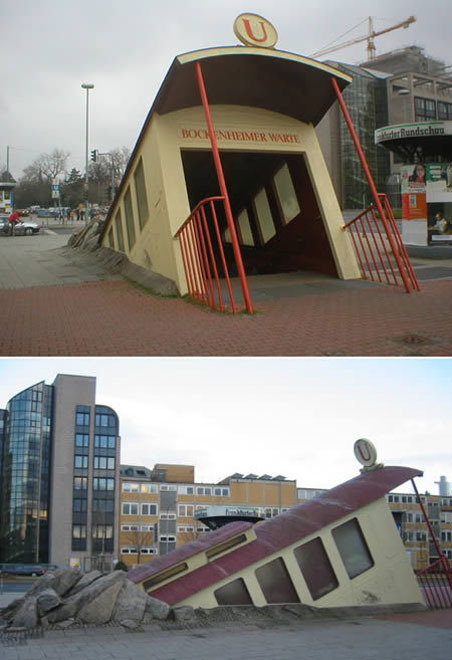
The Bockenheimer Warte Subway Station in Frankfurt, Germany. The entrance to the station looks like a train sinking underground after an explosion. The designer of the station said he was inspired by surrealistic artists.

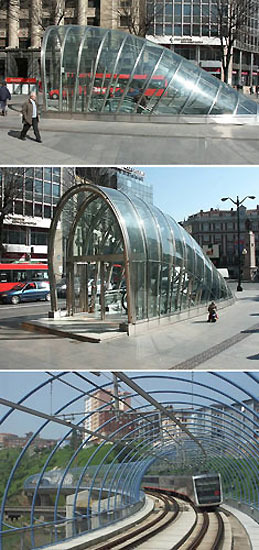
The Subway Station in Bilbao, Spain. The subway station, designed by Norman Foster, is well known for its efficiency and unique design style.

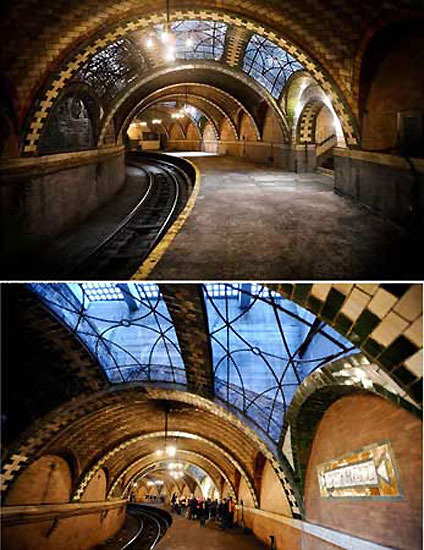
The City Hall Subway Station in New York, United States. The station is a beautiful and functional one. It has been the most attractive subway station in New York since it was put into operation in 1945


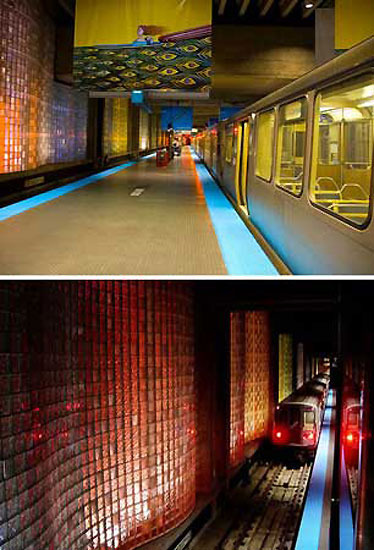
The O’Hare Subway Station in Chicago, United States.

It was built in 1984


The Subway Station in Dubai, UAE. Combining traditional and modern architecture styles, the station looks like a shell.


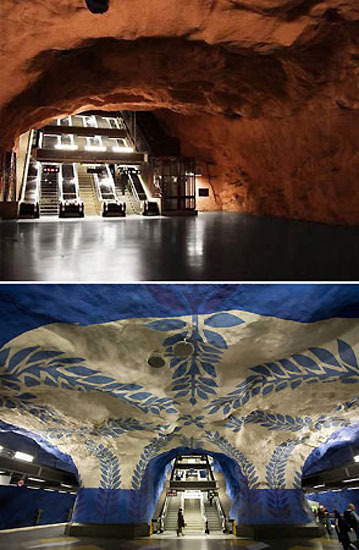
The Subway Station in Stockholm, Sweden. The station is highlighted by its inside cave paintings.


The Subway Station in Pyongyang, DPRK


The U-Bahn Metro in Munich, Germany. It opened in 1972


Zhouzhuang – “The Venice of China”

Zhouzhuang – “The Venice of China”

912508-Zhouchuang_entrance-ZhouzhuangEntrance to Zhouzhuang


01

Hailing from Jiangsu area in southern China among as host of ancient water towns, Zhouzhuang is undoubtedly the better known among the tourists. Like Xitang or the others, it’s only a small place with inter-crossing canals, so no motor vehicles. You can easily cover this interesting place known as “Venice of China” by foot. It’s within reach 30 km from Suzhou & 90 km from Shanghai – serving well as a week-end retreat even for the Shanghainese. It is a photographic paradise for both the amateur or professional. It’s stupendous for its sights in architecture, history & culture.

zhouzhuang 10026623tm10026618tm

160px-Zhouzhuangguzhen_6160px-Zhouzhuangguzhen_2images

154-0160px-Zhouzhuangguzhen_2


China – Global Power Engine

China – Global Power Engine

bridge

The Great Bridge  over Huangpu River, Shanghai


We are witnessing a changing world unprecedented in the history

of mankind. Everything is so extraordinary, booming & busting, transforming without any apparent transition the global, economical,

social & political landscape. China, for so long been humiliated & set in the backwaters, is now rearing its head & standing tall & strong. It’s striving for a peaceful & harmonious world both within its boundaries and without.

The world at large, particularly the US, has been watching closely this emerging Dragon ever since the handover of Hong Kong to China in 1997, Macau in 1999. With the aim of eventual unification of Taiwan, which historically has always been a Province of China, China has come of age in many fields of human endeavor. Its entry to the World Trade Organization in 2001, its staging of the Olympics in 2008, its double-digit economic growth and its quantum leap from a country with virtually no phone to mobile phone – all spell awe and wonder for the outside world. Whereas in the past it takes several generations before any change occurred; now a single generation can witness the most remarkable change and progress.

“To grow, to progress is to change” is the axiom of life and all inhibitions to change must be out of the way. Lee Kuan Yew, the architect of modern Singapore, demonstrated this principle very clearly. To him all sentiment must give way to progress. China has learnt its lessons of the past with its virtual “kow tow” to all the foreign power. A period of long humiliation is now opening to a spectacular era of jubilation.

China has always been a great country, not only by virtue of its geographical size and its teeming population of 1.3 billion, but significantly more so because of its rich culture and tradition and its unbroken ancient civilization. The Greeks, the Romans, the Egyptians and others have all come and gone, but China has persisted since time immemorial. China has always been self-reliant and contributed many inventions, which ironically, while benefiting the West, had led to its own downfall, over 150 years ago, when the West bombarded China with their superior weapons of gunpowder and armory, diplomatic superficiality and “opium”.

A country’s strength is built upon its natural resources. The greatest of which is the human resources. Chinese has always been known as the most assiduous people in the world in their pursuit of economic survival – this trait of character is now leading the way to economic achievement, technological advancement, and political surge on the world stage and excellence in any conceivable field of human endeavor. Today Chinese stand tall and proud with towering buildings in the cloud.

Now “Enter the Dragon . . .” and its past humiliation is over, though its vindication may be a long drawn process. All Chinese must stand tall and proud. The most important aspect of the Chinese Civilization is that it is based largely and purely on positively non-materialism. Its inwardness outlook had succumbed to the greater negative force of greed and covetousness. China was extremely proud and supreme and had no desire to want to trade with the West when the West persistently pursued its economic course and attempted to gain foothold on Chinese soil. Opium trade was the most devious means devised by the British, the world’s greatest drug peddler, to humiliate and caused China to part with Hong Kong and Territories. China lost Macau to the Portuguese by the same token.

Yan Xuetong, a foreign affairs specialist at Qinghua University in Beijing, argued in a scholarly journal the summer of 2006 that China had already surpassed Japan, Russia, Britain, France, Germany and India in measures of its economic, military and political power. That leaves it second only to the United States, he said.

Personally, I dare say the Chinese thinking and philosophy are very different from the West. The Chinese must be doing right to have persisted through the test of time without external influence or help. A materialistic form of civilization soon perishes, overcome by greed and insatiable wants. Perhaps, it’s timely to throw in a word of caution, lest the Chinese also succumb to the same folly.

When Deng Xiaoping, the architect of modern China, first conceived of his famous visionary saying, “Xiang Qian Zou” (Forward Move/The Road To Riches), China has been in a frenzy. This frenzy is now a fantasy for all the world to see! China’s 5,000-year-old tradition of diligence, thrift and simplicity, of silk and cotton clothing, of Chinese tea, art and music, of filial piety, respect and devotion remain intact, withstanding the test of time. Now a much more spectacular and unbelievable phase of human achievement is happening. The emergence of China in the technology and military dimension has to be measured alongside with its emergence as a global economic power.

Of the nations in the world today, China stands out progressively tall and strong. It is as though a sleeping dragon is finally awakened. This appears to be the fear of the West. Though an economically strong China is good commercially for all the trading nations in the West, politically China poses a great threat. It is feared that “once China stands up, it won’t topple or be toppled.” That was why precisely Napoleon in his wisdom decided to let China be and not to rouse her.

Nationally, globally, and internationally – “Quo Vadis”! Who wants to play “Monopoly” The fear of the West is the gear of the East.? Geographically, the sun always set in the West, but it rises in the East always.

Paul Chong ©

A Chinese by Descent

An Australian by Consent