Weeping Buffalo Changing Lives

By P Chong                                                                                                     14 November 2011

At the abattoir, quite often strange happenings of animals crying go unnoticed by human beings. I was talking to my wife about the story below “of a sorrowful buffalo suddenly standing still, refusing to move forward, kneeling on its two front knees, and with tears streaming from its eyes,” when she recalled of her young days living in Taiping, Malaysia. She too had observed in the nearby abattoir of cows awaiting to be slaughtered crying aloud, seemingly knowing their fateful demise.

But this water buffalo had real tears that touched the hearts of the butchers & changing their lives!


The Buffalo was standing still, sad and frightened to tears.

According to China’s People’s News, whether people believe it or not, this incident actually happened in Hong Kong. TheWeekly World News reported that a group of workers were bringing a water buffalo into a packaging factory, ready to slaughter it to make steak and beef stew.

When they approached the front door of the slaughterhouse, the sorrowful buffalo suddenly stood still, refusing to move forward, kneeling on its two front knees, and had tears streaming from its eyes.

How could the buffalo be aware that it was going to be slaughtered, before entering the slaughterhouse? This shows that it was even more alert than many a person. “When I saw what is believed to be a stupid animal actually crying, and when I noticed that its eyes were full of fear and sadness, I could not help but shiver.” Extremely shocked by this, butcher Shiu Tat-Nin recalled: “I quickly called the other people to come and see, and they were as surprised as I was! We pushed and pulled the water buffalo, but it would not move; it just sat there crying constantly.”

Billy Fong, the boss of the Hong Kong packaging plant said, “Mankind has always thought that animals are not like people who can cry, but this buffalo is really sobbing like a baby!”

At that time there were at least a dozen strong, burly men present, but their hearts were softened by the buffalo’s crying, and those who were responsible for killing water buffaloes were even more touched by this, tears welling out of their eyes.

Buffalo weeping non-stop – When workers from other slaughterhouses heard the news, they also ran to the crying and kneeling buffalo, and the site was soon crowded with people who were astonished at what they saw. Three of them were so shocked that they said that from now on, even when they slaughter other kinds of animals, they will never forget that buffalo’s tears. 

At the point when a buffalo is crying and people are crying as well, we can all be sure that none of them will kill the buffalo now. Then the question was how to take care of this matter. Finally, they decided to buy the water buffalo with cash, and then they sent it to a Buddhist temple, for the monastic to take good care of it, so that it could be assured of living out its life peacefully.

When this decision was made, an amazing thing happened again: “When there was an assurance that the buffalo would not be killed, it finally agreed to move, got up, and it’s here with us.” How could a water buffalo understand human words? Shiu said: “Whether you believe it or not, this is really true, although it sounds really incredible. 

Undoubtedly, this buffalo has changed the lives of these butchers.

Shenzhen – The Voice of Innovation In Mainland China

BY P Chong       8 November 2011

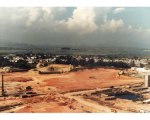
Shenzhen in the early 1990s  

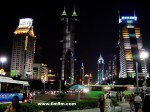
Present Shenzhen
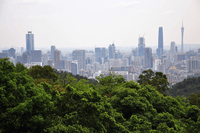
Shenzhen as it Now

Shenzhen was voted by Forbes China in 2010 as the most innovative city in mainland China. It virtually started from scratch.

Shenzhen in the 1970s was but a small village. Its metropolitan cityscape is the result of the vibrant economic growth made possible by rapid foreign investment since the institution of the policy of “reform and opening” establishment of the SEZ in the late 1970s. Both Chinese and foreign nationals have invested billions in the Shenzhen SEZ. More than US$30 billion in foreign investment has gone into both foreign-owned and joint ventures, at first mainly in manufacturing but more recently in the service industries as well. Shenzhen is now reputedly one of the fastest-growing cities in the world.

Being the southern mainland China’s major financial centre, Shenzhen is home to the Shenzhen Stock Exchange as well as the headquarters of numerous high-tech companies. Shenzhen is also the third-busiest container port in China, after Shanghai and Hong Kong.

Shenzhen/Suzhou/Shanghai

Shenzhen continued to top the list of the most innovative cities on the Chinese mainland this year, followed by Suzhou and Shanghai.

Shenzhen continued to top the list of the most innovative cities on the Chinese mainland this year, followed by Suzhou and Shanghai, according to the latest list of the 25 Chinese mainland cities with the strongest innovation capabilities released Monday by Forbes China.

Forbes China’s survey covered 129 mainland cities:

  • with the municipal GDP of above RMB 43.6 billion yuan (US$6.84 billion) in 2010

  • also the number of patents newly applied for (per capita and total number)

  • the proportion of sci-tech expenses to local fiscal expenditures (including expenses on trial development of new products, intermediate experiment allocations and subsidies for important scientific research projects).

 In 2010, the value-added of Shenzhen’s high-tech industry rose 17.1 percent to RMB 305.9 billion yuan, while the total output value of high-tech products made in Shenzhen hit about RMB 1.02 trillion yuan, with 60.1 percent contributed by products with independent intellectual property rights.

The Yangtze River Delta region retained its predominant status this year, with 15 cities edging into the list. Jiangsu province alone has 11 cities included. Five cities from the Pearl River Delta moved up into the list, while no cities from Western China appeared there.

Statistics show that China’s smaller cities are amazingly eye-catching for their innovation capabilities with more than half cities on the list being county-level and prefecture-level cities. Of the top ten, there are 4 county-level cities: Wujiang, Kunshan, Changshu and Zhangjiagang.

Source: China.org.cn

China – World’s Biggest Megalopolis with 42 Million !

Pearl River Delta area, showing boundaries of ...
Pearl River Delta area, showing boundaries of the Special Administrative Regions of Hong Kong and Macau (in green), and the bordering Guangdong Prefectures Map drawn in October 2007 using various sources, mainly : Map of the Pearl River Delta from http://www.johomaps.com Map of administrative boundaries from http://www.hydrocarbons-technology.com (Photo credit: Wikipedia)

By P Chong                                                                         25 February 2011

Million population cities in China are a dime a dozen. According to a Mckinsey Report, China by 2025, will have 219 cities with more than one million inhabitants, compared with 35 in Europe today and 24 cities with more than five million people. China doesn’t do things by halves. Take the Three Gorges Dam for instance – it’s the largest hydroelectric project in the worldcosting some $39 billion to build. China builds around 20 brand new cities each year – a phenomenal scale the world has ever known.

Now the ‘Turn The Pearl River Delta Into One’ scheme will build a 16,000 square mile urban area that is 26 times larger than Greater London, or twice the size of Wales, says The Telegraph report. This will be equivalent to the size of Switzerland.

The Chinese government has announced plans to amalgamate the nine major cities in the Pearl River Delta (home to a manufacturing-driven economic boom) into a single city with a population of 42 or more million people (more than Argentina, the world’s 32nd largest country), occupying an area twice the size of Wales. The “Turn The Pearl River Delta Into One” will link all of these centers by high-speed rail links that will put every point in the new megacity within an hour’s journey of every other point.

The plan, announced in state media, would unite several existing cities in the prosperous Pearl River Delta region, including Guangzhou (12 million), Shenzhen (8.6 million), Dongguan (6.9 million) and six smaller cities. Together, these cities already account for about 10% of China’s economy. All these cities lie around the Pearl River Delta, and unsurprisingly the plan has been dubbed the “Turn The Pearl River Delta Into One” scheme.

Guangzhou

The ambitious plan will see China attempt to combine over 150 major infrastructure projects including transport, energy, water and telecommunications networks over the next six years. This alone is expected to cost £190 billion. On top of this, an express rail line is will be constructed to connect the mega-city with nearby Hong Kong. Twenty-nine rail lines, totalling 3,100 miles, are to be constructed to reduce rail journeys around the urban area between the different city centers to a maximum of one hour of journey. Hospitals and schools will be improved as a result of the development.

Shenzhen

The idea is that when the cities are integrated, the residents can travel around freely and use the health care and other facilities in the different areas,” said Ma Xiangming, the chief planner at the Guangdong Rural and Urban Planning Institute and a senior consultant on the project. He continued, ”It will help spread industry and jobs more evenly across the region and public services will also be distributed more fairly.”

On the green side, pollution, which is a major problem in the Pearl River Delta due to the major industry cities, is to be addressed with an “united policy.”

The long-term plan for China is to move ever greater numbers into its cities, creating some city zones with 50 million to 100 million people and “small” city clusters of 10 million to 25 million.

Briefly, to sum up what Ma Xiangming said:

  • The infrastructure project to be built over 10 years will link around 150 projects in transport, energy, water and telecommunication networks of the nine cities together with an express rail line connecting the hub with commercial Hong Kong.
  • “The idea is that when the cities are integrated, the residents can travel around freely and use the health care and other facilities in the different areas.”
  • The new mega city will help spread industry and jobs more evenly across the region and public services will also be distributed more fairly.
  • Rail journeys around the urban area will be cut to a maximum of one hour between different city centers helped by the inclusion of 29 rail lines totaling 3,100 miles, the report quoted Xiangming as saying.
  • Chinese planners believe the project will help in reducing phone bills by 85 percent as also improve conditions of hospitals and schools. The mega city project also expects to address the issue of pollution caused by industrialization around the Pearl River Delta.

A specialized conglomerate of nine cities into One Megapolis of 42 million people

Its total urban infrastructure investment will equal about £685 billion over the next five years while, by 2025, it will have added some 350 million city-dwellers to its population.

As in a grand prix race, while you stall others will roar. China is doing all that it positively can to be in the lead.

Would the name “Pearl-Megalopolis” be apt for the unnamed megacity?

Source: The Telegraph

World’s Longest Cross-Sea Bridge – The Pearl River Delta Bridge

By P Chong

24 February 2011

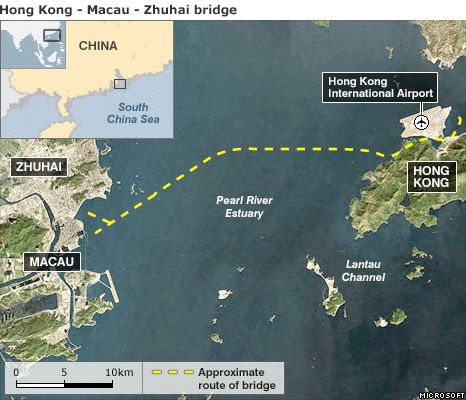
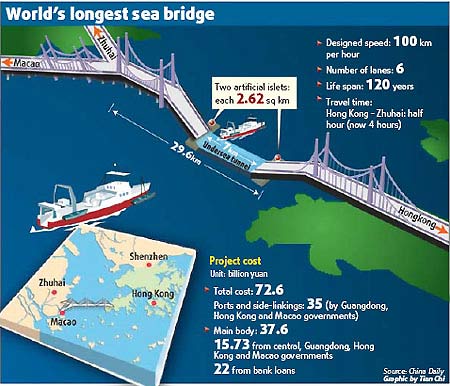
It’s absolutely mind boggling to even think of it! It’s been a dream for the last decade and that dream is now becoming a reality. China never does things in half measures. China has begun constructing a bridge to link southern Guangdong province, China‘s main manufacturing hub, with Hong Kong and Macao. When completed by 2016, officials say it will be the world’s “longest sea-crossing bridge” – spanning nearly 50km (30 miles). One branch of the bridge will reach Zhuhai in Guangdong province.

Pearl River Delta Bridge


The bridge will be a six-lane expressway that can withstand earthquakes up to 8.0 magnitude, strong typhoons and the impact of a 300,000 tonne vessel, said Zhu Yongling, one of the officials leading the project. (This is just the prelude to even greater projects to come in the wake of “Turn The Pearl River Delta Into One”. More details to follow after this article).

Thirty-five kilometres of it will be over water. Driving times between Zhuhai and Macau to Hong Kong will be cut from three hours to about 30 minutes. According to the China Daily, Guangdong has reached an agreement with Hong Kong and Macao on funding. “The bridge will cost 42.2 billion yuan ($5.9 billion). The project will be partly funded by the governments of the three neighbouring regions, and the rest will be raised through public bidding,” Governor Huang Huahua, who is also a deputy to the 11th NPC, told reporters on the sidelines of the annual session of the top legislature.

An artist’s impression of the completed bridge

Summary Facts:

  • About 30 km long.
  • Total investment of about 42.2 billion yuan ($5.9 billion), instead of 36 billion yuan previously estimated.
  • Toll charge for 50 years, investment to be recovered in 37 years.
  • Reduces travel time between Hong Kong-Zhuhai and Hong Kong-Macao from about six hours currently to less than an hour.
  • It will consequently help to reduce transport costs.
  • The three already enjoy close economic ties, but they must contend with a complicated network of ferries and zigzagging roads for transportation. This will be an excellent short-cut.

The project is expected to boost economic development in the region and improve the comprehensive competitiveness of the Pearl River Delta area, experts said.

Guangdong has been a key laboratory for experiments involving the country’s reform and opening up policy over the past 30 years. The southern province saw its gross domestic product rise 14.5 percent year-on-year in 2007, to 3 trillion yuan, accounting for about one-eighth of the country’s total. The plan to build the cross-sea bridge is just one of the moves Guangdong has made to strengthen its economic cooperation with Hong Kong and Macao.

Huang said the provincial authorities will invest in infrastructure in the Pearl River Delta, which has become a magnet for overseas investors, particularly from Hong Kong and Macao.

A complex rail transit network is also in the pipeline that will one day ensure that a journey between any two cities in the region takes less than one hour, Huang said.

The governor said he expects Shenzhen, which is the closest city to Hong Kong, to set an example for the whole province’s close relations with the special administrative region.

According to projections more than 200 million vehicles a year will be using the bridge by 2020, carrying 170-220 million tons of freight.

“Through a more convenient and fast transport network, Hong Kong’s financial, tourism, trade and logistics and professional services can become better integrated with the Pearl River Delta and the surrounding areas,” said Donald Tsang, Hong Kong’s Chief Executive, at a ceremony launching the project.

Indicative of the importance Beijing has attached to the project, the Chinese vice-premier Li Keqiang, the man widely tipped to succeed the prime minister Wen Jiabao in 2012, was on hand to inaugurate construction.

Make 2016 a date in your travel calendar to visit

this Special Economic Zone region to witness

the splendour & magnificence of

the economic wonder that China has in store for you!


Source: The Telegraph & Chinese Daily


Celebrating Father’s Day in Australia

By P Chong                                                Sunday 5 September 2010

With Grandson Matti Cutting A Specially Baked “Durian” Cake

Father’s Day in Canada, the U.K. and the United States is celebrated on the third Sunday in June. In Australia, Father’s Day is celebrated on the first Sunday in September. Why Australia chooses to be different, I have no clue. This year it falls on 5 September.


To me, Father’s Day is simple & pleasurable just to have family members getting together at home & have a day of eats, Karaoke singing, fun & laughter & fellowship. It’s generally a chance for families to get together and celebrate in similar way to Mother’s Day. Dads are spoilt and made to feel special & pampered.


Our two grandsons in Perth, Mattheson (7) & Nathanael (2), are wonderful to be around – for they sure make you want to live life all over again! Our other two grandchildren, Daniel (7 plus) and Stephanie (2 plus), live in Hong Kong. If only they could be around as well . . . but an army of four might bring the roof down!


It is a day for people to show their appreciation for fathers and father figures. Father figures may include stepfathers, fathers-in-law, guardians (e.g. foster parents), and family friends.

Cousins Catching Up with Old Times


I don’t expect presents but I sure appreciate our siblings’ presence. To other fathers, it may be a day out in the park, at the movies, at a zoo, or another place of interest . . . or getting handmade or Hallmark cards, food baskets, chocolates, clothing, gift vouchers etc.


This Father’s Day is very special indeed! We happen to have our relatives visiting from abroad . . . sister-in-law Beng from Singapore with her daughter-in-law Dawn & daughter Rachel, sister-in-law Hwa from Taiping, Malaysia. Others in the merry crowd include our cousins in Perth . . . Marie with her spouse Nigel and Joseph with his darling wife Mabel. Of course, our daughter Agnes & hubby Darren, our youngest son Andrew with Fiona – still very much the newly-wed on their honeymoon!


To me, home gathering is best. Each participating family member bringing along a dish of goodies to share in what I would call a “Potbless Fellowship” and with Karaoke singing . . . food galore . . . nothing seems more memorable!

`

Father’s day is not a holiday in Australia, since it’s a Sunday.

There are some suggestions that the idea of Father’s Day may have its origin in pagan sun worship. Some branches of paganism see the sun as the father of the universe.

As Christians we should remain very wary

Lest we be led astray!

Victoria Peak – Hong Kong

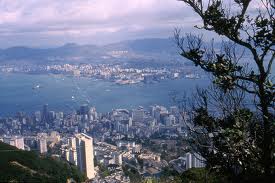
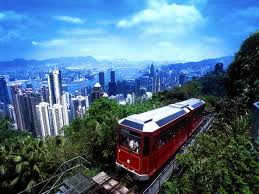
Victoria Peak – the highest point in all of Hong Kong, overlooks Kowloon and all Hong Kong island. Its views are most spectacular & world renowned.

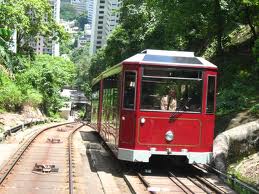
Victoria Peak (traditional Chinese: 太平山, or previously- 扯旗山), 554 meters (about 1817.6 feet) above sea level, is also known as Mount Austin, and locally as The Peak. It occupies the western part of the island and ascent is by way of the venerable Peak Tram. As most visitors would agree it’s the only way to truly experience the beauty of Hong Kong’s natural wonders.

As early as 19th century, the Peak attracted European & prominent residents because of its panoramic view over the colony and its temperate climate compared to the sub-tropical climate in the rest of Hong Kong. The sixth Governor of Hong Kong, Sir Richard MacDonnell had a summer residence built on the Peak circa 1868. Those that built houses named them whimsically, such The Eyrie, and the Austin Arms.

These original residents reached their homes by sedan chairs, which were carried up and down the steep slope of Victoria Peak. There was limited development in the Peak until the opening of the Peak Tram Funicular in 1888. (Refer article by same author on Maxwell’s Hill, Taiping, Malaysia).

The boost to accessibility caused by the opening of the Peak Tram created demand for residences on the Peak. Between 1904 and 1930, the Peak Reservation Ordinance designated the Peak as an exclusive residential area reserved for non-Chinese. They also reserved the Peak Tram for the use of such passengers during peak periods. The Peak remains an upmarket residential area, although residency today is based on wealth.

With some seven million visitors every year, the Peak is a major tourist attraction of Hong Kong. It offers spectacular views of the city and its harbours. The number of visitors led to the construction of two major leisure and shopping centres, the Peak Tower and the Peak Galleria, situated adjacent to each other.

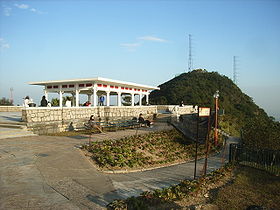
Peak Garden at the Top

PeakLookout

Jumbo Floating Restaurant – Aberdeen, Hong Kong

A mural in the restaurant
Image via Wikipedia - Ancient Mural

Dine like an emperor with a “six-star” sumptuous dinner at the dragon court of this most famous Hong Kong landmark in Aberdeen.

Make it a memorable occasion & have your photo taken dressed in traditional imperial garments sitting on the emperor’s throne.

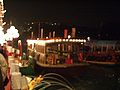
Source: Wikipedia - Full View at Night

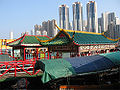
Jumbo Kingdom (traditional Chinese: 珍寶王國) consists of the Jumbo Floating Restaurant (珍寶海鮮舫) and the Tai Pak Floating Restaurant (太白海鮮舫), renowned tourist attractions in Hong Kong‘s Aberdeen Harbour.

Popular for Weddings & Lavish Functions

Over 30 million visitors have visited Jumbo Kingdom, including Queen Elizabeth II, John Wayne, Tom Cruise, Chow Yun-fat and Gong Li. Jumbo Kingdom is part of Melco International Development Limited (新濠國際發展有限公司), a company listed in the Hong Kong Stock Exchange.

The Jumbo Kingdom was established in October 1976 by Dr. Stanley Ho. It took four years and over HK$30 million to design and build it. It was originally decorated in the style of an ancient Chinese imperial palace.


Free motor launch transport

The Jumbo Kingdom recently underwent a major multi-million dollar renovation, which transformed it into “a theme park on the sea” including dining, shopping, sightseeing and cultural attractions.

Jumbo Entrance

A Chinese culinary school taught by the chefs

of Jumbo Kingdom has been established.

Visitors can experience the nostalgic Hong Kong dining experience from a bygone era, the Typhoon Shelter seafood meal on a sampan.

The Chinese Tea Garden, Pier Plaza & Bronzew are Exhibition are additional attractions.

Since its opening in 1976 as the Jumbo Floating Restaurant, it has excelled in the preparation of seafood for discerning diners. Designed like a classic Chinese palace, it can accommodate up to 2,300 people. Situated in Aberdeen Harbour, the Jumbo is one of the world’s largest floating restaurants and an iconic tourist landmark of Hong Kong.

Inside Jumbo Floating Restaurant (Hong Kong)
Image via Wikipedia - Interior

The combination of good food & place makes eating all the more pleasurable!

Colours & lights at night add on to the romantic delight!

HK Sunset Cruise By Chinese Junk

A romantic & worthwhile proposition is a Sunset Cruise plus dinner at the Jumbo Floating Restaurant!

Star Seafood Floating Restaurant – Shatin, New Territories, Hong Kong

Photo Source: Wikipedia

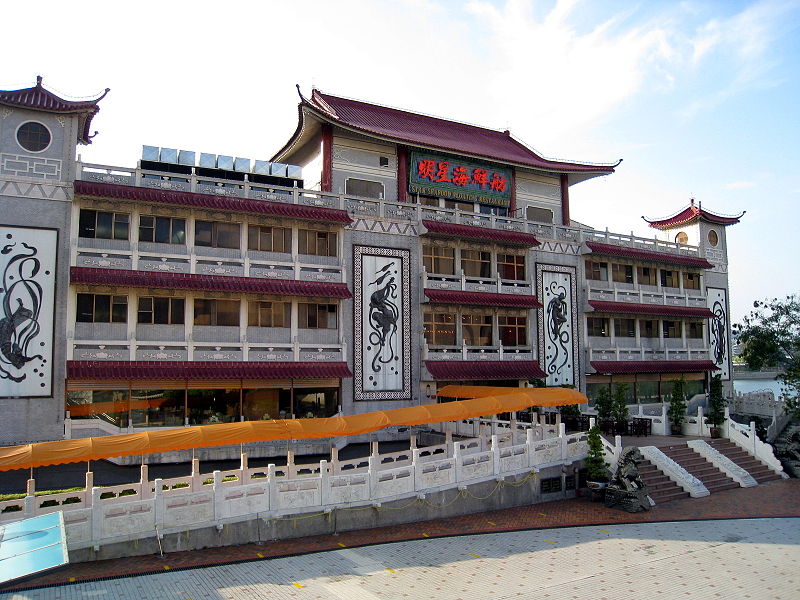
Lion Entrance

The eternal question among the Chinese is:

Do we Eat to Live

or Live to Eat?

Dragon Chairs & Folding Screen

Hong Kong offers a variety of cuisine from street stalls to imperial courts. Good food galore, for the Cantonese are undoubtedly the best cooks in the world. However, but it’s knowing where & what to eat, as like the locals, that will make the difference to your wallet & palate.

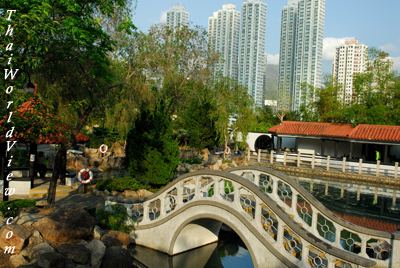
Beautiful Surrounding - Shatin Park

As a regular visitor to Hong Kong, I have come to be familiar with the Cantonese folks in their fondness of eating out. There is no shortage of choice restaurants.

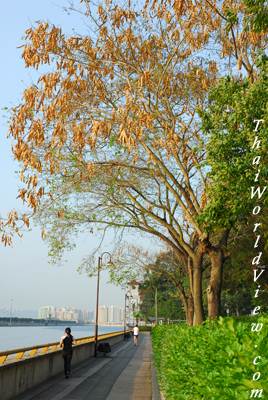
Promenade along Shing Mun River

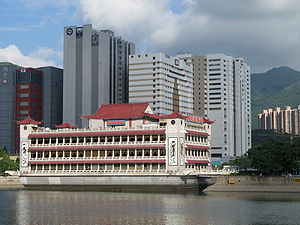
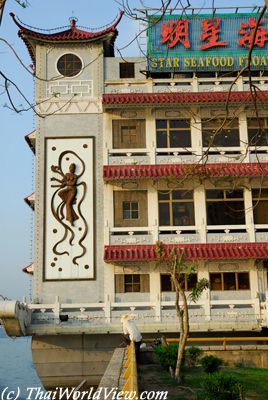
Star Seafood Restaurant (Chinese: “Ming Sing” 明星海鮮舫), formerly called Treasure Floating Restaurant (Chinese: 敦煌畫舫), is a restaurant in Sha Tin, Hong Kong. This is the only marble or granite boat-shaped restaurant berthing along the eastern shore of Shing Mun River, near the junction of Siu Lek Yuen Road and Tai Chung Kiu Road. It serves a variety of Cantonese dishes including Cantonese dim sum & seafood.

Shing Mun River & Cycle Track

Please confuse not yourself with another much more famous Jumbo Seafood Floating Restaurant in Aberdeen in Hong Kong.

Restaurant Side View

The 8-hectare Sha Tin Park is located by the Shing Mun River. The South Garden is a traditional Chinese garden with pavilions, bridge and waterfalls.

Sai Kung nearby is famous for its abundance of seafood restaurants. (Below)

Sai Kung Seafood Restaurants - Many Around Nearby

Related Post:  Eating Out in Hong Kong

Repulse Bay – Hong Kong, China


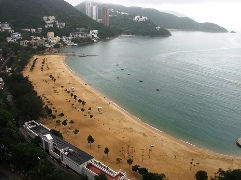
Repulse Bay, wide crescent-shaped beach, popular among locals and tourists alike, is one of the most beautiful beaches in Hong Kong.

Amidst the tranquility of The Repulse Bay, you are only 15 minutes from Hong Kong’s commercial hub, Central.

It is an artificial strip of sand on the south side of Hong Kong Island. Shark nets and floating platforms have been added as public safety for swimmers.

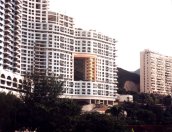
Visitors to the beach would notice the fascinating feature of a tall 37-story residential apartment block specially constructed with a square “hole” or empty space in the midst of it. This may seem to be such a waste of valuable residential space.

This is essential to the needs of a nearby legendary dragon. Legend has it that a dragon lives at the top of the mountain, and a “feng shui” master warned that the building would block the dragon’s access to the shore. Hence, a large hole was cut out of the tower’s centre to mollify the dragon and avoid a whole lot of bad luck.


Hongkees are great believers in “feng shui”. They would go to great length to accommodate the requirements of siting, orientation & the balance of the natural forces of “yin” and “yang” to secure the optimum fortune.

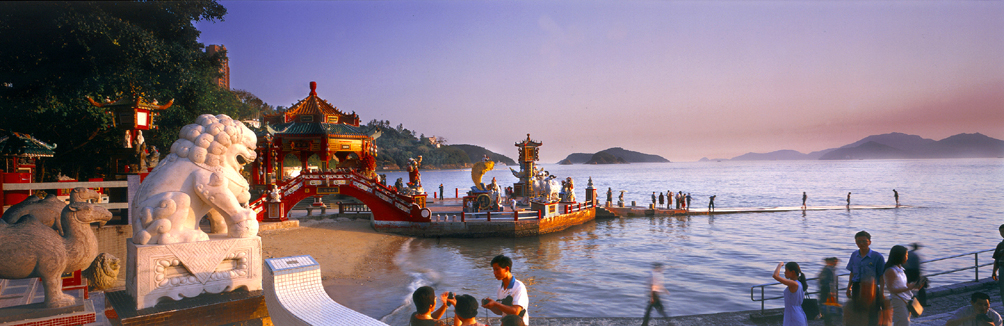
Repulse Bay Beach is also famous for the elaborate statues of Chinese sea goddesses at the Kwun Yam Shrine. Throw a coin into the mouth of the fish statue and receive good fortune; cross the gaudy Longevity Bridge and add three days to your life!

Source: HK Tourism Board: Kwun Yam Shrine

Such are the thrills & frills, apart from the sun, sea and sand . . . an ideal place for relaxation & sunbathing. It’s a delightful & popular place for the family outing though the name may sound “repulsive”. The name is derived from the past to remind the locals of the British army‘s victory over the haunting pirates in the old days.

Repulse Bay is quite a premium residential precinct among the top executives.

World’s Ten Amazing Subway Stations

London's Familiar Underground Sign

By P Chong                      22 April 2010

London Underground, known commonly as The Tube, has the distinction of being the first such railway system in the world with its first section opening in 1863. It is a rapid transit system serving a large part of Greater London and neighbouring areas of Essex, Hertfordshire & Buckinghamshire in the UK. In 1890 it became the first to operate electric trains.


The name “Underground” in London can be quite misleading as some 55% of its system is above ground. Nonetheless, it was an awe inspiring experience for me when using it as a fresh young man coming from an under-developed country in 1959 & 1960.

In my recall, I still remember Madrid Metro, as a system situated right in the centre and has train doors opening at both sides to improve passenger flows. This was a real bonus considering its congestion particularly on bull fight days.

Hong Kong MTR (Mass Transport Railway) is perhaps the most busy of the systems I have seen. Its quick, frequent & efficient and for most times it’s packed to capacity with only standing room.

The world of rapid underground travel, named invariably as Underground, Metro, MTR or MRT, is most fascinating. Herein below is a pictorial presentation of the World’s Most Amazing Ten Subway Stations:

The Bund Sightseeing Tunnel in Shanghai, China. The 647-m long tunnel is a surrealistic fantastic public transportation system with its walls featuring hi-tech geometrical optics of various colors. (Below)

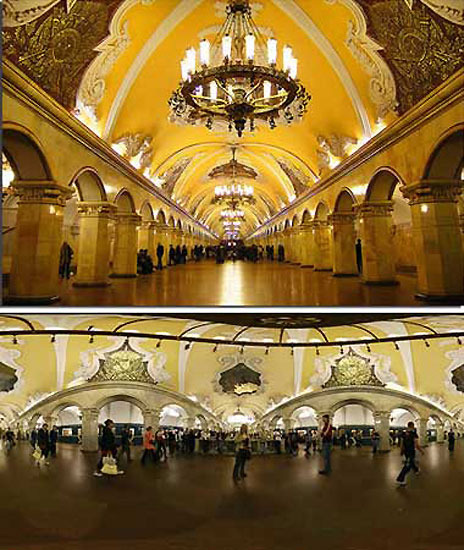
The Komsomolskaya Metro Station in Moscow, Russia. The metro station has become one of the landmarks in Moscow partly because it is located at the city’s busiest public transportation hub the Komsomolskaya Square. The station opened on Jan. 30, 1952

(as below)


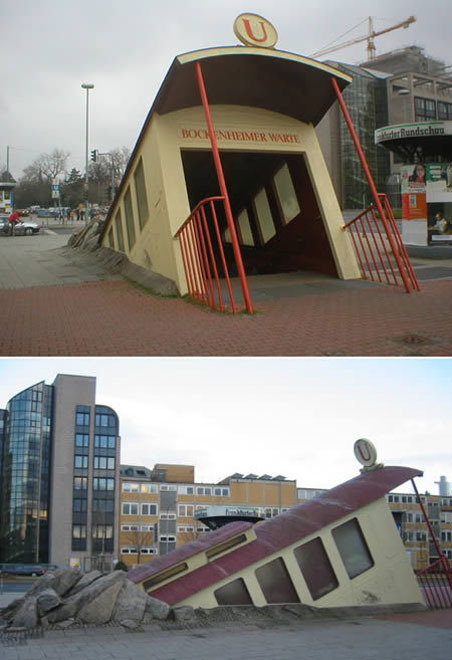
The Bockenheimer Warte Subway Station in Frankfurt, Germany. The entrance to the station looks like a train sinking underground after an explosion. The designer of the station said he was inspired by surrealistic artists.

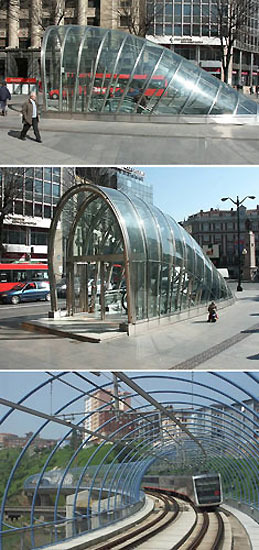
The Subway Station in Bilbao, Spain. The subway station, designed by Norman Foster, is well known for its efficiency and unique design style.

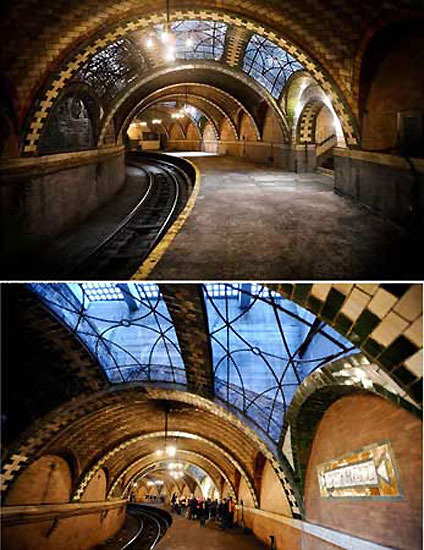
The City Hall Subway Station in New York, United States. The station is a beautiful and functional one. It has been the most attractive subway station in New York since it was put into operation in 1945


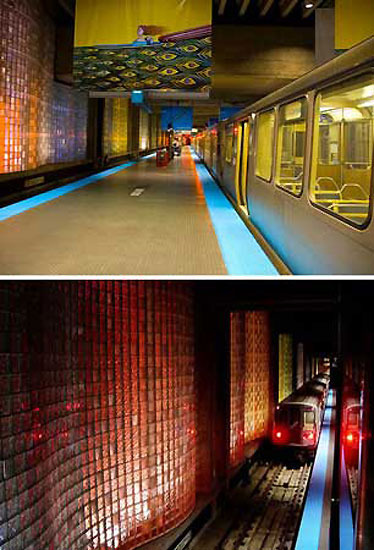
The O’Hare Subway Station in Chicago, United States.

It was built in 1984


The Subway Station in Dubai, UAE. Combining traditional and modern architecture styles, the station looks like a shell.


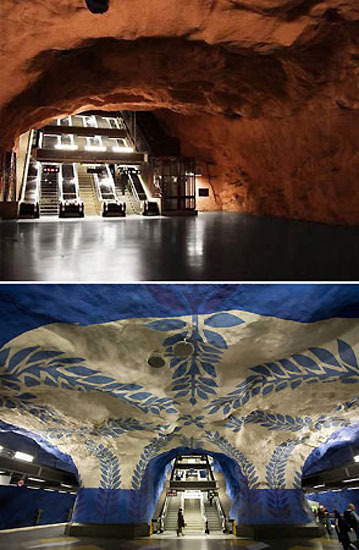
The Subway Station in Stockholm, Sweden. The station is highlighted by its inside cave paintings.


The Subway Station in Pyongyang, DPRK


The U-Bahn Metro in Munich, Germany. It opened in 1972