No Sweat in Learning to Play the Piano

By P Chong                                       Sun. 18 April 2010


As is usual the case, if you wish to learn to play the piano,you have to start at a young tender age. It’s by no means an easy task. I have known of cases even after years of learning, & yet not knowing how to play. It requires constant practice, & lots of it . . . demanding patience, persistence & endurance.

Now, modern technology has come to the rescue, and it appears that you can pick up the basic skill of piano play without any hassle.

A yellow and black glove, stylish enough for Michael Jackson, and fitted

with buzzers just above the knuckles is the answer.

The above technology was introduced by Thad Starner, a pony-tailed Georgia Tech Professor at a recent technology conference.

The glove was designed primarily & initially for rehabbing patients with brian & spinal cord injuries. Starner said he worked with a quadriplegic man, in his 70s, whose hands were so clawed up that he couldn’t button his shirt. The finger-stimulating glove helped him get that ability back, and in the process, the quadriplegic learned to play a little piano.

To teach people to play simple piano licks while they’re not really trying to learn, Starner demonstrated by wearing his glove. The buzzers in the glove vibrated his fingers one at a time, teaching him fingering for Beethoven’s “Ode to Joy.” He wore an earbud that played the simple melody in one of his ears, in synch with the finger stimulations.

In trials, Starner said this kind of background learning works rather well. In the most recent test, subjects completed reading comprehension tests while wearing the glove. Nine out of 16 of them were able to play the melody perfectly.

Starner said he’d never done this sort of while-giving-a-presentation test of the piano glove before. At the end of his talk, he played Beethoven’s simple song without trouble.

China’s Lang Lang in Action


Be inspired by Lang Lang, the world’s most successful pianist, who is described by Los Angeles Times as

“A charismatic poet . . . his tone is pure gold.”


Make that vision or inspiration come true!

Coming: A Dream Orient Super Express

By P Chong                              Sat. 17 April 2010

London to Beijing by Train . . . in just TWO Days!

A Typical CRH Train in China Wuhan-Guangzhou CRH Railway Line – Fastest in the World 400Km/hr. 14 billion yuan. Open 20.12.2009

It’s plane to fly & train to ride!

Speaking from personal college days’ experience, Euro-Rail round trip ticket provided us with the most convenient & budget way of seeing Europe. We could without problem alight & embark at any point along our planned scheduled holiday route. By so doing, we covered numerous destinations without costing us heftily.

However, if time is of the essence, the train journey from London to Beijing taking a week is not one most people would currently consider. Imagine if you could find yourself stepping off in the Chinese capital in a mere two days that would be a dream!

The prospect of this incredible journey is being fast forwarded with China’s ambitious plans to build a high-speed rail network to Europe. As with all the Chinese leaping achievements in the past thirty years, the realisation of this dream may be sooner than your wish.

The Europe Route, Northern Route & South East Asian Route

Under the scheme, British passengers would be able to depart from King’s Cross in London and, using the Channel Tunnel, join a service in Paris to the Chinese capital Beijing.

Rail expert Wang Mengshu, from China’s Academy of Engineering , said: “We are aiming for the trains to run at 215mph.” That means the 5,070-mile trip from London to Beijing – which currently takes a week or more and several changes of service – could be completed in 48 hours.

The new service will not be arriving in Britain just yet, but the Chinese are hopeful it could be here within ten to 15 years. China already has its own high-speed railway network, and is negotiating to extend this to up to 17 countries. It’s certainly providing a network of affordable speedy rail travel. Indeed it’s globalisation in action!

Mr Wang said most of the countries covering the Northern Route & the South East Asian Route are already at the negotiating table. The talks involve a trade of resources for technology. Many of the countries are under-developed but mineral rich. So it’s a gain-gain situation for all concerned. China has proposed three highspeed railway projects, although the specific routes have yet to be decided & finalised.

The first, the South East Asian Line, would potentially connect Kunming in southern China, with Singapore via Vietnam, Thailand and Malaysia. Another, the Northern or Central Asian Line, could start in Urumqi in northern China and go through Kazakhstan and Uzbekistan , and possibly end in India.

The third, that is the Europe Line, would start in China’s north-east and go north through Russia and then into Western Europe.(Please refer Map above).

Though the project may be beset with security issues such as illegal migration, smuggling and visas, which could all be ironed out & the bumpy ride smoothened. Undoubtedly, the ambitions of the world’s most populous country are rarely derailed.

CHINA’S WUHAN-GUANGZHOU HIGH SPEED TRAIN

China-Wuhan CRH Line

China is spending £480 billion on domestic railway expansion, aiming to build nearly 19,000 miles of railway in the next five years. Presently it boasts of the world’s fastest train, the 250 mph Harmony Express, which speeds 660 miles between the cities of Wuhan and Guangzhou in three hours.

It’s globalisation in action

Bringing dreams to realisation

Freeing the world of domination

Fulfilling dreams, hope & aspiration

Popular Japanese Capsule Accommodation Spreading Abroad

By P Chong                                              16 April 2010

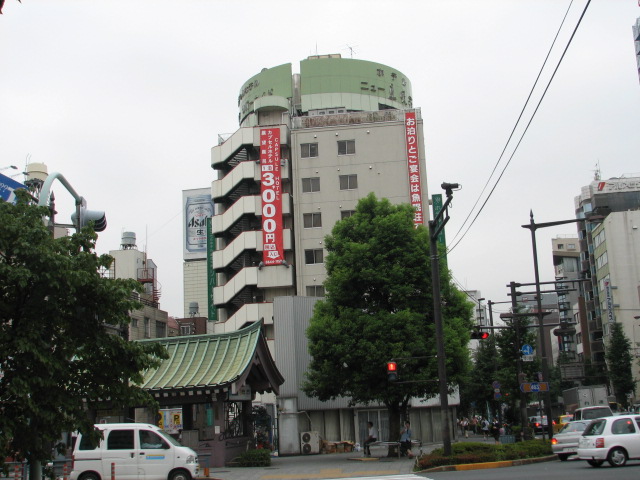
Asakusa Capsule Hotel
One of the Original Capsule Hotel

More like Cubicles/Pigeon Holes

It’s possible to travel on a shoe-string in Japan because you can save heaps by staying in those “capsule hotels” – where there won’t be any room service but self-capsule service. The capsule, neat & clean,  usually in dimension of 3x3x6ft is all that is needed for you staying overnight in the middle of Tokyo.

Apart from the air-ticket fare, the bulk of the travelling expenses goes towards accommodation.

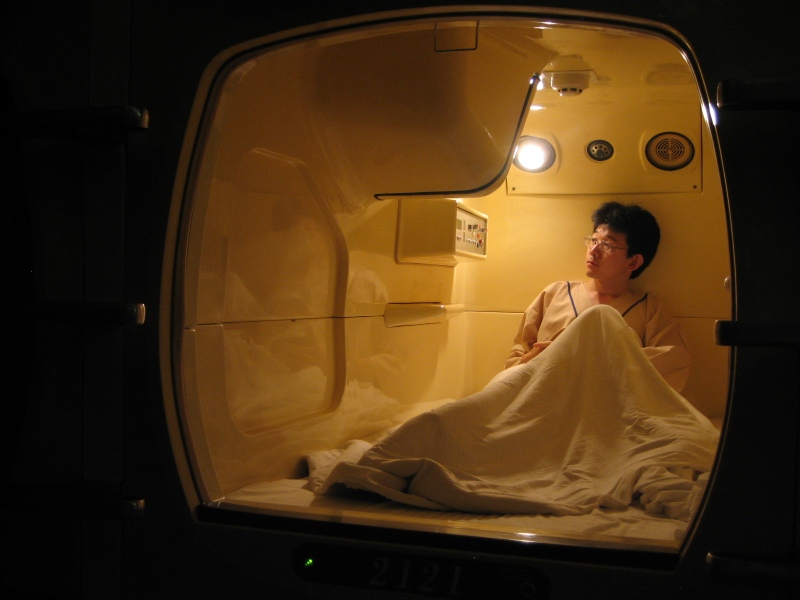
Capsule Hotel Guest


Such accommodation is modestly clean & safe. For 3200 Yen (about $30) you get a bed in a capsule cell, a capsule box incorporating TV/Radio & controls for volume, light switches. The facilities as provided by the hotel include inexpensive restaurant, massage rooms & baths. Washing/bathing & toiletries being all external & separate may be somewhat inconvenient.

Ticket Vending Machine

At the entrance, you will told that you are expected to stay in until check-out time. They give you a suit of inner wear & a locker key. Most of these hotels accommodate male only, with the exception of some which have women-only floor. $29 is so cheap compared to what is usually charged $120 – $200 for a 3-star hotel in Japan.

Capsule Box Controls

Asakusa Capsule Hotel in Tokyo charges $30 for a capsule with a small TV incorporated with the alarm clock, Radio in a capsule box.

C

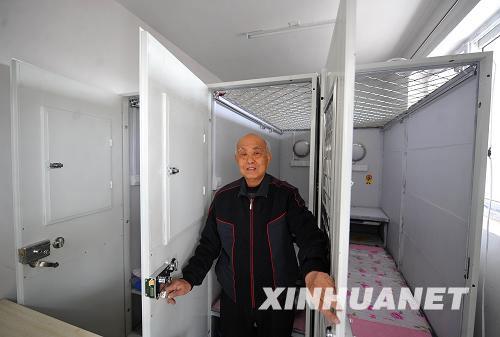
Beijing Introductory Capsule Apartment

In Beijing, China the idea of the capsule-type of accommodation, known appropriately as “Capsule Apartments” has been introduced at the 2010 Spring Real Estate Fair recently. The new living spaces have attracted many people’s attention. Some say that they meet the demands of graduates who are not rich enough to rent a bigger suite. Hopefully, they would alleviate the problem of accommodating those millions of migrant workers who can ill-afford more expensive housing.


Each unit is less than 2 square meters and can only fit a single bed.

Huang Rixin –  designer and owner of the “Capsule Apartments” in Beijing.

“Those who earn one thousand to one and a half thousand a month can’t afford the rent for a single room, which may be 600. So I took out the money I saved over more than two years to build the capsule apartments. I hope it will be accepted by the public, and that the government will consider this issue and take it as a method to solve the housing problem of the floating population in the city.” said Huang. The 72-year-old retired engineer built 8 units of capsule apartments in Beijing. The monthly rent for each unit is between 200-250 yuan.

Huang had an open display of his capsule units and attracted its first tenant, 25-year-old Zhang Qi. The young lady has worked in Beijing for five years with a monthly salary of over three thousand yuan. She wants to save more money to help her family. Zhang says that the only inconvenience is the toilet and shower, because the bathroom is not on the same floor. But she felt she can overcome this if others can.

In places like Hong Kong & Singapore, where space is a premium, such neat capsules could be considered adequate at least temporary. To think of it, in the early days of Hong Kong, migrant workers used to share the same bed with sleeping arrangement alternating according to their work schedule.

Even the early days of Singapore HDB flats used to be nothing but cubicles, like pigeon holes! The same goes for Hong Kong where two in the kitchen is a crowd!

In Perth, we are indeed a fortunate lot with the luxury of space. But as with the enlargement & spread of urban sprawl & land becoming more scarce, the traditional quarter-size building lots are increasingly being squeezed to less than 400 sqm. However, single dwelling is much preferred to apartment type of dwelling.


Afraid of Dying?

By P Chong                                                        Wed. 14 April 2010

You’ve no doubt heard many a sermon preached or theories on the question of life & death. With due respect, many of them have undoubtedly left you confused & disillusioned. The crux of the matter is that death, like taxes, is a certainty in life. It’s not a question of IF, but WHEN.

Sooner or later, we must all face death. Source: KRT

You are not about to hear from me theology or theories, philosophy or astrology, though I have, without sounding audacious, in my time preached many a sermon behind the pulpit. Nor would I want to bore you to sleep with lengthy talk. I would, if you permit me, relate to you a simple story to throw light on this much debated issue.

Our LORD Jesus Christ had but three years of public ministry. His preaching has withstood the test of time over the past two thousand years. It’s all on the basis of simple stories relating to everyday life or nature. This proves that “Simplicity sells, complexity repels.”

The story goes:

A sick man turned to his doctor as he was preparing to 
leave the examination room and said, ‘
Doctor, I am afraid to die. 
Tell me what lies on the other side.’ 

Very quietly, the doctor said, ‘I don’t know.’ 

’You don’t know? You’re, a Christian man, 
and don’t know what’s on the other side?’

The doctor was holding the handle of the door; 
on the other side came a sound of scratching and whining, 
and as he opened the door, a dog sprang into the room 
and leaped on him with an eager show of gladness.

Turning to the patient, the doctor said, 
’Did you notice my dog? 
He’s never been in this room before. 
He didn’t know what was inside. 
He knew nothing except that his master was here, 
and when the door opened, he sprang in without fear. 
I know little of what is on the other side of death, 
But I do know one thing…

I know my Master is there and that is good enough.’

Whatever your misgivings, doubt & belief, may you put your faith & trust in God that he’ll be there waiting to receive you. “I know my Master is there & that is good enough.”

Whether you’re rich or poor,

mighty or meekly,

strong or weak,

young or old,

spiritual or secular,

ultimately, everyone dies!

Needless to say, to be well received

you need to be well prepared.

Bonsai – “Tray Planting”

By P Chong                               Wed. 14 April 2010

Beautiful Bonsai Display

It is the art of dwarfing trees or plants and developing them into an aesthetically appealing shape by growing, pruning and training them in containers according to prescribed techniques.

Literally translated, the Japanese word “Bonsai” simply means “Tray Planting”.

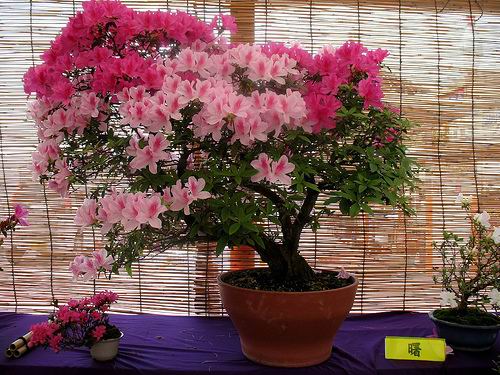
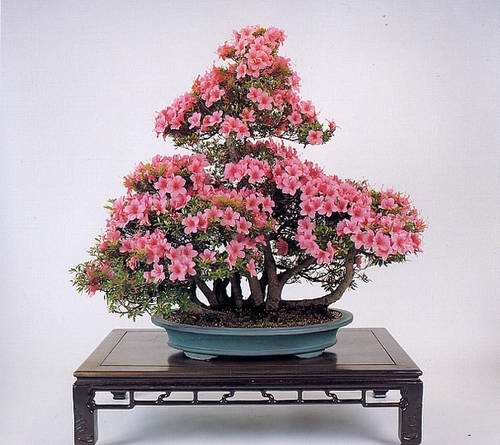
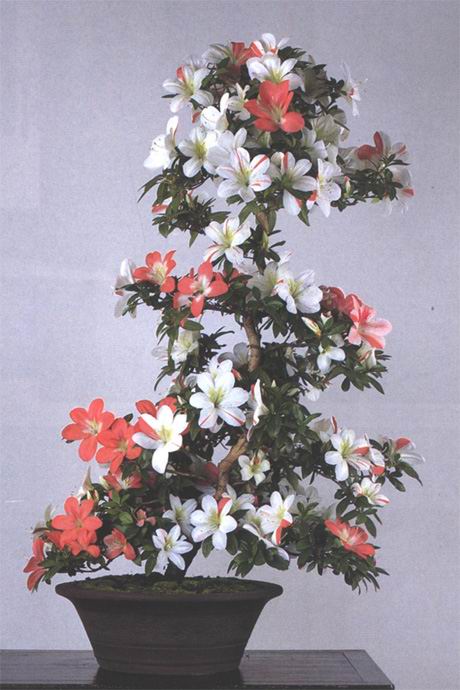
Azalea Bonsai

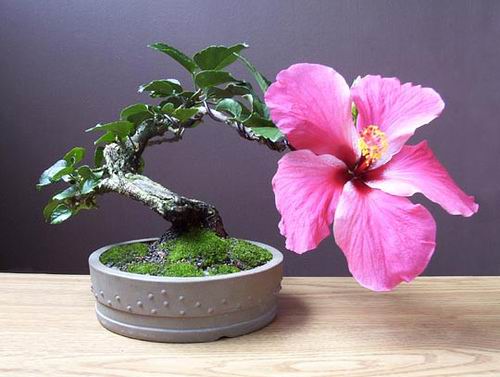
Hibiscus Bonsai

Bonsai is really a miniature tree in a small pot. Allowing your imagination to play its role, you replicate Mother Nature & a landscape in a small pot. You plant a trimmed branch of a tree & make it grow with artistic restrictions in a miniature way. The size usually ranges from a few inches to a few feet tall and could even bloom flowers & bear fruits.

Azalea

Bonsai keepers always trim their bonsai, so that they keep their original size & shape for years & years, or decades & decades. Vintage Bonsai has passed through generations to generations, and it could live for more than 100 years in a small pot.

Carousel Display of Bonsai

With bonsai, you don’t just plant & grow & allow nature to take its course. Due care & attention, love & patience must be exercised to reap the benefits. Every branch and twig of a bonsai is shaped or eliminated until the chosen image is achieved. From then on, the image is maintained and improved by a constant regime of pruning and trimming.

It is an interesting hobby that will provide you with joy & satisfaction. It entails patience & lots of tender loving care. Though it requires more of your time than normal gardening, your creations will be much more lasting & enduring. It requires less space for storing or display.


Here below is a vintage Bonsai which is very old. The age is about 500 years & the pot is 300-year-old. How much is it worth? Or what would you be prepared to pay for it? It’s quite priceless for such a beauty! Make an offer? Perhaps US$210,000!

Vintage Bonsai

There used to be Takagi Bonsai Museum in Tokyo (Ichigaya), but it closed in 2004. There is now a district in Saitama prefecture (1 hour from Tokyo) called “Bonsai Village.”

In Perth, Western Australia, there’s this centre:

Bonsai Society of Western Australia Inc

10 Choules PlMyaree WA 6154

(08) 9330 6242

Screen shot 2013-08-01 at 2.52.48 AM

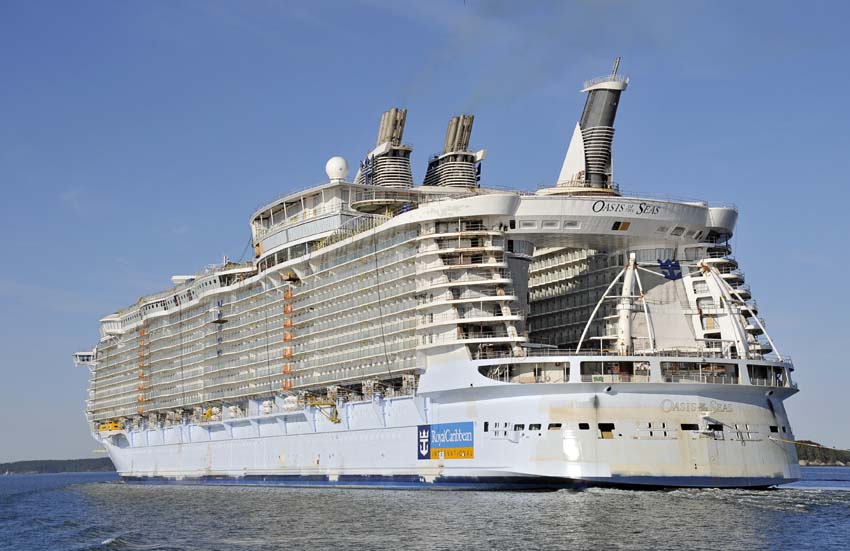
World’s Largest Cruise Ship “Oasis of the Seas”

By P Chong                            Tues. 13 April 2010

Embarking the “Virgo” in Singapore 2001

Some years back in 2001 we took a cruise on the “Virgo” from Singapore to Phuket & Langkawi in what was considered the largest of the cruise ships from the fleet of Star Cruises Company. It was great. Then in 2008, we had another cruise from Sydney to New Zealand on Dawn Princess, and it was even greater & larger.

Competition is ripe in the world of popular cruising and there seems to be no end to competitors coming up with the largest of their cruise ships.

Those days it was a dream to go on a QE2 cruise, which dream was then surpassed by the introduction of Queen Mary2 – apparently the world’s largest & most prestigious of the cruise ships. Now, that supremacy didn’t last long either with the coming of the “Oasis of the Seas”.

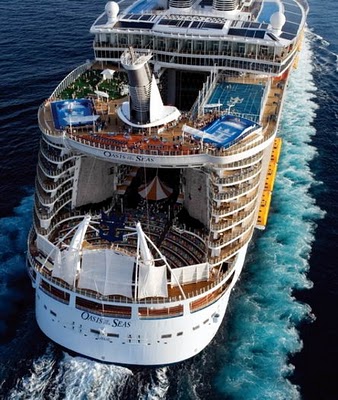
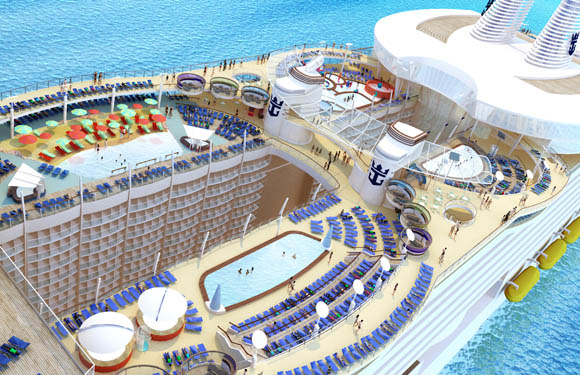
This is Royal Caribbean International’s newest, largest & most revolutionary cruise ship – the highly anticipated “Oasis of the Seas”. She made her global debut only in December 2009, arriving into her home port of Port Everglades in Fort Lauderdale, Fla. following a 14-day transatlantic crossing from Turku, Finland. Hundreds of eager onlookers – ranging from Royal Caribbean top executives to local government officials, residents and media – came out to welcome “Oasis of the Seas” to the United States for the first time and to be among the first to catch a glimpse of the world’s most revolutionary cruise ship.

Just when you think Royal Caribbean International has enough cruise ships in the world, another big one is under way by the name of “Allure of the Seas”. Already they have a fleet of others known invariably as “Freedom of the Seas”among others “ . . . of the Seas” like “Independence of the Seas” & “Liberty of the Seas”.

Their megacruises are also catering for in a variety of other cruise ships distinctly categorised under Voyager Family, Radiance family, Vision family & Sovereign Family – each with a fleet of ships with creative names . . . Adventure, Brilliance, Enchantment, grandeur, Legend, Rhapsody, Majesty, Monarch . . . It’s so numerous reflecting the booming cruising business.

Royal Caribbean’s cruise ships are the most innovative and exciting in the travel industry. Here are the reasons why:

  • Plunging into the 21st century, each ship in the current fleet carries more passengers than the entire Royal Caribbean fleet of the 1970s and has features—such as new surfing pools—that were unheard of in the past.

  • Their lofty perches allow passengers to contemplate the passing seascape by day and dance away the night in a heavenly space high above the water.
  • A variety of lounges and high-energy stage shows draw passengers of all ages out to mingle and dance the night away. Production extravaganzas showcase singers and dancers in lavish costumes. Comedians, acrobats, magicians, jugglers, and solo entertainers fill show lounges on nights when the ships’ companies aren’t performing.

  • Professional ice shows are a highlight of cruises on Voyager- and Ultra Voyager-class ships—the only ships at sea with ice-skating rinks.

  • The action is non-stop in casinos and dance clubs after dark, while daytime hours are filled with poolside games and traditional cruise activities. Port talks tend to lean heavily on shopping recommendations and the sale of shore excursions.

    Broadwalk

    Central Park

    Aqua Theatre

    Pools

This is strictly in a megacruise category of its own – with none to compare. Experience their most innovative and imaginative ship yet, “Oasis of the Seas”. This new class of naval-engineering genius features the first-ever neighbourhood concept where everyone can find their unique experiences in one of their seven distinct onboard districts, including:

  1. Central Park – a public space combining nature and nautical;
  2. Boardwalk – dedicated to family, fun and featuring the new and entertaining Aqua Theatre; & the
  3. Royal Promenade – the heart of many Royal Caribbean ships, that’s now bigger and better than ever.
  4. With 28 ultra-modern loft suites and 2,700 spacious staterooms, this 16-deck marvel proves that the impossible, is possible. You have to see it to believe it.

Exterior View

From rock-climbing walls on every ship, to elegant dining rooms and relaxing spas, your experience onboard is nothing short of incredible. And the service you get will be just as amazing, with their signature Gold Anchor Service on every ship.


Their new “Oasis of the Seas” isn’t just a ship, it’s a collection of amazing experiences that challenge all limitations. More options than ever before, including two Flow-riders, a Zip Line, Aqua Theatre, Carousel, Loft Suites and more. This is where the impossible becomes possible and the unimaginable becomes real.

UPDATE (27 July 2013)

COMPETITION IS KEEN. “ALLURE OF THE SEA” IS NOW NO.1

view photos below:

Allure of the Seas image004 image005 image006 image007 image008 image009 image010 image011 image012 image013 image014 image015 image016 image017 image018 image019 image020 image021 image022 image023 image024 image025 image026 image027 image028 image029 image030 image032 image033 image034 image035 image036 image037 The kitchen Titanic & AllureFront: The Titanic cf. Allure of the Seas (Back)

Please read related posts by same author:

1. Dawn Princess Cruise

2. Cruise For Life It Shall Be . . . No Nursing Home For You Or Me


The ‘Newly Renovated’ Bund – Shanghai

By P Chong                            Mon. 12 April 2010

The Bund Area

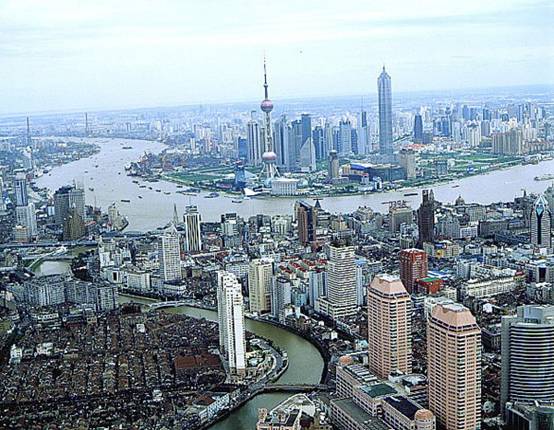
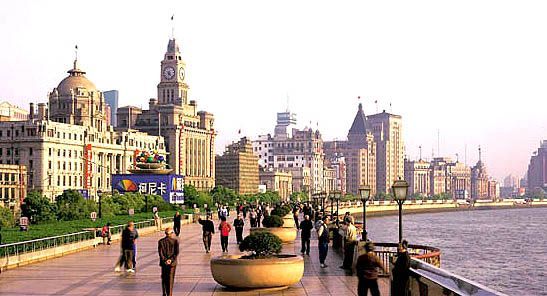
The 2,000-metre long waterfront promenade of the Bund, Shanghai’s European-style boulevard or esplanade, looks so refreshing & welcoming after a three-year facelift costing the City officials US$700 million.

New Renovated Bund

Its reopening last month to the public was well in time to welcome the influx of tourists with the opening of the World Expo 2010 on 1 May. It is now four times larger than before connecting four theme squares with a seating capacity for 2,000.

From the photos my email pal sent me, I can visualise a different atmosphere immediately. Its vast development & improvement made it an ideal fun place for the public & will no doubt supersede its past fame as a tourist destination.

Summarily, the improvements include:

* Widening of the pedestrian mall

* Vantage point to view the fabulous Pudong across the Huangpu River

* Tunnelling work to ease traffic congestion

* Reducing to six lanes from the previous eleven – 70% of the traffic

will now be diverted underground

* Convenient now to live in Puxi & work in Pudong with the construction of several tunnels & bridges connecting the two locations

* Illegal vendors or hawkers will be a thing of the past

* It will have its own dedicated team of police.

According to Shanghai’s mayor, Han Zheng: “The Bund is the symbol of Shanghai. It bears 170 years of history of this city & condenses the transformation of Chinese economy, politics & culture in the course of 100 years.”

Pudong at Night

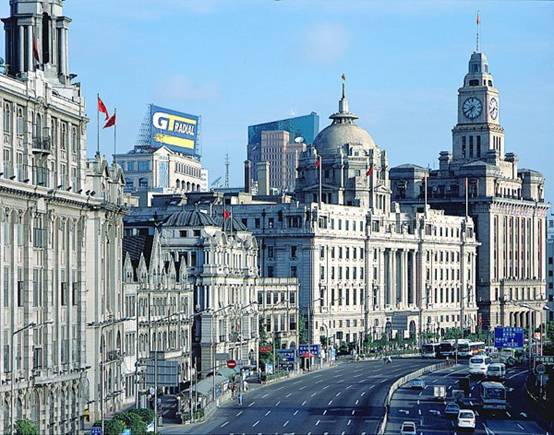
The Old Bund

The old Bund contains 52 historic colonial buildings. Newer skyscrapers are mainly on the eastern side of the Huangpu River. Shanghai Oriental Pearl Tower is the third highest in the world.

As many as two million visitors are expected on the new Bund. I remember during our first visit to the Bund in 1989 & subsequently in 1997, we were swarmed by curious friendly crowds, eager to practise their spoken English with us.

Pudong - The Bund

The Bund will always be the centre of Shanghai’s residents’ life. It fame & longevity have long been perpetuated by the popular tune of “Shanghai Bund” – sung either in Cantonese or Mandarin.

Come Aboard Not to Fly But To Live In It!

By P Chong                             11 April 2010

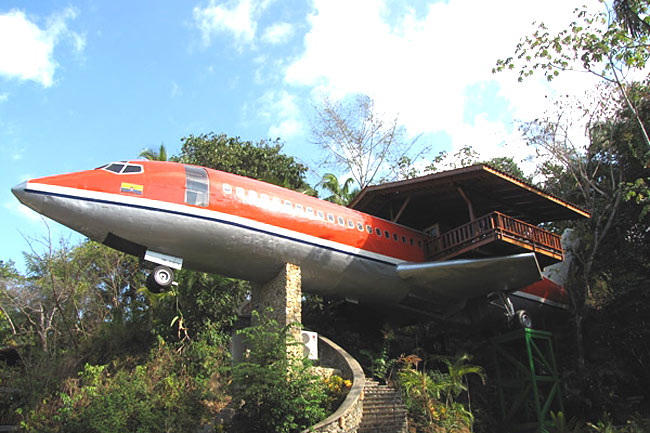
It’s a plane! No, it’s a home!!

Gosh! This plane is not taxied on the runway!” the guests let out surprisingly. “It’s situated on a slope among the trees!”

Yes, but this is not just a plane . . . it is uniquely a residential abode, a home for Joanne Ussary.

It’s a plane! No. It’s a home!!

What a novel idea to convert a plane into a residence! This is ingenious & out of this world. Imagine if you could live in it & take off to the sky to see the world simultaneously. Well . . . short of it being a fantasy. Creative . . . imaginative . . . unconventional from the usual human residences.

Look Again!

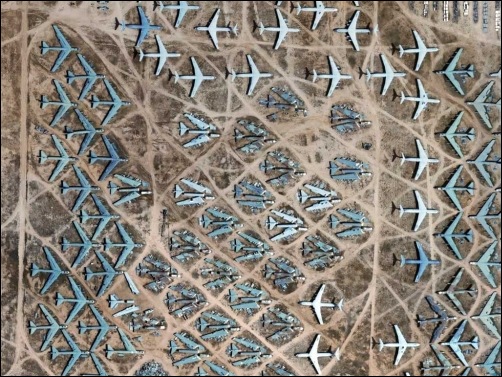
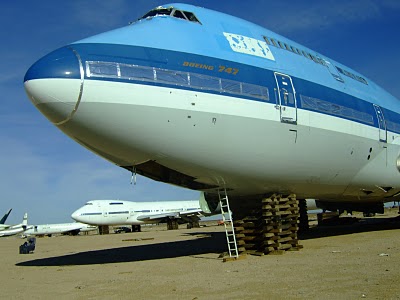
Ideas are a dime a dozen. This might have cost her a fortune you think. If you search the Arizona Desert in US, you can find Airplane Graveyard with hundreds & thousands of disused aircrafts which you can pick up one suitable for your purpose for a song. These aircrafts are already de-commissioned – used but not abused with bodyworks still intact.

Aircraft Graveyard in Arizona, US

Boeing 747

Three-Level Body

How much did it cost in a project of this nature for Joanne Ussary? She paid US$2,000 for the plane body; paid US$4,000 to have it moved & transported plus US$24,000 to renovate. It worked out cheaper than buying a conventional home.

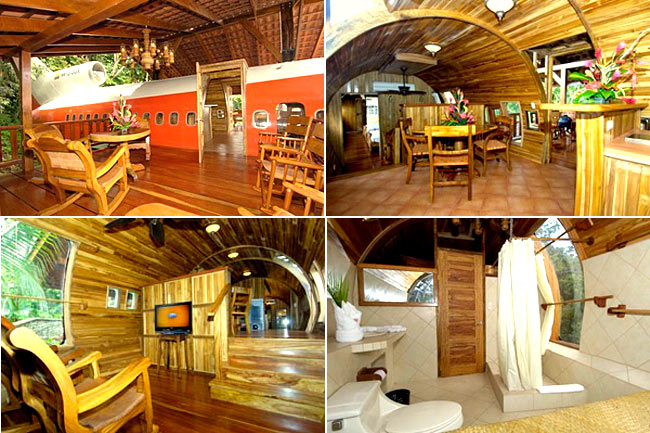
Let’s take a look at Joanne’s pride of creative conversion:

Tea in the Verandah Patio

Sited high on slope among greeneries

Living Areas

Delightful Views
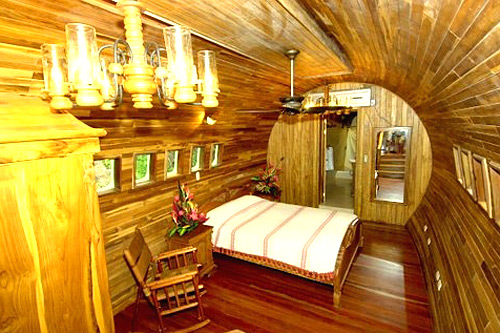
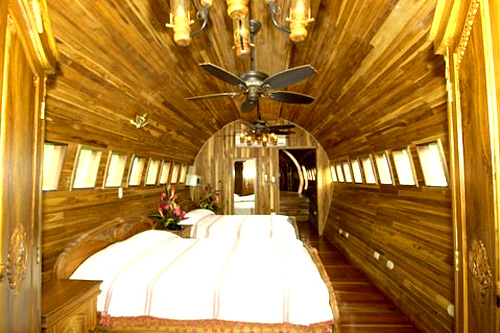
Wood-Panelled Bedrooms


Are you well satisfied with this home presentation?

Would you like to live in one?

It might turn out to be a tourist attraction in the neighbourhood!

What a home!

The Years of “Growing Pain”

By Paul Chong                           Sat. 10 April 2010

Our children & grandchildren are so fortunate compared to the days when we were young. Growing up was definitely “growing pain” especially for a family of eleven (2 parents & 9 children). Except for the last three siblings, all used to pack into a one-room rented shop accommodation, sleeping on floor mats, before we had our own family home in Pokok Assam, Taiping, Malaysia. There was nothing for a long time we could call our own!
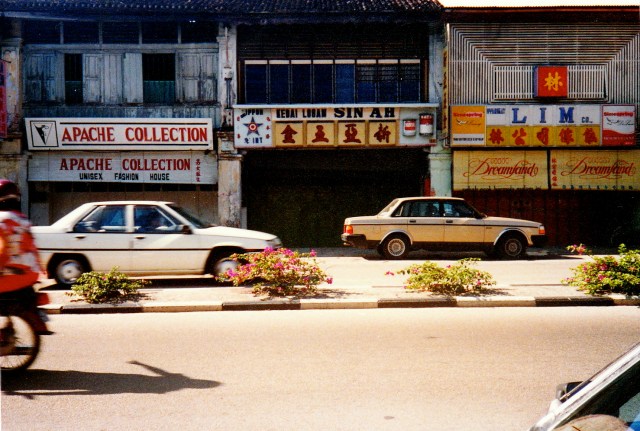
163 Kota Road, Taiping – My Father’s Rented Shop (Middle).

We had one room upstairs where 8 of us dwelled.

My father liked to be called a “mechanic”. He was more correctly a handyman who could fix anything without any formal training. You name it he repaired it . . . from restoring a bicycle motor dynamo, gaslight lamps, electrical appliances like kettles, bicycles, tyre puncture, motor vehicle battery charging, gas lights among a host of other items. His hands were always preoccupied with one item or another. He also repaired watches & clocks which he passed on to my late second uncle. I always admired his skills & wished that he would transfer & teach me some of it.

To my father no son of his was going to follow in his footsteps. He believed in the family’s progression & success and nothing good would come out of it by “holding the hammer”. His sons & daughters must learn to “hold the pen”. . . for the hand with the pen meant “might” to him.
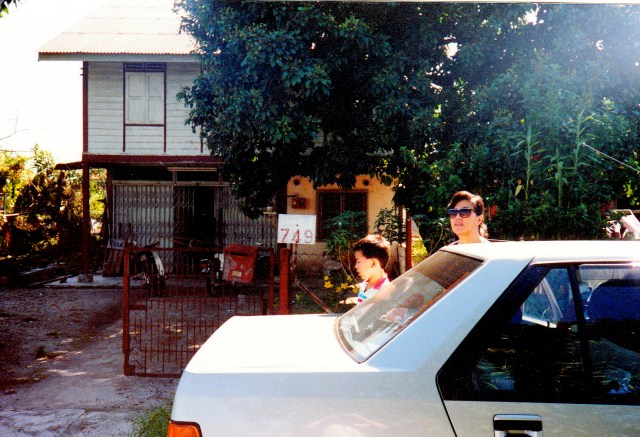
Our Home at 749 Pokok Assam, Taiping – A Resettlement Village

My father regretfully had only two years of Chinese education in the traditional Confucius style of schooling. But if you were to see his calligraphy & his style of Chinese character script, you would think that he was a Chinese scholar, enhanced by the fact that he was often quoting Confucius & Chinese idioms in his normal conversation. Through his own personal lack of education, he was most passionate that his children had proper schooling & academic attainment.

Our dear mother, as with most olden days’ women, was unfortunate not to have gone to school. Nevertheless, she was wise & demonstrated in every way to be a woman of substance. While father fought hard in his economic survival especially during the Japanese Occupation period, she was equal to the task, pulled her weight, and helped keep the family together. Father always made sure of the basic needs – rice, sugar & salt.

I understand what it means to be austere & frugal. We went through several periods of hardship & struggle. My father always impressed upon me that he went to school with only two cents in his pocket. So when we were getting twenty cents in our school days, we couldn’t complain.

We were all English educated – eight of us except the younger sister next to me, she was in the Chinese school. She did not complete her education. By her own choice, she left school early and took up a practical course in dress-making. Bee delighted herself making clothing for our three young sisters – Susie, Alice & Annie. Her time was divided in helping mother in the household chores & making dresses professionally for others.

Susie is a retired school teacher in Taiping, Malaysia. Alice a retired business woman in Eastbourne, England and Annie, a secretary in one of the government departments in Perth, sadly passed on untimely with that dreadful cancer disease in January 2016).

Bee married early & became a mother & grandmother way ahead of us. Her children are all successful & she, recently widowed, now lives with her youngest married daughter in KL, Malaysia. She has more children & grandchildren than I have. (She also had cancer & passed on in the year 2011, April).

Mike, the youngest in the family, is by far the most successful of the siblings. Having trained as a medical technologist at the former W.A.I.T. (WA Institute of Technology),  the present Curtin University, he worked for some time in Malaysia in the discipline he was trained for before switching to the field of sales. He has held various managerial positions with Hewlett Packard & Dupoint. To keep track of his career movement is like tracking him globally – for one day he’d be in US, next Taiwan, China, Singapore or Malaysia.

He’s now stationed with his family in Melbourne & is responsible for the Pacific Rim business . . . still very much on the move . . . airports & hotels . . . in Shanghai or somewhere else and flying high. His three children, one girl & two boys, are all doing well in the field of real estate, journalism & dentistry.

Proudly, we have two nephews who are most successful in the field of import/retailing business and event/marriage planning enterprise.

Our parents are no longer with us, but I am sure they would only be too happy & proud that their offspring have climbed the social-economic ladder and attained that family progression according to their wish. It’s been a long & hard journey, when all of us were sleeping on floor mat, all cramped into one room.

To crown the Chong Family glory, our children have done us proud with their academic achievement: our daughter with a PhD, doctor son as a qualified anaesthetist & our youngest son as a civil engineer who also holds a second degree in computer science. It is foreseeable that others in the family will soon join in the academic rank, not that some have already done so.

Austerity & frugality are two preciously forgotten vocabulary in today’s society. Today, the flash of credit cards with free & easy spending rule the day. Unless you have gone through hard times, you’d never understand & appreciate good times.

Save to be safe

Austerity before prosperity.

To God Be The Glory!

Related Posts by Same Author:

  1. No pain No Gain . . . Suffering Builds Character
  2. The Importance of Knowing Why “Roots To Grow, Wings To Fly”

The Amazing Automatic Cooking Robot

By P Chong                            10 April 2010

Reporters Shooting at Robot-Cooked Food

I wonder whether we “live to eat or eat to live”.

Whatever, eating is an integral part of life. Eating is life’s pleasure & variety is the spice of life. Its pleasure has increased progressively & abundantly with the availability of global foods, food technology, cooking facilities & amenities.

For the gourmet group, not only do they derive pleasure from eating, they also indulge in cooking shows or demonstrations by qualified chefs. No doubt too the same goes for the average consumers. Not knowing to cook well does not handicap lots of eager hands willing & ready to learn & attempt. Food need not be expensive nor exclusive . . . for the test is in the eating. To a large extent, it depends upon food preparation & cooking.

To quote the words of Marcel Boulestin, chef & food writer (1878 – 1943):

. . . the pleasure of eating something because it is expensive has absolutely nothing to do with the taste of good cuisine.”
Food lovers have been known to savour every known restaurant in town and some sticking on to their favourite haunts. Another category of people I know collect recipes but never really achieving anything out of the habit. What if there is a machine – a mechanical device . . . an automatic cooking robot to cook your favourite dishes? This is not just a concept or a futile dream in our modern day life style, where convenience & labour saving are so priceless.

Yes! Your dream is a reality today. In Yangzhou, east China’s Jiangsu province, the students from Yangzhou University have made this possible. It’s developed jointly by Shanghai Jiatong University in conjunction with an enterprise from Shenzhen.

In a report by CCTV on April 7, 2010, the university students demonstrated the culinary skills of their newly invented “Automatic Cooking Robot”. It can cook like any professional chef, and not just one dish, but a host of 600 kinds of dishes.

One lady friend of mine Amy has this to say: “I shall apply for redundancy payment from Nigel and offer him this?”
Another food enthusiast Martin was saying: “I am not sure how this is done. But it does sound like a great idea in western society where food is more expensive. Asian markets have hawkers and it is so economical to eat out. Good idea for the future.”

Students from Yangzhou University operate an automatic cooking robot in Yangzhou, east China’s Jiangsu Province, April 7, 2010. (Picture: Xinhua/Zhao Jun)

Girls tasting food by automatic cooking robot

Come & taste

Then have your say!