The Minefields of Self-Pride

The Minefields of Self-Pride

“You may say to yourself, ‘My power and the strength of my hands have produced this wealth for me.’” ~ Deuteronomy 8:17
3382637996_60a4e2226f

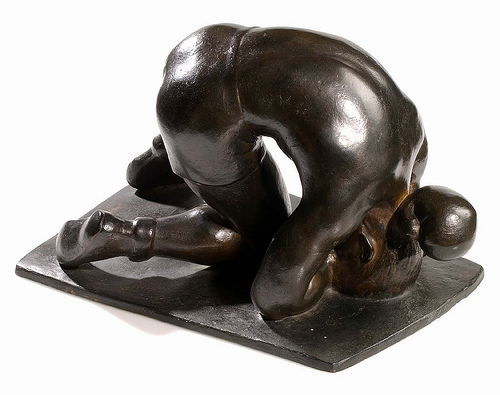
Walter Hancock – Fallen Boxer 1934

The danger of forever crediting yourself with your success is ever present. The popular phrase of being “a self-made man” leads only to conceit, pride and eventually to one’s downfall. We have heard stories of tall poppy syndrome, rich and powerful men crashing to nothingness. It’s alright to work hard and smart through sweat and tears to achieve success, provided we avoid the pitfall of claiming it all to our own self-reliance, disregarding the grace and mercy of God which made all things possible. The American philosophy of emphasising that winning is everything runs against the grain of giving due credit to God. They say that you are either a winner or a loser. There’s no second place in life, or as in the Olympics; sportsmen resort to steroids and all forms of drugs to achieve success. Our own sportsmen and women are not exempted in their similar quest for success.

Do we really deserve our individual rights and privileges and all the entitlements that accompany success? “My power and the strength of my hands have produced this wealth for me”- such thought and attribute only lead to the grave danger of eventual failure. We are but custodians or stewards of the wealth that God deems fit to bestow upon us. He gives and He can also easily take it all back.

To continue in His grace and mercy is to accord God that honour and due praise.

Avoid the danger of developing secular legalism as believers. All that is required of us is to remain faithful, to love God as He loves you and to get to know Him. The notion of being grateful seems to have been thrown out of this world. We are so used to taking without wanting to give that a “grabbing syndrome” is prevalent, particularly in the capitalist world.

Our pride will prevent us from experiencing God’s grace and mercy. Our cold cold hearts must warm vertically towards Him above, and horizontally reaching out to others with feelings of graciousness, generosity, kindness and care. Humbleness is more welcome than haughtiness. Let God continue to shower you with blessings to accomplish whatever you pursue. It’s through His grace and not our work that accomplishment is realised.

    Paul Chong

Zhouzhuang – “The Venice of China”

Zhouzhuang – “The Venice of China”

912508-Zhouchuang_entrance-ZhouzhuangEntrance to Zhouzhuang


01

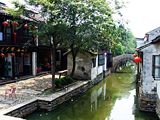
Hailing from Jiangsu area in southern China among as host of ancient water towns, Zhouzhuang is undoubtedly the better known among the tourists. Like Xitang or the others, it’s only a small place with inter-crossing canals, so no motor vehicles. You can easily cover this interesting place known as “Venice of China” by foot. It’s within reach 30 km from Suzhou & 90 km from Shanghai – serving well as a week-end retreat even for the Shanghainese. It is a photographic paradise for both the amateur or professional. It’s stupendous for its sights in architecture, history & culture.

zhouzhuang 10026623tm10026618tm

160px-Zhouzhuangguzhen_6160px-Zhouzhuangguzhen_2images

154-0160px-Zhouzhuangguzhen_2


Smoke-Free Deli

Smoke-Free Deli

barberry-square-deli_0001


We used to have a delicatessen business for about seven and a half years in 1984. We were reputed for not selling cigarettes which was most unusual for any deli. This economic unsound business practice was by choice on the principle of health hazards of smoking.

Today most or all of these delis have suffered their economic demise. Small business, as like hardware stores, suffered sadly from the competition of supermarkets & service stations. (Kalamunda lies in Perth Hills of Western Australia).


ON TOP of old Kalamunda

With panoramic Perth down under

The air is clean, the scene serene

It really makes you sing.

Set in the centre of Kalamunda Town

Barberry Square Deli has great renown

It’s being called unusual, fantastic & strange

Because of the Deli’s incredible range.

Satay sauce & chilli, all are in store

With Asian ingredients & every spices more

Chocolates, lollies, ice-cream,cool drink

But without cigarettes, now that’s hard to thinkl!

“Why Paul, what sort of store do you run?

We come to play video game just for fun

Yet no cigarettes are here for sale

Surely this means your business must fail?”

“It’s true.” says Paul, “we did think twice

Before we banned the smoking vice.

But we believe that your good health

Is more important than our wealth.”

Paul Chong

A Chinese by Descent

An Australian by Consent


Li River Cruise, Guilin

This is really transporting to an era of simpler times

and an environment of natural beauty

Guilin – it’s heaven on earth

It’s one of those places

That makes your heart yearn to return!

Guilin - Li River

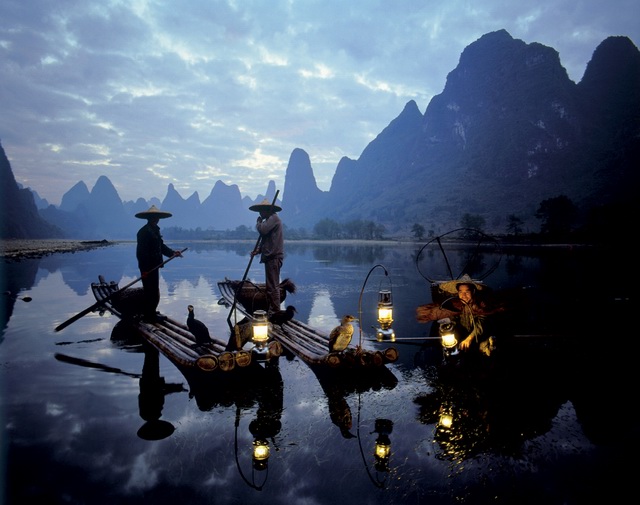
Fishermen Aided by Cormorants – Special Fishing Birds

Below: Slideshow of Guilin’s paradise with characteristic Chinese music
<iframe width=”420″ height=”315″ src=”http://www.youtube.com/embed/T4b6F9II17k&#8221; frameborder=”0″ allowfullscreen>
A cruise down the Li River to Yangshuo is one of the highlights of a holiday in Guilin, China.Among the Chinese, the saying, “Guilin has the most beautiful scenery in China, and Yangshuo is the most beautiful part of Guilin.”

The riverside karst hilly landscape, reminiscences of those limestone hills of Ipoh, Malaysia, & calm pristine waters with fishermen at work all fill an air with awe & refreshing wonder.

Li River meanders its wayLiRiver_map

through 52 miles of beautiful countryside, with

bamboo forests, dense reed-beds,

and incredibly bizarre rock formations

Li River - Boarding

Pictures Below:

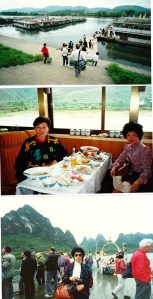
1.Boarding the boat for the cruise.

2. A seafood lunch was provided on board the cruise – delicious & sumptuous.

3. On the deck cruising along calm pristine waters.

Li River  Cruise

4. Beautiful scenery at every turn.

5. Just enjoying the refreshing cold wind of the month of June 1989 on the open deck.

6. Shops & souvenirs galore after                       disembarking at Yangshuo.


Huangshan (Yellow Mountain)

Huangshan (Yellow Mountain) is the prelude to James Cameron’s epic movie “Avatar”.

It was here that he got his inspiration for it, and that’s where landscape similarities exist.

By Paul Chong                                                                 

IMG_NEW

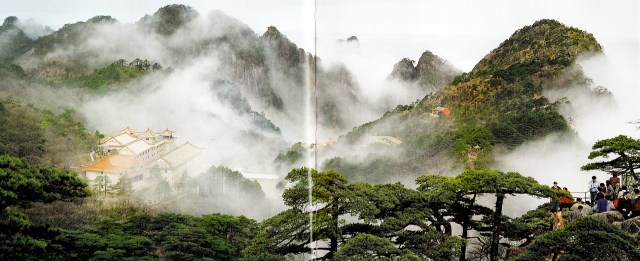
Huangshan stands supreme from amongst the five reputed mountains

of China – Taishan, Huashan, Hengshan & Songshan. These are all sacred mountains renowned for their scenic beauty. However, there’s an old saying well known throughout China “No need to see any other mountains after Huangshan!”

images-1greeting-pine.jpg

Huangshan derived its name from the famous Yellow Emperor who frequented the place as his retreat. Since ancient times, inspiration of artists, painters & poets has come alive in this southern Anhui Province of high mountains, rocks, pine & cedar trees, sea of clouds, snow & spectacular nature’s beauty. It is a majestic place of perpetual scenic beauty in all the seasons and is now listed in the UNESCO World Cultural and Natural Heritage.

A magnificent place with its spectacular vista & ever-changing scenes have drawn visitors from all over the world. Our son Andrew, a keen amateur photographer, has been there in all the four seasons. But winter is reputedly the best season to enjoy the sea of clouds & snowy scenery.

snow-huangshan5.jpg

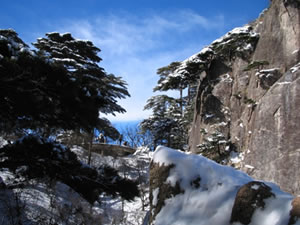
In December 1998, we took the cable car up Huangshan & stayed the night. We couldn’t have chosen & imagined anything more freezing that night & day. Everywhere was covered with snow & ice. It was absolutely beautiful but frightfully cold & the cable car service stopped to function which was unexpected. The only way down the mountain was by foot. We were advised to purchase special spikes for our shoes if we were attempting to go down the mountain on foot as the trail & steps were icy & slippery. It was very risky & dangerous to say the least – the trail & steps had no side railing or protection. It could mean one slip & eternally down the steep ravine.

sunsets-on-huangshan01.jpg

images-3To a certain degree we were encouraged to see workers & labour transporters literally running up & down the mountain with the added weight of load strung over their shoulders. Most goods, foods & even building materials were transported by human labour in that fashion.

jade-screen-scenic-area.jpg

We reached the foot of Huangshan safe & sound with, however, days of ache & pain to remember the descent by. Fortunately, there was compensating gain in the sight of scenic beauty marking our journey with a sweet & bitter refrain. (Info Update: src=’http://player.cntv.cn/standard/cntvOutSidePlayer.swf?v=0.171.5.8.8.7&#8242; type=’application/x-shockwave-flash’ lk_mediaid=’lk_juiceapp_mediaPopup_1257416656250′ lk_media=’yes’/>//

The Family – Face of Our Civilisation


Family Kiama: The face of our civilisation is the family


An United Family A Thousand Successes

It’s the unit that

Respect & honour bound in unity

breed past & present society

It must be the consideration for all eternity.


The new age sets the modern trend

The family is set to end

Marriages are no longer grand

When like-sex togetherness lawfully stand.


The sins of the world are multiplying in fold

Crimes & offences are prevailing bold

Young and old no longer can be told

The ideals of goodness can’t be sold.


We must ponder and be back to the basics

For the solutions and answers that we seek

Stop this decay before society gets too sick

God‘s principles and guidance must we stick.


Paul Chong

A Chinese by Descent

An Australian by Consent


A Word On Dancing

A Word On Dancing

tango-ultimo2009-04-29-1241048229

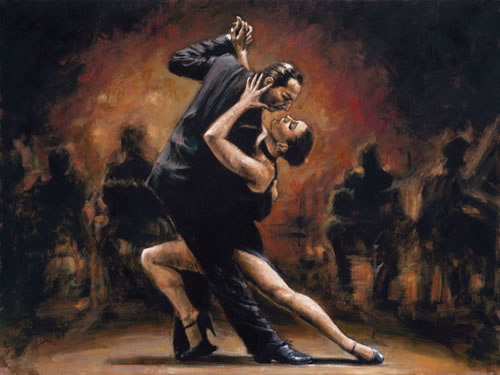
Out of Hollywood is a famous show called “Dirty Dancing”

and appropriately so, if you go by the definition of “Dancing” as:

. . . is the vertical expression of the horizontal desire.”

However, dancing can be elevated to such height of romantic delight when it comes to ballroom dancing, particularly the “tango”. Doing it can be most daunting for many & few often take on to the floor. Yet to a professional or one who is skilled, it so simple & grand . . . for you don’t tangle out, you just tango on!

No fear of making a slip

For Tango is so sleek

In the guiding arms of a pro

You’ll dance & grace the floor.

It takes two to express, vertically or horizontally, whatever the desire may be! When the vertical urge is on, it becomes a horizontal song!

Would you like to comment?

Paul Chong

A Chinese by Descent

An Australian by Consent

My Most Unforgettable Teacher

Brother Antonio

My Most Unforgettable Teacher

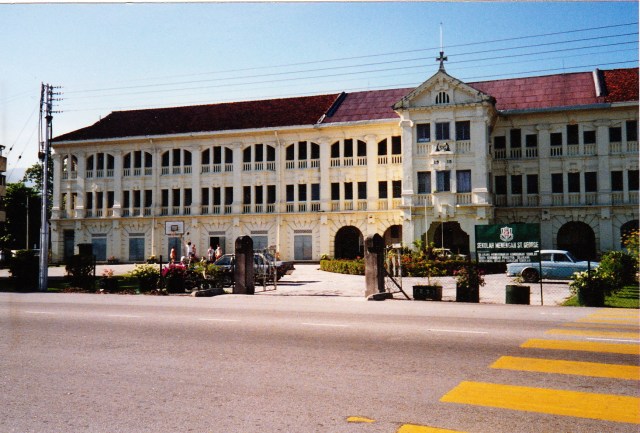
SGI Taiping MalaysiaSt George’s Institution, Taiping, Malaysia

Teachers are the substance that schools are made of – breeding & nurturing students who will ultimately take their rightful places in society. Here’s a tribute to one such great teacher.

Brother Antonio was a man of most unusual and rare character. He was short and stout. No taller than five feet, he yet appeared every inch a man. A pair of deep-set dark brown eyes was hidden behind a pair of thick spectacles. He had an extraordinarily wide mouth from which fluent speech poured. A pair of sensitive ears enabled him to pick up any musical air in a second. Antonio was a scholar, a musician, an artist, and above all a great mathematician.

Mathematics had always been his favourite subject in school. He entered the seminary when he was very young. Surprisingly, he was not brilliant at first, and made a poor first attempt in the Senior Cambridge examination, but had an astonishing score of seven distinctions on his second attempt. This he would relate now and again to encourage the weaker pupils in his class.

Our Antonio’s voice could be heard long before he stepped into the classroom. He would be muttering to himself in his melodious voice as he entered, and no sooner was he in than he would be working laboriously on the blackboard. Not a fraction of a second was wasted. To him, to waste one second meant to waste precious gold.

Usually a class is varied in intelligence and attainment. Our mathematician had a fiery temper. The more backward pupils, slow to understand his explanation, would feel the full force of his rage. I vividly remember one occasion when he kicked his table so hard that he sprained his ankle. The peculiar thing was that he would later feel sorry about his stupid act and would tell us that it was punishment for losing his temper.

To make a silly error in mathematics was to him a moral sin. Time and time again he would stress the importance of being careful. If we were careless he would be vitriolic in his scolding. I recall that his most popular term was ‘fool.’ He elaborated on the word and his degrees of comparison were ‘fool’, ‘damn fool’ and ‘very damn fool’. At this he would roar with laughter.

Indeed, he frequently produced an atmosphere of gaiety. He conducted the school orchestra and he was immensely proud of his stance at the platform, as with baton in hand he conducted the flourishing orchestra of some forty members. Besides his talent as a conductor, he possessed a beautiful and powerful voice, which could be heard in church every Sunday.

Here was a man greatly admired by all who knew him. Apart from all his ability and knowledge he was a man of great piety. His occasional talks on moral subjects and Divinity swayed even some of the wicked hearts. At prayer he was fluent and composed, as if he indulged in direct conversation with God.

He lacked only one skill – he could ride a bicycle! I can still visualise the scene one Sunday morning when he was cycling back from church after early Mass in the rain. He was going very fast when he reached the school gate, and when he applied the brakes the machine skidded, hurling him through the air. His face hit the huge stone pillar, resulting in a very severe cut from the forehead down to his nose. His eyes were injured too, and his spectacles were smashed to pieces. He was confined to hospital for nearly three weeks.

He did not waste his time, however. He prescribed work to be done from his hospital bed, and as usual some boys would go up to him seeking mathematical problems, which he readily lent a hand.

Back in class he told us that his accident was designed as a punishment for his sins, and by suffering it gladly he had thereby cut short his days in purgatory.

In a matter of three short years, he was no longer just an ordinary teaching Brother, but became the Sub-Director of the school (St. George’s Institution, Taiping.).

Paul Chong