Look at the architecture of the new hall and stadium which is comparable with the best in the world.
Ordos in Inner Mongolia with the second highest GDP after Shanghaihas its wealth through the vast resources of coal exploitation.
The government has built an entire new Ordos City.
All buildings virtually sold but unoccupied – held mainly by investors for investment. In China, nobody ever loses in real estate, at least not on a consistent basis. So they keep on building & investors with cash to spare to spare keep on buying.
Nobody has yet moved into the new City of Ordos, but investors are waiting patiently . . . only a question of time, they believe.
At present, of course there isn’t any existing economic activity, except some 30 Km away in the old city of Ordos.
With characteristic & unique style of architecture, reflecting the Mongolian past traditional life, Ordos City will prove to be a great tourist attraction in the days ahead.
There are also monuments dedicated to the great Genghis Khan, the historical conquerer in the era gone by.
Melissa Chan of Aljajeera in 2009 made this report, which as shown below in YouTube video:
Mongolians traditionally used to live in tents & will need time to get used to modern living.
Slideshow of Images of Futuristic Buildings
This slideshow requires JavaScript.
This is nothing compared to what is projected ahead!
By 2025, China will build TEN New York-sized cities.
The scale and pace of China’s urbanization promises to continue at an unprecedented rate. If current trends hold, China’s urban population will expand from 572 million in 2005 to 926 million in 2025 and hit the one billion mark by 2030. In 20 years,China’s cities will have added 350 million people, more than the entire population of the United States today. By 2025, China will have 219 cities with more than one million inhabitants, compared with 35 in Europe today and 24 cities with more than five million people. Also, 40 billion square meters of floor space will be built – in five million buildings. 50,000 of these buildings could be skyscrapers – the equivalent of ten New York Cities.
So what’s happening in Ordos is rather insignificant when compared with the greater picture of China!
The Cities above are so placed in an alphabetical order
and not by any means on an arguably competitive basis
In hindsight, having travelled to Beijing, Paris, London & New York, the four major metropolitan cities in the world, I just can’t begin to take stock as to which city I like best. I guess each one has its own unique attractions to offer and likely too because of differing love & interests, each individual will have have a different opinion.
I asked my wife for her choice of the appealing attractions of each place and she indicated the following:
The magnificent Forbidden City is the largest & the best-preserved imperial palace complex in the world. It has 9,999 rooms during the flourishing period, just one room short of the number that ancient Chinese belief represents ‘Divine Perfection.’ It is surrounded by a moat six metres deep & a ten-feet high wall. For five centuries, this palace functioned as the administrative centre of the country.
The Great Wall of China is one of the ‘Eight Wonders of the World’ and is enlisted in the World Heritage Directory. This immense wall was built to keep out invaders as well as to retain the inhabitants. It spans five provinces from Shanhaiguan Pass in the east to Jiayuguan Pass in the west, looking like a gigantic dragon across deserts, grasslands and mountains. In the downtown area of Beijing, it is possible to climb Badaling Great Wall.
Probably the best known landmark in Europe, the Eiffel Tower is the symbol of Paris and one of the city’s must-see attractions. You can climb up the stairs or take the elevator after waiting in the (long) queue.
One of the not-to-miss sights in Paris is the Louvre Museum, possibly the most famous museum in the world with a fabulous collection. It is housed in the Louvre Palace, once home to France’s Royal Family.
The Notre Dame de Paris is one of the first Gothic Cathedrals ever built.
Construction started in 1163 and lasted for almost two decades. From the lookout at the north tower you have a great view over the city.
London
Big Ben
The Clock Tower of the Palace of Westminster, known as the Big Ben, is one of London’s most famous landmarks. At the time the tower was built in 1858 its clock was the largest in the world.
Tower Bridge
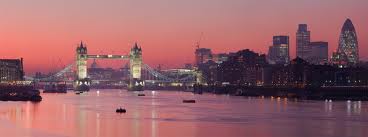
London’s Tower Bridge is one of the most recognizable bridges in the world. Despite being disliked by many when it was built in 1894 the bridge soon became one of the London’s most famous landmarks.
Piccadilly Square
Piccadilly Circus is a busy square in the heart of London. It is famous for the fountain that was installed here at the end of the 19th century and for the neon advertising that turned the square into a miniature version of Times Square or Beijing’s Tiananmen Square.
New York
Empire State Building
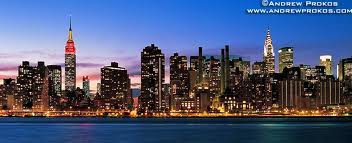
Tired of staring up at New York City skyscrapers? Check out the view of New York City from atop the Empire State Building. The Empire State Building is a classic New York City attraction, and offers visitors wonderful views of New York City and the surrounding area.
Statue of Liberty”The Statue of Liberty was a gift to the United States in honor of the friendship established during the French Revolution. The Statue of Liberty has become an American symbol of freedom and welcome to the immigrants who come to the USA looking for a better life. While the interior of the Statue of Liberty is closed for improvements, you can still visit Liberty Island and nearby Ellis Island.
Grand Central TerminalRenovations since its opening in 1913 have turned Grand Central into more than just a hub for transportation — there are shops, dining and more available to visitors. Grand Central is both an essential transit hub and a beautiful example of Beaux-Arts architecture.
An old Chinese saying goes like this: “If you want to be rich, you must first build roads.”
Economy maybe said to be slowing down
but the rumbling is still being heard loud & clear!
In the Grand Prix, when others stall, you roar!
And, boy, have they built some roads & other mega infrastructure. In the past year, we’ve seen the world’s longest sea bridge, the world’s longest gas pipeline and a high-speed railway that’s left everyone else in the dust — literally.
The resultant infrastructure push is incredible. A list of 108 super projects is floating around China as we picked out the 45 coolest ones to showcase here.
From highways spanning the continent, to the largest wind power base in the world, to a modern Silk Road that links Europe and India, to new cities in the desert, building & conglomerating 9 giant cities in the Pearl River Delta Region into one megalopolis in excess of 50 million, China is showing what it really means to do big things.
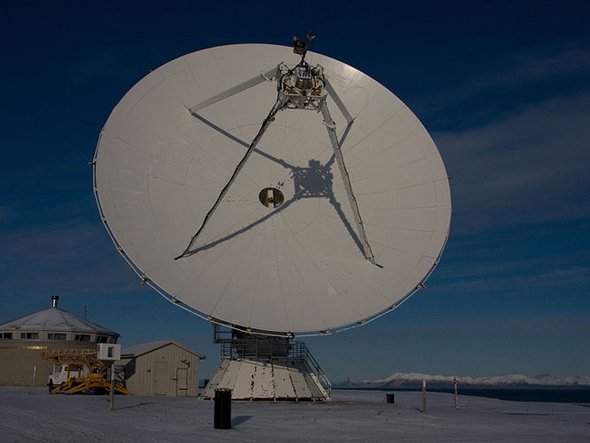
$102 MILLION: The Pingtang Telescope will be the world’s largest radio telescope when completed in 2016
Here in this slideshow is the presentation of the selected projects:
This slideshow requires JavaScript.
$176 MILLION: Shanghai Synchrotron Radiation Laboratory conducts China’s major scientific projects and is the country’s most expensive research facility
$368 MILLION: The Hainan power grid project is China’s first underwater cross sea power grid and will link the southern island of Hainan to mainland China
$473 MILLION: The Qinling Tunnel is the longest highway tunnel in China
$760 MILLION: China Central TV Headquarters is a loop of six horizontal and vertical sections covering 1,551,837 ft.
$900 MILLION: The Tianhuangping hydroelectric project is the biggest in Asia and plays a vital role in providing power supply in eastern China
$1.1 BILLION: The Shanghai World Financial Center Project is home to the second highest hotel in the world – the Park Hyatt Shanghai is on the 79th floor
$1.3 BILLION: The Baltic Pearl Project is China’s largest foreign development project and consists of residential and commercial properties outside St. Petersburg, Russia
$1.7 BILLION: The Wuhan Tianxingzhou Yangtze River Bridge is a combined road and rail bridge across the Yangtze River in the city of Wuhan
$1.7 BILLION: The Nanjing Metro Line was completed in 2005 and is used by almost 180 million people a year
$1.8 BILLION: The Shanghai Yangtze River Tunnel and Bridge is the fifth longest cable-stayed bridge in the world
$1.9 BILLION: The Chengdu Shuangliu Airport will handle 35 million passengers annually
$2.12 BILLION: The Wuhan Railway Station serves the world’s fastest trains at 217 mph
$2.2 BILLION: At 128 stories, The Shanghai Tower will be the tallest skyscraper in China and the second tallest in the world when completed in 2014
$2.2 BILLION: The Qinshan Nuclear Power Phase II will add to the Qinshan plant and have the most nuclear reactors of any site in the world
$2.88 BILLION: The Hongyanhe Nuclear Power Plant is the first nuclear power station in northeastern China and will reach 45 billion kWh annually
$3 BILLION: The Great Gabon Belinga iron ore mine is China’s largest African mining operation
$3.3 BILLION: The Tianjin offshore drilling rig is China’s national base for offshore oil development
$3.5 BILLION: The Beijing Capital International Airport Terminal is the largest single construction project in China and the third largest building in the world
$4.5 BILLION: Lingang New City, a planned city to be completed in 2020, will house almost 1 million people
$6.3 BILLION: The Xiangjiaba Hydro power Project is expected to be completed by 2015 and generate 31 billion kwh annually
$5 BILLION:The Shanghai-Hangzhou maglev project will create the fastest inter-city train in the world at 280 mph
$6.3 BILLION: The Beijing South Railway Station is Asia’s largest railway station
$6.5 BILLION: China is one out several countries that signed a contract to re-construct the ancient “Silk Road” linking China and India with Europe
$6.76 BILLION: Xiluodu Dam will be the third tallest dam in the world and second largest hydro-power station in the country.
$7.89 BILLION: The Su-Tong Yangtze River Bridge is the world’s longest cable-stayed bridge
$8 BILLION: The Shanghai Yangshan Deep Water Port Project will handle the largest container ships in the world
$8.3 BILLION: The Nigerian Railway Modernization Project is China’s largest overseas project
$10.2 BILLION: The Yangjiang Nuclear Power Station in Guangdong province will be the biggest nuclear power plant in China
$10.2 BILLION: The Guangdong Yangjiang Nuclear Power Station will be China’s newest power plant when completed in 2013
$10.7 BILLION: The Hong Kong-Zhuhai-Macau Bridge project will connect two huge regions when completed in 2016
$12 BILLION: The Hainan Wenchang Space Center launch project will be the country’s newest launch center
$14 BILLION: The Harbin–Dalian High-Speed Railway will serve the first high speed train in northeast China
$16 BILLION: Hangzhou Bay Bridge is the world’s longest cross-sea bridge project
$18.2 BILLION: The Jiuquan Wind Farm will be the largest wind power base in the world when completed in 2013
$23.1 BILLION: The Kunming New International Airport will be China’s 4th largest aviation hub
With no room for expansion at the current Kunming Wujiaba International Airport, the local government decided to build a new airport tentatively called Kunming Xiaoshao International Airport. With the completion of the new Kunming, the old Kunming will be demolished and all operations will be transferred from the old to the new.
$33 BILLION: The Beijing Shanghai High Speed Railway is the world’s longest high-speed rail project
$44 BILLION: China is one out of 32 countries who signed an agreement for the construction of highways to span the continent and reach Europe
$45.4 BILLION: The Ningxia’s Ningdong Energy and Chemical Industrial Base will double the province’s GDP and generate $30.3 billion after the planned 2020 completion
$62 BILLION: The South-to-North Water Diversion Project is expected to divert 44.8 billion cubic meters of water to the north by 2050
$306.7 BILLION: The “Turn the Pearl River Delta Into One” will result in an urban “mega-city” bigger than Wales
$458 BILLION: The Tianjin Harbor Industrial Zone is one of the largest chemical ports in the world
Other Great Chinese Infrastructures worth ment
$2.6 billion: China’s construction of the Libyan coastal railway project $4.5 billion: Guangzhou Nansha Lair shipbuilding base project $5.0 billion: Niger oil project$5.4 billion: Changxing Shipbuilding Base will be the world’s largest shipbuilding base project $7 billion: Sudanese oil project $7 billion: China’s construction of the Algerian East-West Highway Project $10.7 billion: Baosteel million-ton steel base project in Zhanjiang East Island$11.7 billion: Rural Market Project $20 billion: Portland Oilfield Sinopec investment $26.8 billion: Tianjin ethylene project $38 billion: Zhangzhou and Fuzhou-Xiamen railway projects $77.5 billion: Super markets projects $77.5 billion: Liaoning Hongyanhe Nuclear Power Project $237 billion: State Environmental Protection Eleventh Five-Year Plan $800 billion: Zhejiang Sanmen nuclear power project $900 billion: Northern Energy and Chemical Base project$1 trillion: Tianjin Binhai New Area investment.
Even more are listed – There are just too many to list them all.
Care to add up the costs of these projects yourself?
Is China building faster than the market can keep up?
In 2005, it was awarded as a national AAAA scenic spot.
It’s home to some 130 rare white tigers.
White Tigers do not exist in the wild, they are purposefully inbred in captivity to meet the demand of the paying public. The kind of severe inbreeding that is required to produce the mutation of a white coat also causes a number of other defects in these big cats. The same gene that causes the white coat causes the optic nerve to be wired to the wrong side of the brain, thus all white tigers are cross eyed, even if their eyes look normal. They also often suffer from club feet, cleft palates, spinal deformities and defective organs.
YouTube video below:
Located in the biggest city Guangzhou in south China, Chime-Long Xiangjiang Safari Park is the biggest animal theme park in Asia, covering an area of 130 hectares. Chime-Long Xiangjiang Safari Park combines science research, tour and science education, aiming at “protecting wildlife and natural resources”. Since it opened to the public in 1997, the park has already received over 10,000,000 tourists.
Chime-Long Xiangjiang Safari Park is also known as the heaven of animals, as there are 460 species, among them there are many international endangered animals. For example, there are more than 130 white tigers born in Chime-Long Xiangjiang Safari Park, which covered over 50% of the whole amount of this species on earth. Besides the white tigers, there are white lions, white kangaroos, red-headed Cranes, Flamingos, Pygmy Hippos, polar bears and so on.
The park is the best place for tourists who are keen to be close to nature & animals. Inside the park, visitors could get as close as they can to the animals, feed the animals by their own hands, as well as take photos with the animals.
Slideshow of more white tigers:
This slideshow requires JavaScript.
It is a great family holiday destination.
And white tigers are such a great attraction.
There are also a good many white tigers to captivate you in the confinement round the resort hotel restaurants.
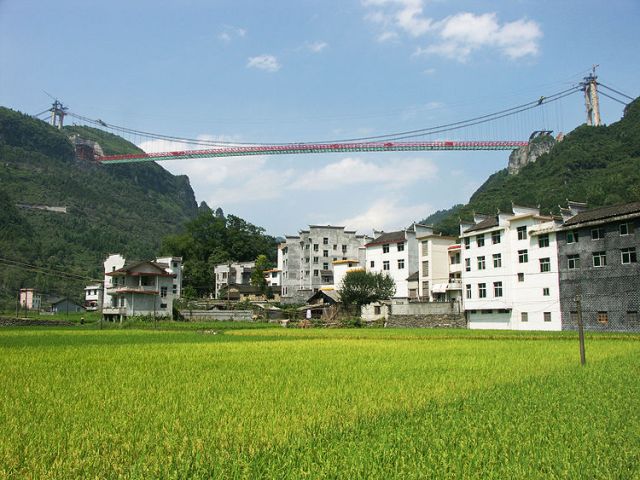
With a main span of 1,146 metres (3,760 ft) and a deck height of 350 metres (1,150 ft), it is the sixth-highest bridge in the world and the world’s twelfth-longest suspension bridge. Of the world’s 400 or so highest bridges, none has a main span as long as Aizhai. It is also the world’s highest and longest tunnel-to-tunnel bridge. The bridge contains 1888 lights to increase visibility at night. (Wikipedia)
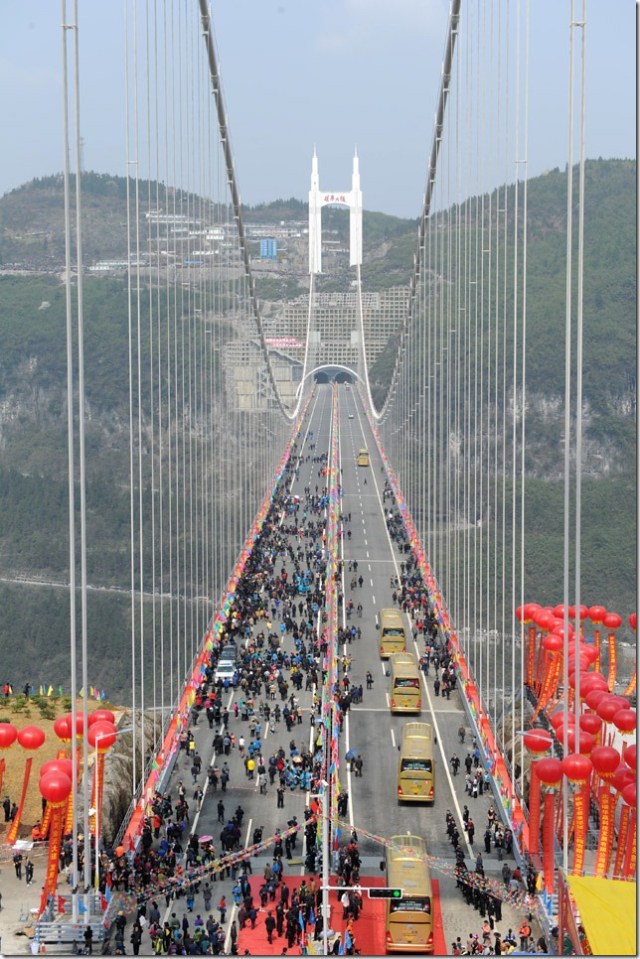
Construction took five years. Work finished at the end of last year, making it among the world’s longest and highest suspension bridge, carrying traffic 355 metres above the foot of Dehang Canyon. Construction of the bridge started in October 2007 and its main sections were completed at the end of last year. It is designed to help ease traffic in the mountainous region, where queues are common due to the narrow, steep and winding roads.
A brave worker put the final touches on the Anzhaite Bridge.
The bridge, which connects to two tunnels, was built to ease traffic. Drivers can take in the views of the Dehang Canyon People and traffic during the opening ceremony.
Vehicles motor along a two-way, four-lane motorway. Pedestrians walk along it on a special walkway under the road.
Aizhai is the fourth suspension bridge in China to cross a valley so wide that it seems to be connecting two mountain ranges. The first three were the Siduhe, Balinghe and Beipanjiang 2009 bridges. Located deep in the heart of China’s Hunan Province near the city of Jishou, the suspension bridge is the largest structure on the Jishou to Chadong expressway with a deck 1,102 feet (336 mtrs) above the DeHang Canyon.
The two tunnels on either side of the Aizhai Bridge allowed the engineers to use the mountain top for the location of one of the towers, reducing its height to just 165 feet (50 m) – unusually short for a bridge with a span nearly as long as the Golden Gate bridge at 3,858 feet (1176 m). In addition to cost savings, the stubby support also allows the bridge to blend more naturally into its surroundings. The taller bridge tower is no less unique with side span cables that soar down the backside of a mountain, making first time visitors quizzical as to what exactly lies ahead.
With most of the structure hidden from view, the bridge will come as a jaw-dropping surprise whether you enter the canyon from either tunnel. Due to a gap of approximately 328 feet (100 m) between the last truss suspenders and the tops of the bridge towers, the engineers added some additional ground anchored suspenders to stabilize the two massive suspension cables and reduce any oscillations that could damage other components of the bridge. An overlook and visitors center will offer additional views of the broad valley.
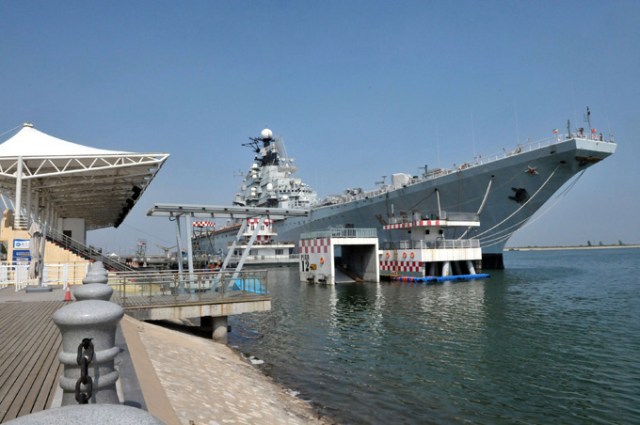
The Kiev, a 1,000 foot vessel, once the pride of the flagship of the mighty Soviet navy’s Pacific fleet (first began December 1972), serving them well for almost twenty years, as well as being able to hold more than a thousand crewmen, she could be loaded with dozens of missiles – some nuclear-tipped.
But now the Kiev is leading a much more sedate & humble life . . . available for business retreats, intimate getaways or simple relaxation (without actually getting away). That’s because the Chinese have bought the aircraft carrier and transformed her into a floating luxury hotel, the world’s first luxury aircraft carrier hotel, costing $15 Million.
It’s strange to think that a ship that was once a weapon of war is now a place of relaxation and fine dining.
The Kiev will stay permanently docked at theTianjin Binhai Aircraft Carrier Theme Park. Much as a Soviet-era sailor might resent the indignity, Kiev won’t go back out to sea. She’ll entertain guests and clients at anchor, a bizarre museum to a different country’s naval power. Guests will relax with Western-style cuisinein ornate luxury suites, dreaming of Chinese seapower.
Sold to Tianjin International Recreation Port in 2000, the Kiev has been refitted, furbished & transformed into a world-class floating hotel with 148 room – including two presidential suites, three VIP guest rooms and 137 standard rooms. Since it was purchased over a decade ago, the Kiev has also been upgraded with a luxury restaurant – something the original crew would have no doubt killed for.
Long after Shanghai’s 2010 World Expo has gone, the China Pavilion still stands magnificently. This striking immense red structure is the first building you’ll see upon entering the Expo Park & the last one upon leaving.
It’s certainly reflecting the theme: Better City, Better Life.
Timelapse and video shot on Canon 7d and GoPro Hero HD for SeeChina.org.cn and Danwei.tv by Janek Zdarski
“The main structure of the China Pavilion, “The Crown of the East,” has a distinctive roof, made of traditional dougong or brackets, which date back more than 2,000 years. The dougong style features wooden brackets fixed layer upon layer between the top of a column and a crossbeam. This unique structural component of interlocking wooden brackets is one of the most important elements in traditional Chinese architecture. Dougong was widely used in the Spring and Autumn Period (770 BC-467 BC).”
The contour design of the pavilion is based on the concept of “Oriental Crown, Splendid China, Ample Barn, and Rich People,” to express the spirit and disposition of Chinese culture. The pavilion has a core exhibition area on the top floor, an experience area on the second and a functional area on the first. China’s achievements in urban development from ancient to modern times are shown as the core theme of the pavilion.
The China Pavilion sits right next to the Expo Boulevard and the Sun Valleys, which act as the center of the Expo. (Slideshow Below)
This slideshow requires JavaScript.
Painted the same red as the Forbidden City, the China Pavilion consists of four pillars with 6 floors expanding out and up. The 30 meter high roof is constructed from 56 wooden brackets (dougong), which represent the 56 minority ethnic groups of China. Additionally, nine folded scripts engraved on the surface of the building list the short names of China’s provinces.
Designed by He Jingtang, the director of the Architectural Academy of the South China University of Technology, “the Pavilion includes many energy saving technologies. The exterior of the structure offers a temperature buffer zone and natural ventilation for the interior, and the inverted shape of the pavilion acts as shading for entire building as well as the courtyard below. The roof of the structure includes eco-friendly landscaping and harvests rainwater.”
The China Pavilion, also known as the Oriental Crown, represents the spirit of the people of China and is one of the 5 permanent green buildings on the Expo Park converted into a national history museum.
Video hosted by Nancy Merrill below showing the background to its construction:
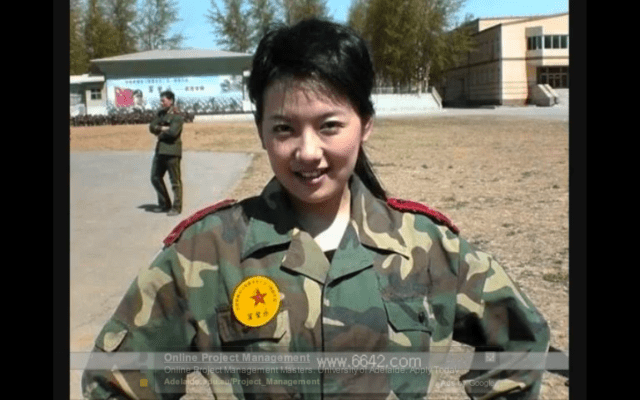
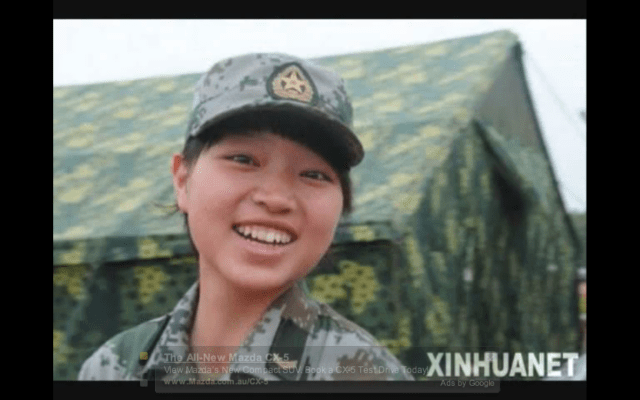
As opposed to all Western negative reports, Chinese women are changing China and the world.
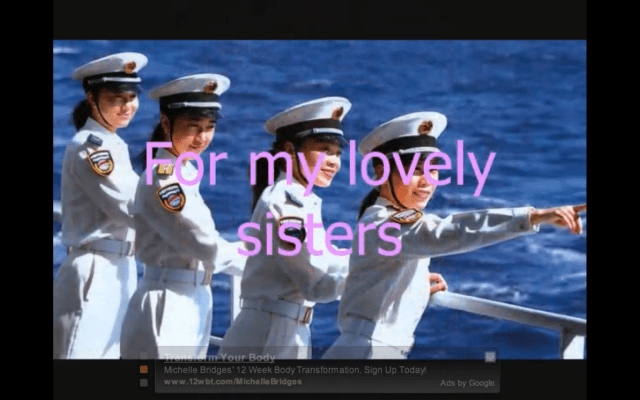
From the social-economic front to the war front, we find women in China playing a significant role.
Confucian patriarchal hierarchy has been an impediment to women’s leadership in China, but not since Mao Zedong said that ”Women hold up half the sky”. . . a view of women as a resource that ought to be deployed outside the home – fueled the rise of many women in professional fields,” said A Report on Women’s Leadership in Asia, entitled “Rising to the Top?”
As a result, Chinese women, who make up 49 percent of the population and 46 percent of the labor force, have achieved a higher proportion in the top layers of management than women in many Western countries, said the report which mostly analyzed data on gender equality and women’s leadership in the region. ”In China, gender equality embedded in communist ideology has mitigated the impact of Confucian patriarchy,” it said.
The findings of the report may be summed up:
In East Asia, “China leads in terms of women in senior management.”
Some 29 million, a quarter of the national total of China’s entrepreneurs, are female.
The highest percentages of women employed in Asia are also in China.
Half of the 14 billionaires on Forbes magazine’s 2011 list of the world’s richest self-made women are from mainland China. Many of them are property magnates; the others focus on retail and consumer goods.
“The pathway for female entrepreneurs tends to lead from excellent universities to high posts at large, state-owned enterprises, allowing women to build up business acumen, managerial skills, and networks that later enable them to raise capital for their new enterprises.”
Women in Asia are closing the gap with males in health, education, and employment, but are severely under-represented at top leadership levels, paid less than men, and disadvantaged by cultural and social norms.
Since 1949 China has promised women’s equality. “Women hold up half the sky,” Mao said. His revolution turned society and family upside down: It abolished family property, and replaced family-jobs patronage with a state bureaucracy. Mao put a final, nationwide end to the centuries-old practice of “foot binding.” For a time, communism was a girl’s best friend.
China’s 1950 marriage laws, for example, made men and women, at least theoretically, equal. They banned bride sales and concubines, and legalized divorce. For centuries men were allowed three or four wives, and women had no rights. It was a feudal world with brutally stark winners and losers. The film “Raise the Red Lantern,” with its bitter, subtle infighting among concubines vying for the attentions of a patriarch, captures something of those family dynamics.
According to Martin Whyte of Harvard University, “Changes in the Chinese family were imposed quickly and radically, In most societies these changes would take generations. In Mao’s China they were compressed into a time frame, really, of two or three years. Changes [involving women] are probably more important than the Great Leap Forward or the Cultural Revolution. By 1960, China had a ‘modern society’ in cities.”
Ironically, China is a developed country inside a developing country. Progress for women is found in cosmopolitan centers where law and culture are emphasized. Shanghai has always been a mecca for females. The mid-20th-century novels of Eileen Chang set in Shanghai that illustrate an independent voice for women are now extremely popular among college students.
In the metropolis, the family is undergoing a “permanent revolution.” The phrase is actually Mao’s. Courtship and choice between young people is more open – made possible by new wealth – new attitudes, and cellphones, and it is giving rise to new family types, the diminishing of patriarchy, and an often more confident and assertive female.
China’s patriarchy is a feudal holdover, scholars say, where land equals power. Male children inherited land. In an urban culture, where mobility is valued, and land is not an issue, female talents are more emphasized.
Changes of the nature as described above breed a different set of social problems, which can only be judged by time alone.
Recent Related Articles by Paul:
1. China’s First Lady-in-Waiting (Sun. 22 April 2012)
2. Fu Ying: “The West Has Become Very Conceited” (Tuers. 24 April 2012)
The number of women in the army is itself staggering at about 2 million
YouTube Video
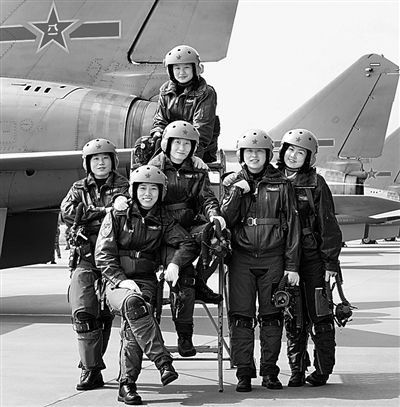
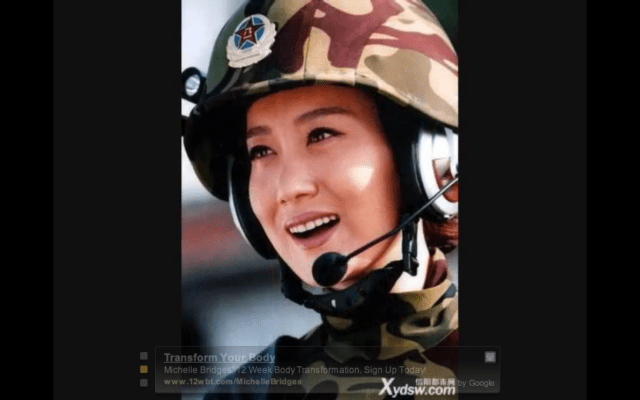
Speaking just on the Female Airforce, according to a Xinhua News Agency article the first six ”loyal and fearless” female pilots flying with the Xian JH-7 fighter bomber have just finished the training required to perform all-weather air-to-ground missions and are now able to attack and destroy targets located on unfamiliar ground, hidden by fog, using precision munitions.
The female fighter pilots, currently assigned to a PLAAF (People’s Liberation Army Air Force) Regiment, were selected from more than 20 million girls graduated from high school in Sept. 2005. After attending the flying school, they were assigned to a front line squadron in March 2011, where they conducted advanced training that included formation flying, low altitude attack, live firing exercises using conventional weapons.
The Xinhua article depicts the female pilots as “skilled” “loyal” and “fearless” and provides also a group shot of the six JH-7 pilots with flight suits and helmets. Wow, not bad for a totalitarian state where the information on women (and women’s rights..) is usually hidden or classified as secret.
Below these female fighter pilots are among some 328 female pilots recently recruited and trained by China’s People’s Liberation Army Air Force. They don’t just look good, they can roar through the skies faster than the speed of sound. And they don’t just fly normal air force missions, they also take part in disaster relief flights, research-oriented trial flights and afforestation. They have also flown in China’s 60th national day parade.
She was the Chinese ambassador to the United Kingdom from March 2007 to 2009. From 2004 to 2007 she was the ambassador to Australia. She led the Chinese Delegation during talks with North Korea that led to the latter country’s decision (later reneged on) to abandon nuclear weapons.[2]
In 2008, she indicated the negative press coverage of the protests towards the 2008 Beijing Olympics could create possible backlash from China towards the west, claiming that the “demonising” approach to the protests harmed the west’s image in the eyes of the Chinese population.
She was cited by The Guardian newspaper to have said: “Many who had romantic views of the west are very disappointed at the media’s attempt to demonise China. We all know that demonisation feeds a counter-reaction”.[3] Currently she is Vice Foreign Minister of PRC.[4]
In February 2010 she was recalled as UK ambassador and replaced by Liu Xiaoming. (Source: Wikipedia)
In another World Policy Forum intervierw: FU Ying on China’s policy
VERY INTERESTING. A WOMAN OF HIGH CALIBRE, INTELLIGENCE AND FULLY CONVERSANT WITH WORLD EVENTS. IT IS SUCH A PLEASURE TO HEAR ANSWERS TO QUESTIONS ASKED JUST OFF THE CUFF. INDEED, GREAT LEADERSHIP IN A WOMAN!
In a SPIEGEL interview, China’s Vice Minister of Foreign Affairs, Fu Ying, 58, accuses Europeans and Americans of perpetuating Cold War . . .
‘The West Has Become Very Conceited’
(As shown by the intelligence & insights of Madame FU Ying, China’s Vice Minister of Foreign Affairs in a SPIEGEL interview)
In a SPIEGEL interview, China’s Vice Minister of Foreign Affairs, Fu Ying, 58, accuses Europeans and Americans of perpetuating Cold War stereotypes of her country, rejects allegations surrounding the treatment of artist Ai Weiwei and disputes notions that Beijing would like to rule the world.
SPIEGEL: Madame Fu Ying, few countries are more interesting to the West right now than China — and few others alarm the West to the same degree, now that you have launched your first aircraft carrier. Why does China need to arm itself to this extent?
Fu Ying: The first aircraft carrier going to sea is a very exciting event in China. It’s something the Chinese people longed for. People think it’s a natural step in the growth of the Chinese military — although this so-called aircraft carrier was really just a framework of a second-hand aircraft carrier that we refitted and will only be used for scientific research and training purposes. It’s far, far from being a full-fledged aircraft carrier. In that sense, China is well behind other countries, let alone the United States which has had a mature and highly developed fleet of aircraft carriers for a long time now.
SPIEGEL: Are there not more pressing areas where that money could go rather than towards increasing the military budget?
Fu Ying: A number of areas are given greater priority than the development of our defenses. The greatest emphasis is on economic development, the well-being of the people and the sharing of the wealth. My daughter’s generation is the first that never experienced hunger in this country. That is unbelievable progress. Your concern about the Chinese military appears to me to be clouded by stereotypes about China based in the Cold War thinking of the division between us ideologically. You feel comfortable with aircraft carrier ownership by your allies, like the United States and France, but you are more concerned if China also has one.
SPIEGEL: How far will China go in terms of defending its interests? In the dispute over the sovereignty of the South China Sea, the tone can at times be quite sharp.
Fu Ying: We, too, are wondering why there is such strong rhetoric, since the countries involved are already engaged in dialogues on the basis of the Declaration on the Conduct of Parties in the South China Sea in 2002. But this is a dispute of words, and what matters is that the shipping traffic in the South China Sea remains peaceful and there is no war or conflict going on.
SPIEGEL: The Americans clearly have doubts about your intentions. Pakistan is believed to have provided China with access to the wreckage of the high-tech US helicopter that crashed during the operation against Osama bin Laden. Are you in a position to confirm whether this is true?
Fu Ying: Both China and Pakistan have denied this rumor. I think the most important thing is the question of whether China and the US are enemies. Are we going to be in a war? Are we preparing for a war against each other? We certainly don’t see it that way. It is not very friendly that the US maintains a weapons embargo against China. We have no intention to threaten the US, and we don’t see the US as a threat to us. The West tends to place China in the framework of the Cold War. This puzzles China a lot.
SPIEGEL: Many Germans, while respecting China’s development, see your country more as a rival than a partner. Is that something that you can understand?
Fu Ying: I’m grateful you raised that point because it is something that has been on my mind for a long time. If you fundamentally accept that China’s growth has lifted countless people in the country out of poverty, then you also have to agree that China has done things right. One must also accept that there can be a different political system. The countries in the West think they have the only system that works and they have narrowed down “democracy” to a multi-party election system, which works well for some countries, most of the time, but as we are now seeing with the latest financial crisis, they sometimes experience difficulties too. The West has become very conceited. At the end of the day, democracy alone cannot put food on the table. That’s the reality.
SPIEGEL: China’s decision-making process appears to be shielded with black box secrecy, and even long-time observers are puzzled over how political decisions are taken. Does it really come as a surprise to you that many are wary of China’s intentions?
Fu Ying: China’s political system is a product of China’s history. It is based on the country’s own culture and is subject to a constant reform process, which includes the building up of democratic decision-making processes in China. In order to make the right decisions, you have to listen to the people and their criticism. No government can survive if it loses touch with the people and reality. And we have a very critical view of ourselves.
SPIEGEL: The West perceives a lack of transparency and rule of law in the Chinese model.
Fu Ying: I think at the moment it is the Western governments that are having problems. We are observing what is going on in the West. We try to understand why so many governments made so many mistakes. Why do political parties make commitments they cannot fulfill? Why do they spend so much more than they have? Has the West been stagnating since the end of the Cold War? Or has it just become conceited?
SPIEGEL: Democracies are very complicated, and compared to tightly ruled systems, they are at a disadvantage. Do you feel superior?
Fu Ying: Superiority is the not the word we use. The Chinese are very modest. We respect your success and we learn from you. You are in the post-industrialized era. Many of the problems you encounter might occur in China later. So we want to see how you address those problems, and if we can learn from you.
Part 2: ‘The Door to Dialogue’ with the Dalai Lama ‘Is Always Open’
SPIEGEL: The case of recently arrested artist Ai Weiwei, who is well-connected in Berlin, was seen in Germany as a provocation. Was it intentional that he was arrested shortly after German Foreign Minister Guido Westerwelle attended the opening of an exhibition in Beijing with Chinese officials?
Fu Ying: That’s why I say you are conceited. You really take yourself very seriously. Why would a country like China decide on domestic matters and try to make them coincide with a visit by a foreign minister from a European country? I don’t see the linkage. The case you are discussing is a legal matter. I am not really interested in this case.
SPIEGEL: If it is a legal case, then why wasn’t Ai Weiwei publicly charged? Instead he disappeared for 81 days. The allegations of tax evasion don’t appear to be very convincing.
Fu Ying: If you have such great interest in this case and believe there has been a breach of law or rules in his case, you may very well raise it. We can pass it on to the authorities. But how many more Chinese artists, writers, singers and movie stars do Germans know? Your view of China is very narrow and negative, and that’s why we don’t feel comfortable discussing human rights with you. Our understanding of human rights is based on the UN Charter, which guarantees political rights, the right to life and the right to development. But in your view, human rights seem to concern only some individuals who are subverting the state or are breaching laws.
SPIEGEL: Some of these people symbolically represent hundreds of others.
Fu Ying: But please try to put things into perspective. We have 1.3 billion people living in China. Since day one of our relationship with the West, human rights have been a subject for discussion. Many issues were discussed and solved and the content keeps changing. But today the Western understanding of human rights is used as an instrument against China, regardless of the fact that China has improved very much in this area, and no matter how intensively we are working on the issue.
SPIEGEL: Can you say anything more concrete about the Ai Weiwei case?
Fu Ying: He is being investigated and he has been released after paying bail. I don’t have any further comment on him.
SPIEGEL: As one dictator after another was chased out in the Arab world this year, critical journalists, attorneys and human rights activists in China have been experiencing a wave of repression, with some even speaking of a “Chinese Winter”. Does China fear a handful of activists?
Fu Ying: What was happening in the Middle East is an event that attracted attention all over the world. We, too, are trying to understand what led to these revolutions. As for China, I don’t see any direct linkage. Again, it’s the habit of some Western analysts to connect everything bad with China. If you think your society is strong enough to avoid infection by the Arab revolution, what makes you think that the Chinese society is so weak that it has to be infected? Eighty-seven percent of Chinese surveyed in a poll by the Pew Research Center in 2010 said the government is on the right track. In the US, however, recent polls show that a lot of people think the country is not on the right path.
SPIEGEL: China always shows pretty strong reactions when Western leaders meet with the Dalai Lama. You recommend that other countries should solve their disputes through dialogue. Why hasn’t China succeeded in reaching an agreement with the Tibetan spiritual leader?
Fu Ying: Our difficulty with the Dalai Lama is his political views and demands for Tibet independence. If you read his website, you will see what he wants. In essence, he wants an independent Tibet.
SPIEGEL: He has explicitly rejected that, saying he doesn’t want separation, but instead greater autonomy.
Fu Ying: Tibet is part of China. But, of course, the door to dialogue is always open. Dialogue is always welcome. I am glad more and more people are visiting Tibet, and more and more people understand life in Tibet better now.
SPIEGEL: Unfortunately, journalists are not allowed to access Tibet.
Fu: There is a bit of concern about the intentions and motives of Western journalists. Sometimes it’s as if some of them come to a wedding and only want to inspect the contents of a dark corner. They want to show the world there is no smiling bride, there is no groom and no happy friends — just darkness. They write about it extensively. They may be facts, but they are very selective facts.
SPIEGEL: The Dalai Lama has officially retired from his offices. Is this not a good point in time to seek a peaceful solution?
Fu Ying: The fact that he is withdrawing from his political offices shows that he does regard himself as the king and god in one and is thus the owner of Tibet. But those days are over. Tibet is finally undergoing development, and the region truly is doing better and better. So we will see whether the Dalai Lama can relinquish himself of his political demands.
SPIEGEL: It’s not only Tibet which is developing at a fast pace. Lately, the West has been up to its neck in debts, but China has experienced fantastic growth. Has communism ultimately defeated capitalism?
Fu Ying: We are not the Soviet Union. During the entire Cold War, the West and the Soviet Union were at each other’s throats. You each wanted to see the other side’s demise; that was your strategic objective. But China was not part of your fight and we have always supported Germany’s reunification.
Part 3: ‘China Has No Intention to Rule the World’
SPIEGEL: As of the end of June, China held US bonds with a total value of $1.165 trillion and European bonds worth $700 billion. Economically, China is already a superpower today. What does that mean for the political balance of power?
Fu Ying: Many say that power is shifting from the West to the East, but we believe that it is a process of diffusion. It used to be within the Western world, but now it is also diffusing to a wider world. There is a need to reform the current world structure, which was built after World War II to the benefit of around 1 billion people of the developed world. China is only one of the newly emerging countries. Brazil is growing. India is growing, as are parts of Africa. In the future, 3 to 4 billion people will be coming into this process of wider industrialization. But that reform needs to be an incremental process that is achieved not through war and not through conflict, but through dialogue.
SPIEGEL: Will the West wind up on the losing side?
Fu Ying: You are currently experiencing difficulties, but you have gone through so many difficulties in the past — Europe and the US — and you always bounce back. We are also interdependent, and your loss is not necessarily our gain. We’re in one boat. And we indeed worry when Western economies are experiencing difficulties. That’s why it is good that German Chancellor Angela Merkel and French President Nicolas Sarkozy are taking the lead. Very recently, my colleagues and I discussed the future of the European Union. The prevalent view was that if you work together to address the current difficulties, then the EU will go forward to become more integrated. If you do not, the euro zone might collapse.
SPIEGEL: What would it mean for China if the financial crisis in the West extends to other regions?
Fu Ying: Everyone would suffer.
SPIEGEL: Many observers believe that the legitimacy of the Chinese government hinges on its economic success. In the event of an economic crisis, would you need to be worried about your country’s stability?
Fu Ying: Do Western governments change their multi-party system during an economic crisis? I don’t think so. Why should we be worried? Having said that, our reform is an ongoing process and we will continue to move forward.
SPIEGEL: For a long time, the West believed that the developments in China were a win-win situation for everyone involved. Now, however, the impression is solidifying — even within international institutions like the World Trade Organization — that the Chinese want to shift the balance of the global economy to their advantage. The long-term policy of keeping the Renminbi artificially undervalued is just one example of this that is often cited.
Fu Ying: China has no intention to rule the world. But if you continue to see yourself as the center of the world, if you see yourself as the monopoly of all truths, all the right beliefs and all the right values, then you will always find it uncomfortable when you realize that the world is diversified. There are different values and cultures. And if you believe you have won the Cold War, then the Cold War is finished, over, done. We are living in a new world. Get down off your high horse of being on top of the world. Come down to be equals and join us on a level playing field instead of creating a new rival in the style of the Cold War.
SPIEGEL: You maintain very close relations with leaders like Kim Jong Il in North Korea, whose people are starving because he refuses to open up his country, or North Sudan’s President Omar al-Bashir, who is being sought for crimes against humanity. What is your philosophy regarding this?
Fu Ying: Our own sufferings in history have taught us that we should never try to impose on other countries or support others to impose. We have a permanent seat on the United Nations Security Council; we have hundreds of Chinese UN peacekeepers in Darfur, Sudan. If every time you don’t like the leader of a country and then move in and intervene, that would lead to chaos. Think of your own experience in intervention, which is not always successful.
SPIEGEL: You’re referring to the military deployment in your neighbor country, Afghanistan.
Fu Ying: You need to reflect on your own experience.
SPIEGEL: China weakens institutions like the United Nations, in particular, because you frequently water down joint resolutions against Iran, North Korea or Syria, whose President Bashar Assad allows the army to fire against his own people, to the point of ineffectiveness. Where are the limits to China’s tolerance of human rights violations?
Fu Ying: The case of Iran is part of the whole security situation. That’s why we have the five-plus-one discussions on Iran. In the case of the Democratic People’s Republic of Korea, we have the six-party talks. I believe patient diplomacy will pay off in the end.
SPIEGEL: With regard to Iran, this patience could result in us losing a race against time in the end.
Fu Ying: We don’t have a better solution.
SPIEGEL: Given differences of opinion like that, how are powers like China and the USA supposed to cooperate in dealing with global challenges like cyber security, financial stability, food security and nuclear proliferation?
Fu Ying: We need to overcome the wall of distrust. If we only allow ourselves to be led by our own views, our own feeling, our own emotions, even our own values, then we will only create more problems. Be it peacekeeping missions or the protection of shipping channels off the coast of Somalia or climate change, I think you will find China to be an enthusiastic participant in world affairs.
SPIEGEL: How does it feel to be viewed as a new economic superpower?
Fu Ying: It is flattering.
SPIEGEL: Does it make you nervous, as well?
Fu Ying: Not at all. We don’t view ourselves as a superpower. You are not going to see a USA or a Soviet Union in China. You are going to see a culturally nourished country with a big population, being more content, being happy, being purposeful — and it will be a friend to the world. There is no reason to worry about China.
SPIEGEL: Madame Fu Ying, we thank you for this interview.


 See the new City of Ordos in Inner Mongolia, China where the crowning of Miss World 2012 took place. It was won by




















 Paul Chong's Blog