The New Cancer-Fighting Superfood – Black Glutinous Rice – Pulut Hitam

イカスミで真っ黒です。
イカスミで真っ黒です。 (Photo credit: Wikipedia)
Black rice
Black rice (Photo credit: Wikipedia

Lots of natural foods & remedies are not promoted or even made known to the public simply because it’s against the commercial interests of the pharmaceutical corporations. People, particularly the Asians, have long been consuming black glutinous rice without really knowing why. Now its value & benefits are scientifically proven & revealed. What a load of surprises & goodness!

BLACK RICE IS THE NEW CANCER-FIGHTING SUPERFOOD, CLAIM SCIENTISTSCarried on Friday, 27-August-2010 by Daily Mail , UKhttp://www.dailymail.co.uk/health/article-1306356/Black-rice-new-cancer-fighting-superfood-claim-scientists.htmlhttp://www.dailymail.co.uk/health/article-1306356/Black-rice-new-cancer-fighting-superfood-claim-scientists.html 

Black rice is low in sugar but packed with healthy fibre and plant compounds that combat heart disease and cancer, according to scientists Black rice – revered in ancient China but overlooked in the West – could be the greatest ‘superfoods’, scientists revealed today. The cereal is low in sugar but packed with healthy fibre and plant compounds that combat heart disease and cancer, say experts. Scientists from Louisiana State University analysed samples of bran from black rice grown in the southern U.S.  They found boosted levels of water-soluble anthocyanin antioxidants. Anthocyanins provide the dark colours of many fruits and vegetables, such as blueberries and red peppers. They are what makes black rice ‘black’. Research suggests that the dark plant antioxidants, which mop up harmful molecules, can help protect arteries and prevent the DNA damage that leads to cancer. Food scientist Dr Zhimin Xu said: ‘Just a spoonful of black rice bran contains more health promoting anthocyanin antioxidants than are found in a spoonful of blueberries, but with less sugar, and more fibre and vitamin E antioxidants. ‘If berries are used to boost health, why not black rice and black rice bran ? Especially, black rice bran would be a unique and economical material to increase consumption of health-promoting antioxidants.’ Centuries ago black rice was known as ‘Forbidden Rice’ in ancient China because only nobles were allowed to eat it. Today black rice is mainly used in Asia for food decoration, noodles, sushi and desserts. But food manufacturers could potentially use black rice bran or bran extracts to make breakfast cereals, beverages, cakes, biscuits and other foods healthier, said Dr Xu. When rice is processed, millers remove the outer layers of the grains to produce brown rice or more refined white rice – the kind most widely consumed in the West. Brown rice is said to be more nutritious because it has higher levels of healthy vitamin E compounds and antioxidants. But according to Dr Xu’s team, varieties of rice that are black or purple in colour are healthier still. They added that black rice could also be used to provide healthier, natural colourants. Studies linked some artificial colourants to cancer and behavioural problems in children.

The scientists presented their findings today at the 240th National Meeting of the American Chemical Society in Boston . Victoria Taylor, senior dietician at the British Heart Foundation, said: ‘In reality, it’s unlikely there’s a single food out there that will have a great impact on lowering your risk of heart disease. Healthy eating is about a balanced diet overall. ‘It’s great if you can eat more of some groups of healthy foods, like having five portions of fruit and vegetable a day, but there is still no conclusive evidence that ‘super foods’ alone make a real difference to your heart health.’ 

Health Benefits Of Black RiceHave you heard about black rice ? Like red and brown rice, black types of rice retain the bran cover that is usually removed to create the traditional white rice.  This means that it retains its natural nutritional benefits than the more processed white rice. In ancient China , black rice was only served to the highest authority which is the emperors.  Once you were caught eating black rice, you would be subject for death execution.  This was the reason why in ancient Chinese times, black rice was referred to as the “Forbidden Rice”.

Today, this type of rice are being distributed worldwide and its nutritional benefits are already discovered. Sometimes referred as “Super Food”, black rice are packed with vitamins, amino acids and minerals plus high amounts of fiber. Black rice also contains anthocyanins, a good antioxidant food source that is a perfect component for cancer prevention and other serious diseases.  This is the reason why it has dark blue, purple colour.  This antioxidant is also responsible for good memory and maintains a healthy heart. This rice also has less sugar, making it more ideal to people who are diabetics.  It also contains more fiber than brown rice, thus helping you lose more cholesterol and lessen the risks of hypertension. Black rice is a good alternative for your daily meal.

Instead of indulging yourselves into a fatty diet, why not try black rice. It is more heart-friendly, prevents cancer and may also promotes weight loss. You can acquire black rice through your local supermarkets or you can buy online through different online retails stores like eBay and Amazon


Jujube Fruit (Chinese Date) – Health Benefits

Widely cultivated in China and India, ziziphus zizyphus(syn. Ziziphus jujuba and Ziziphus vulgaris) is a species of small deciduous spreading tree in the buckthorn family Rhamnaceae. It is native to warm temperate and subtropical regions throughout the world, and is commonly known as Jujube, red date, or Chinese date. Ziziphus zizyphusis can tolerate a wide range of temperatures and rainfall. It requires hot summers and sufficient water for fruiting.

English: Ziziphus mauritiana fruit and foliage...
English: Ziziphus mauritiana fruit and foliage, Mount Archer National Park, Rockhampton (Photo credit: Wikipedia)

Nutritional Value: 

Jujubes are high in nutritional value (The Herbs 2011) and a good source of: Vitamins, Minerals & Antioxidants.

Medical Benefits: Jujubes are widely used in Chinese Medicine as a mild sedative (Sisyphus 2011) and for relieving anxiety, insomnia, apprehension, nervous exhaustion, palpitations, nerve excess, night sweats and hot spells and irritability.

Varieties: 1. CHICO and LI are the best Fresh varieties 2. TA-JAN is an ideal drying fruit 3. SUIMEN is an all-rounder, suitable for drying and can be eaten fresh.

Originally from China, it is now grown throughout the world. The Chinese discovered the health benefits of Jujube fruit more than 2000 years ago and it has been used as a herbal remedy ever since. Modern research has enabled the Chinese and Koreans to use this fruit in many medicines and studies continue in the western world on the properties the Jujube fruit contains.

jujube_juice
jujube_juice (Photo credit: BlogMama)

In Vietnam, the fruit is taken fresh & used as a healthy fruit drink.

The jujube fruits can be eaten fresh or dried. They are available in either red or black, with the latter being smoked to enhance flavor. They are used in Chinese and Korean traditional medicine. Dried fruits are usually used in Chinese delicacies, tea, or sweetened tea syrup.

The most common health benefits of the Jujube fruit:

  • to soothe injured or inflamed skin.
  • also used as a demulcent in this way.
  • used for treating boils, scratches and sores and
  • can also treat internal inflammation and discomfort.
  • Used for many cough drops and sore throat lozenges.

 Similarly, several known digestive complaints can be treated effectively by Jujube fruit including loss of appetite and diarrhoea because it destroys bacteria in the intestines. In fact, the Chinese use it in the treatment of hepatitis and cirrhosis of the liver simply because Jujube fruit is known to strengthen the liver. It also serves another purpose by aiding the spleens daily function ensuring that the health benefits of Jujube fruit are used to their full potential.

As well as assisting with many bodily functions, Jujube fruit is known to help mental health conditions by having an overall calming effect, when ingested. Therefore irritable, nervous people can take advantage of the health benefits of Jujube fruit. Further benefits include increased stamina and strength, increased energy levels, improvement to the metabolism and a reduction in allergies.

The high content of botulinus acid found in Jujube fruit is being used in experiments aiding modern medical research in the quest to find cures for cancer, leukaemia and HIV. In addition, K562 leukaemia cells in the body have been proven to be reduced by extracts from Jujube fruit which again verifies the health benefits of Jujube fruit.

All in all, the Jujube fruit is an invaluable natural source, one that will probably continue to be in use for many years to come.

Chinese Style of Celebration


English: Traditional Chinese wedding attire


Contemporary red envelopes
Contemporary red envelopes (Photo credit: Wikipedia)


There is something to be said about the Chinese when it comes to the question of celebration. And celebration not quite in the sense as generally observed by most people. Being a Chinese myself and having been largely Western educated with the benefits of having lived one score & ten years of my life in Australia, I can safely tell you that the Chinese are the most assiduous economic seekers.


They work both hard & smart without really ever taking a break or a holiday.


Before the introduction of modern way of business & labour operation, the Chinese as I know them work 24/7. Their holidays mean work & more work, as I would always say “Hard work will not a person kill, but sheer idleness will.”


My own grandfather & father lived by this philosophy, and in all the years of my father’s natural life, who raised up the nine of us siblings literally with the skills of his two hands, he had only been to Singapore and once to India with a cousin of mine. Needless to say, my grandfather known as “Mopeng Kaya” by the local Malays, never went anyway for holidays.


From thew womb to the tomb, the Chinese will never fail to celebrate the great & memorable occasions of birth, wedding & death.


Baby’s Full-Moon Celebration


30 days after being born, a Chinese baby is held in high esteem & will celebrate the occasion known as the “Full Moon” with red eggs, yellow rice & chicken curry, distributed far & near among all relatives & some close friends. It’s a real big thing.


Character represents “Longevity”


The other question of birth has to do with birthdays and not just any birthday. It is mandatory to celebrate the 60th & the 80th birthdays. These two great days are significant in the life of the Chinese. Red is the colour to go by in all the celebrations as in the distribution of red packets containing even sum of money known as “Ang Pow”.


Chinese “Ang Pow”


Chinese wedding celebration knows no limit too. The grandeur of its celebration spells the status & wealth of the people concerned. Rolls-Royce limousines as bridal vehicles & other luxurious imported vehicles make the scene.


Chinese wedding traditions


In life as in death, celebration goes on. Celebration mean eating. Food is the medium of celebration. The size of the banquet depends upon the economic status of the celebrants & also upon the significance of the day. There is also the question of “saving face” or as in Singapore they would express the notion of “Kian Soo” (not to lose out). In the Western world, it’s worthy in keeping up with the Joneses but for the Chinese it’s more by outdoing your relatives, friends & neighbours. Of late it was reported of a wedding banquet for 808 tables held at Liede Village, Guangzhou,


That is how celebration takes on the progressiveness of immensity.As a nation, there are other great festival celebrations such as Autumn Spring Festival or known abroad among the Chinese folks simply as Chinese New Year celebration, an occasion to match Christmas, or if not to outmatch it.


National holiday such as this create great havoc as great problems arise out of the need to cater transport for mass movement of people – a MUST-GO-HOME kind of thing to celebrate. But these days,the Chinese are beginning to take holiday trips locally to places of interest or abroad for their holidays. With millions on the move, that itself create the atmosphere of celebration.


With redness prominent everywhere & the ding & the bang of “noise” fill the air. It’s more “noise” than “music” with the classic display of lion dance & dragon dance for bigger occasions. These dances are performed with great kung-fu skills & artistry – nothing short of great gymnastic performances.


A picture is greater than ten thousand words. Here’s a slideshow to depict the colour, size & immensity of Chinese celebrations:


This slideshow requires JavaScript.


BAMA – The Shangri-La of Longevity


‪中文(简体)‬: 漓江山水
‪中文(简体)‬: 漓江山水 (Photo credit: Wikipedia)

Longevity is Healthy Wealth

In the Longevity Village of BAMA, China . . .you can find 580 villagers aged 90 years-old and above, while the oldest Loo Mao Sheng (born 1885) is 126 years old in 2015, though difficult to verify as birth certificate didn’t come about till 1949.

Screen Shot 2015-08-15 at 5.29.26 amLoo Mao Sheng (Born 1885) Unofficially oldest living person in the world\

Click to play video

There are 5 such villages all inhabited by the Yao minority community who numbered some 250,000 of which 70 are over 100 years old & 200 in the 90s category. This is undoubtedly the highest per capita concentration of the world’s long life people.

BAMA was honoured in 1991 as “the town of long life”.

In the massive land of southwest China, there’s this land of mystery, with heavenly scenery rarely known by people. Here, among every generation there lives a group of people; the elderly over 90 are still enjoying their time doing farming and taking care of their families; over 90 randomly been seen at leisure in home; almost one hundred people have reached or exceeded 100 and are still in good physical and mental health. In terms of historic documents, the oldest native was 142 years old. Since the foundation of the new China, the longest one lived there was 131 years.

Screen Shot 2015-08-15 at 4.32.08 am

Recommended: Simple diet of vegetables, corn & potatoes; infrequient sex as too much sex is detrimental to health & longevity, plenty of fresh air & sunshine, toil & sweat (no age limit). As I always maintain:

Hard work will not a person kill

But sheer laziness will.

This very place is Bama Yao Ethnic Autonomous Country in the northwest mountainous region of Guangxi. In 1991 Bama was honoured “the town of long life” by the Academy of International Natural Medicine. It ranks sixth after:

The data took from the second national census to the fifth shows the number of aged people increased constantly. For the fifth census in 2000, Bama’s population of people over 100 was 74. Based on the overall population 200 of Bama County, the proportion is 3.1/10.000. The number of people around 90-99 was 456 with a proportion of 19.09/10.000. Bama’s proportion of people over 100 is the highest in the five long life regions. Why are there so many senior aged people? Is there any hidden secret? Great attention has been aroused to Bama’s long life phenomenon in the whole world.

English: A Longji terrace in Longsheng county,...
English: A Longji terrace in Longsheng county, Guilin, China. (Photo credit: Wikipedia)

Is it the air or clean green environment?

Perhaps it’s their hard work in the open field.

Or it’s the organic spring water that they drink.

It could very well be in their genes.

Could you ensure your own longevity just by living there?

This must be the ultimate Shangri-La!

Updated in 15 & 16 August 2015

“Staying Alive”

Qinshihuangdi3
Qinshihuangdi3 (Photo credit: Wikipedia)
First emperor of China Qin Shi Huang, from zh ...
First emperor of China Qin Shi Huang, from zh wikipedia (Photo credit: Wikipedia)

Legend: "The great ships full of boys and...

Legend: Great ships sent by Shi Huang-ti filled with young men & girls in search of the immortal medicine

Men’s quest for immortality has long been in existence. In ancient China, Emperor Shih Huang-ti (Qin Shi Huang), a formidable figure known to have united China & obsessed with the flight from death, was said to have sent 500 young men & 500 young women to the island of Japan in search of the illusive longevity herb. Not finding it & for fear of being beheaded, these young men & women did not return to the palace. They decided to stay on, married or inter-married with the aborigines. That, as the legend has it, is the origin of the Japanese race as we know them today.

How far is the truth, your guess is as good as mine!

In ancient Egypt,the Egyptians took to mummifying dead bodies as the way of preserving the dead by embalming & wrapping them up in cloth.

However, such dead were never nor could be resurrected.

Apparently in February 2009, 60 Minutes on CBS News mentioned that according to one scientist it might be possible to live up to 500 years with the advancement of medical science & technology and replacement of body parts. A year earlier than that,Aubrey de Grey ofMethuselah Foundation, mentioned this: “Within 30 years, humans could be immune to diseases, unaffected by the ravages of aging, and able to live to 150 or perhaps 1,000 years old”.

Medicine and biotechnology may soon begin advancing more quickly than nature can find ways to kill us. “Ultimately,” Bryan Appleyard for Cosmos Magazine, writes, “the forward movement of technology will outstrip our own forward movement through time, and death, the old enemy, will have been vanquished.”

It is a known fact that the Bible contains many biblical figures such as Abraham & Noah living for hundreds of years, but since the Great Deluge (the Great Flood) men’s living age has been drastically reduced.

Whether immortality is attainable or not, no proponent can live long enough to be proven right or wrong!

The irony is, whatever faith you possess, everybody wants to go to heaven but nobody wants to die.

On a more pleasant note, let’s have a look at this interesting video of

Rita Hayworth/Fred Astaire/Gene Kelly on “Staying Alive!”

Could these dead figures be revived to do such a contemporary tune made famous by the Bee Gees?

Qin Shi Huang (2001 TV series)
Qin Shi Huang (2001 TV series) (Photo credit: Wikipedia)

CLICK  HERE BELOW

http://www.youtube.com/watch?v=mz3CPzdCDws

The Voice

The Voice of Frank Sinatra
The Voice of Frank Sinatra (Photo credit: Wikipedia)
The VoiceTV Singing Competition

The demised legendary singing sensation, Frank Sinatra, known solely as “The Voice”, probably lend its name to the new television singing competition.

It’s a reality talent show which saw its initiation in the Netherlans & is now catching the world by storm. Its version, adopted & adapted globally, can differ from country to country, but its basic format is a blind audition, a battle phase & live performance shows.

Created & launched in 2010 by John de Mol, the owner of the production company called Talpa, its incredible success in the Netherlands has now caught on in China, where its own version of the show kicked off in July 2012.

The Voice comes with a “format bible,” which records every detail of the original TV program, such as lighting, theatrical design, stage setting and even standards for choosing the contestants.

The Voice has become a brand and television companies that want to produce it must pay a license fee to use the intellectual property.

“The success of the Voice worldwide can be explained by the positive energy that the show sends out. The coaches, the blind auditions and the fact that audience can play along add to this positivity,” said Maarten Meijs, managing director of Talpa Distribution.

It is fair to say The Voice is successful in another aspect: it earns a lot of money through advertising and televoting.

At a time when the consumers have their own ways to skip advertising, by recording programs or watching television on demand, advertisers are looking for new ways to incorporate publicity within shows. The Voice provides them with an opportunity.

An important element of the talent show is the color red. In the Netherlands, this element subtly refers to the main sponsor of the show: Vodafone, while in China, the color reminds the audience of the local main sponsor Jiaduobao drink.

Chinese audiences are drawn & attracted to the show because of the inherent nationalism theme, stressing on the concept of “living homogeneity”, quite apart from the commercial potential of product advertising & using digital media in the show.

By & large, The Voice renders people who live in obscurity the opportunity to become famous, stimulating celebrity mania.

It’s a known fact that some of the best talents, because of the lack of opportunity, lack of exposure, the natural fear of failure & rejection, become sadly missed, going to their graves with the best music interred with their bones.

So, let The Voice be heard & captivate!

If you have a gifted voice, sing to the world

Let your hidden singing gem be uncovered!


Source: CCTV/Xinhua

Source: Xinhua

China’s Rural Medical Health-Care Reform


China with more than 1.3 billion population must be commended for its effort in providing health care even to the remote rural areas.

It’s by no means an easy task, reflecting the care & consciousness of the Central Government to do their utmost for the people who had contributed much to the victory of the Communist Party.

Now, it’s the political will & desire and financial resources, which China has plenty of, to bring about this needed medical reform of its health-care system for millions of rural folks.

 In the early years, China’s rural medical scene was covered by teams of “Barefoot Doctors”. Such doctors were in fact farmers who received minimal basic medical and paramedical training who worked in rural villages in the People’s Republic of China. Their purpose was to bring health care to rural areas where urban-trained doctors were reluctant to go. They promoted basic hygiene, preventive health care, and family planning and treated common illnesses. The name was derived from southern farmers, who would often work barefoot in the rice paddies.

In the 1930s, the Rural Reconstruction Movement had pioneered village health workers trained in basic health as part of a coordinated system, and there had been provincial experiments after 1949, but after Mao Zedong’s healthcare speech in 1965 the concept was developed and institutionalized. In his speech, Mao Zedong criticized the urban bias of the medical system of the time, and called for a system with greater focus on the well being of the rural population. China’s health policy changed quickly after this speech and in 1968, the barefoot doctors program became integrated into national policy. These programs were called “rural cooperative medical systems” (RCMS) and strove to include community participation with the rural provision of health services. Barefoot doctors became a part of the Cultural Revolution, which also radically diminished the influence of the Weishengbu, China’s health ministry, which was dominated by Western-trained doctors.(Wikipedia)

The New Rural Co-operative Medical Care System (NRCMCS) is a 2005 initiative to overhaul the health-care system, particularly intended to make it more affordable for the rural poor. Under the NRCMCS, the annual cost of medical coverage is 50 yuan (US$7) per person. Of that, 20 yuan is paid in by the central government, 20 yuan by the provincial government and a contribution of 10 yuan is made by the patient. As of September 2007, around 80% of the rural population of China had signed up (about 685 million people). The system is tiered, depending on the location. If patients go to a small hospital or clinic in their local town, the system will cover roughly 70-80% of their bill. If the patient visits a county clinic, the percentage of the cost being covered falls to about 60%. If the patient requires a specialist in a modern city hospital, the plan would cover about 30% of the bill.(Wikipedia)

The Government’s effort is further augmented by non-profit organisations, individuals & doctors themselves who undertake to provide free service. 

Receiving expensive medical treatment is a challenge for many people, particularly those from rural areas. Many have to travel from village to town, to big city hospitals in search of medical care. It’s both time-consuming and costly, besides not being able to find the right needed expert help.

But now, with this new ‘Doctors for Rural Areas’ initiative, doctors and other medical experts come to their communities. There are no fees and no waiting lists. The doctor-patient relationship is simple and direct.

A patient says, “The great thing is that, for us ordinary people, getting to see a doctor is easy. We’re happy because we don’t have to go to the towns or cities. But there are too many people here!”

Liu Yong, the founder of the ‘Doctors for Rural Areas’ scheme, also deputy director of the department of medical oncology, came up with this idea two years ago which won support from the hospital. He says providing practical help is a doctor’s duty.

Liu says, “I am concerned about health conditions at the grassroots. I work in a large city hospital, and although we see some farmers, the majority of rural people, especially in rural areas, don’t always get access to the treatment they need.”

After seeing a patient, a doctor will often give them their phone number so they can keep in contact. This isn’t a hospital requirement, the doctors do it out of care for the patients.

Slideshow 

This slideshow requires JavaScript.

Liang Jun of “Doctors for Rural Areas” scheme, says, “I’ve found that by providing these free clinics, we ensure people overcome the often expensive and difficult problem of getting to see a doctor. For me, it is a glorious thing.” Liu also says, “This work is helping me find a clinical focus for my future work. By combining my specialty with the needs of the people, I hope that I can really apply what I have learned. “

Zhang Peiying, president of Xuzhou central hospital, says, “We run ‘Doctors for Rural Areas’ in order to get medical care direct to the people. It’s also good for the doctors. It gives them a real sense of providing service to the community.”

Seeing a doctor in the rural areas is no longer a problem or a major challenge. The free clinics, medical staff are also bonding in a way that seldom happen in a doctor-patient relationship.

Crucial medical reform is truly happening

With professionalism & dedication growing!

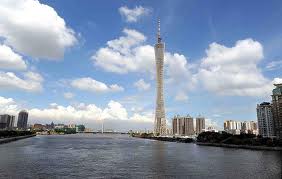
Canton Tower (Guangzhou TV Tower)

‪中文(简体)‬: 在建中的广州电视观光塔(2008年)
‪中文(简体)‬: 在建中的广州电视观光塔(2008年) (Photo credit: Wikipedia)


When I first visited Guangzhou in May 1989, it was like an “gigantic village” – dirty, ugly & teeming only with people & bicycles. It wasn’t a pretty sight except for White Swan Hotel, a five-star splendour, where we stayed. To attract foreign tourists five-star hotels were being first built.

Then what greeted me in the late 1990s and 2000s is staggering & beyond my widest imagination. Simply unbelievable!

There weren’t many places of interest in the old days except the Five Rams’ Statue, Dr Sun Yat Sen‘s Memorial, the zoo which housed some Panda bears & shopping mainly at Friendship Store. However, we had the taste of the famous Guangzhou cuisine & it was good. In a word, we were totally unimpressed as first time visitors.

Today, Guangzhou is different!

In line with the Stratosphere Casino Hotel Tower in Las Vegas, the world’s ‘highest’ Ferris wheel‘ is set to open for business on top of a 1,480ft tower in Guangzhou China – with passengers riding in see-through pods. As compared, this development may not be as daring & adrenaline-pumping as with the Stratosphere’s. (Refer: Stratosphere Casino Hotel Tower, Las Vegas on Wed. 19 Sept. 2012).

Built on the 450-meter-high Canton Tower, known as the Guangzhou TV Tower, the amazing wheel consists of 16 pods holding a total of 96 fearless thrill-seekers.

Each capsule is just over three meters wide, and built using a special macromolecule material which allows a 360-degree crystal clear view.

Just think about this – 15 years ago some of the leading business journals scoffed when Coca-cola announced they were going into China and one remarked “How can the Chinese afford to drink Coke when a can of Coke would cost the equivalent of a week’s salary?”

Chinese companies are now competing with the likes of GE, Westinghouse, ABB etc to build power plants and massively sophisticated infrastructure – and beating ALL of them hands down!!

NOBODY CAN COMPETE WITH CHINA!!

Countries and companies that align with Chinese companies will become super powerful as China and Chinese companies have a long tradition of “Guan-Xi”. In Australia, BHP-Billiton is one such company that is laughing all the way to the bank, for China is building one Sydney-sized city every five days. Did you know that by the year 2025, China will have 219 cities with more than one million inhabitants, compared with 35 in Europe today and 24 cities with more than five million people. Also, 40 billion square meters of floor space will be built – in five million buildings. 50,000 of these buildings could be skyscrapers – the equivalent of ten New York Cities.

Slideshow of more images:   

This slideshow requires JavaScript.

Shuanglang – Little Known Secret Paradise

Shuanglang nestling on Erhai

Shuanglang, a Bai Minority town,

across from Dali in Yunnan, nestling on the shore of Erhai Lake, is one of China‘s most laid-back destination.

With poetic scenery and tranquil guesthouses, the small fishing village of Shuanglang has become a favourite escape from urban living for those know.

An idyllic hideaway 

Many of you may know of the tourist-thronging Dali & Lijiang in Southwest China’s Yunnan Province. But few of you may have heard of Shuanglang Village. This is an idyllic place & China’s hidden little treasure which few have come to know.

For over a thousand years, the local Bai Minority people here have made their living fishing in the lake. But the past 10 years have brought in a change to life. The small tranquil village is now popular with visitors looking to unwind and enjoy a slower tempo.

Boating pleasure

Old alleys and traditional architecture made for pleasant wanders. And it’s easy to take a boat out on the lake or just kick back and do very little.

Surrounded by mountains on three sides, Shuanglang village hugs the scenic Erhai lake. The weather here always seems perfect, making it a great retreat anytime of the year. It is also home to some of the most romantic boutique guesthouses in China.

Filming taking place . . .

Baxun, Shuanglang village chief & owner of the first such guesthouses, said,”A guesthouse is not a hotel. It’s much more personal. The decoration varies in different guesthouses. Each and every one of them represents the owner’s unique style.” There are more than 120 guesthouses now, offering much choice for a comfortable stay. Most face the lake and have decks providing breath-taking views.

A tourist said,” I like staying here. It feels like home.” And many really do make this their other home. In fact, many of the guesthouses are opened by the once “outsiders”.

Xiaoyun and her husband, “We wanted to find somewhere peaceful to live,” came to Shuanglang in 2009 from Beijing, and fell in love with the quiet village. The couple later quit their jobs to set up their own guesthouse here. “We had traveled to many places around the country. The air, clouds, people . . . we just love everything here.”

As elsewhere in China, change is coming to Shuanglang. Several new guesthouses have been built in anticipation of future visitors. With the influx of bar, restaurants & people, the mood of the village will no doubt change. Hopefully it will be a few years before this hidden gem becomes a mini-Lijiang.

English: Erhai - Lake of Dali (Yunnan) - North...
English: Erhai – Lake  (Yunnan) – Northern part (Photo credit: Wikipedia)

For the present, tranquillity & peace exist. Before long these may not persist!

Life of Contrast in India

Taj Mahal

Present India, an emerging economic power on the heels of Chinais pathetic when you examine the extremes of living conditions behind the scene. Its glossy picture is dimmed largely by the mass of poverty, ignorance, religious & social taboo & social indignity . . . the list goes on.

India is a huge mass of land of huge contrasts. The very best exist alongside the worst. Materially India is poor but spiritually rich. Human degradation is witnessed at an unprecedented scale in India, for example, children pressed into low paying jobs, with the untouchable shunned by the society. Religious taboo & language barrier add on more hindrances to economic advancement.

On the brighter side, one may also witness heights of moral ascendancy and the wealthy splashing & displaying their vast wealth by the way they live. India is renowned for its great temples & palaces. India also boasts of the second largest pool of engineers and scientists in the world. Its 50% illiteracy rate is among the highest in the world too.

The Upsides & Downsides of life is far too many to be adequately covered by the scope of this writing. Suffice for me to show the contrasting aspects by way of pictorial slide presentations here:

Young Girl documents Slum Life in India – YouTube

Slides on the Upsides of Life (including the Downsides)

This slideshow requires JavaScript.

Lives of great disparity & extreme
Bridging the gap would be slim
The challenge ahead is great
If India were to make the grade!