Jining: The Hometown of Confucius & Capital of the Grand Canal

Jining, Shandong
Image via Wikipedia

Chinese Name: 济宁市 (jǐ níng shì)


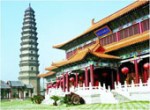
Jining, known as the Hometown of Confucius and Capital of Grand Canal, is an important industrial and cultural center lying in the southwest of Shandong Province. The total population, Han mainly, is 8.31 million with a total size of 11,000 square kilometers.

Jining, which is located right to the north of the Lake Nanyang (Chinese: ; pinyin: Nányáng), is today the northernmost city reachable by navigation on the Grand Canal of China. The city is served by Jining Airport.

 Qufu is the Hometown of Confucius, philosopher & the greatest mind of far-reaching importance in Chinese history. 
The Temple and Cemetery of Confucius and the Confucian Family Mansion were listed in the World Heritage in 1994. Of these three sacred buildings, the Temple of Confucius, the representative classical architecture complex of Confucianism, is praised as the ‘Number One Temple in China’.

The Temple, along with the Forbidden Cityand Mountain Resort of Chengde, are China’s three largest ancient building complexes.

Qufu is the must-see place of Jining, while the three sites – Temple, Cemetery and Mansion – are the must-see destinations when traveling to Qufu.


Other Famous Scenic Spots include Mencius Family Mansion and Mencius Temple: A time-honored and well-preserved ancient building complex for sacrificing Mencius and residence of his offspring that was first built during the Northern Song Dynasty (960-1127)


Yishan Mountain: A mountain resort 10 kilometers (6.2 miles) south of Zoucheng County with spectacular natural scenery and historical relics, especially featuring a granite pebbly landscape.


Baoxiang Temple: A well-preserved Buddhist temple more than a thousand years old, where a great many holy Buddha relics were excavated in 1994; the annual Buddha Light Festival (Fo Guang Jie) is held in the temple.

Beijing’s Epic Traffic Jam

By P Chong

Thursday, 18 August 2011

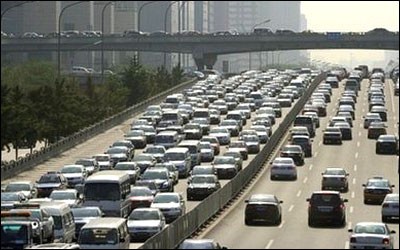
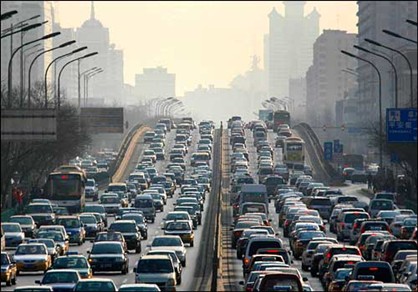
Beijing is building another Great Wall – this time it’s made of cars.

In China with the world’s largest population of 1.3 billion, and where everything is of out- size proportions, e.g. the Great Wall of China, Three Gorges Dam, the Grand Canal,

the largest of this or the tallest of that, nothing seems to amaze anyone more than its nightmare with traffic jam.

Super block buster movie? Unreal!

No! It’s real!!

Massive traffic snarl

Traffic jam beyond your wildest imagination!!!

If you are one of those drivers confronted with road rage in traffic jams in Kuala Lumpur, Bangkok, or Jakarta, forget about driving in Beijing or be caught in one of their traffic jams . . . they could stretch for days on end.

 How about this: ONE traffic jam snaking into Beijing is 100km long and expected to last for a month . . .

showing how China’s economic growth and booming car numbers are still outstripping the billions being spent on infrastructure.

Baffled by the world’s longest traffic jam, the Chinese government has mobilised hundreds of policemen to clear the 100-km long stretch of the Beijing-Tibet highway, riddled with vehicles for 13 days, with the pile-up almost reaching the outskirts of the capital. Surprisingly, there have been no reports of road rage, and the main complaint has been about villagers on bicycles selling food and water at 10 times the normal price.

“Insufficient traffic capacity on National Expressway 110 caused by maintenance construction since August 19 is the major cause of the congestion,” a publicity officer with the Beijing Traffic Management Bureau told the Global Times this week.

The snarl up on the highway, on a section that links the capital to the Chinese region of Inner Mongolia was triggered by road construction and repair. While all sorts of vehicles appeared to have been caught up in the jam, it was mostly caused by lengthy coal carrying trucks, which brings fuel for the industries around the capital.

Traffic arrangements built up over generations in the U.S. are lacking in much of China, said Bob Honea, director of the University of Kansas Transportation Research Institute, who has visited China. “We’ll see this problem more and more often. It’s true of every developing country,” he said.

“Beijing’s already a big parking lot!” complained a taxi driver Gan during a traffic jam on the East Third Ring Road. “We’re making another Great Wall, it’s just that this one is made of cars,” he said.

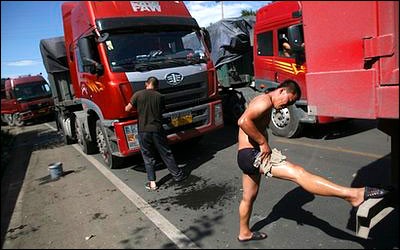
In the worst-hit stretches of the road in northern China, drivers pass the time sitting in the shade of their immobilized trucks, playing cards, sleeping on the asphalt or bargaining with price-gouging food vendors. Many of the trucks that carry fruit and vegetables are unrefrigerated, and the cargoes are assumed to be rotting.

 No portable toilets were set up along the highway, leaving only two apparent options — hike to a service area or into the fields. At several places, drivers, sick and tired of the snarl up, were bitter and angry as temperatures soared during the day and dipped in the nights. Many complained that local vendors were fleecing them for food and water, charging heavy rates, by selling water for 10 yuan as against 1 yuan.

The jam which some in Beijing say was not new in that particular section has also brought the spotlight back on China’s soaring auto sales. The congestion is set to peak in five years, when the total number of cars is expected to nearly double, the Beijing Transportation Research Centre said in its new report.

If people continue to purchase vehicles at the current rate of 1,900 new cars a day, the total will reach seven million in 2015 in Beijing alone, reducing average speeds in the city to below 15 km an hour, the report said.

By the end of 2009, Beijing had four million cars, a growth of 17 per cent over 2008. Experts say the urban layout forces people to buy cars and the city planning leaves people no choice but to travel.

In recent years, vehicle buying in the world’s most populous nation has gathered pace. China last year passed the US for the first time as the world’s biggest buyer of automobiles.

 Car ownership is soaring fastest in China’s biggest and richest cities such as Beijing and Shanghai. About 650,000 new cars are estimated to be put on the road every year in the capital alone.

Road-Straddling Megabus 2011-08-03 (TED) One radical solution thown up this month is a road-straddling mega-bus so big that cars can drive under it. Proponents say this would eliminate the need to tunnel underground or build expensive bridges. The elevated buses straddle the road on rails and provide enough clearance for other vehicles on the road - apart from large trucks - to drive beneath. This strategy would allow the buses to travel faster than the other traffic without the need for dedicated lanes or structures.

And construction of 15km of rail track is planned for Beijing’s Mentougou district this year, with a further 170km if it is successful.

 Source: CCTV, The Australian, Global Times, The Wall Street Journal

China vs. America: Which Is the Developing Country?

Before you begin to read this transcript, let me urge you to drop any pre-conceived ideas you may have about China. Have an open mind, otherwise it would be likened to dropping off a plane or cliff with a closed parachute – and it can be dangerous.

To quote the words of Martin Jacques in our preceding presentation of “Understanding the Rise of China” that:

This is China, a civilization state rather than a nation state”

and

“China is not like the West, and it will not become like the West as its economy expands over the next decade.”

Here below, Robert Herbold presents a most enlightening concept on the differences that separate China from the United States and how the differences make them grow apart.

Bob Herbold, Former COO of Microsoft

 (Robert Herbold, a retired chief operating officer of Microsoft Corporation, is the managing director of The Herbold Group, LLC and author of ‘What’s Holding You Back? Ten Bold Steps That Define Gutsy Leaders’ (Wiley/Jossey-Bass, 2011).


”Recently I flew from Los Angeles to China to attend a corporate board-of directors meeting in Shanghai, as well as customer and government visits there and in Beijing. After the trip was over, in thinking about the United States and China, it was not clear to me which is the developed, and which is the developing country.


 Infrastructure: Let’s face it, Los Angeles is decaying. Its airport is cramped and dirty, too small for the volume it tries to handle and in a state of disrepair. In contrast, the airports in Beijing and Shanghai are brand new, clean and incredibly spacious, with friendly, courteous staff galore. They are extremely well-designed to handle the large volume of air traffic needed to. In travelling the highways around Los Angeles to get to the airport, you are struck by the state of disrepair there, too. Of course, everyone knows California is bankrupt and that is probably the reason why. In contrast, the infrastructure in the major Chinese cities such as Shanghai and Beijing is absolute state-of-the-art and relatively new.
 The congestion in the two cities is similar. In China, consumers are buying 18 million cars per year compared to 11 million in the U.S. China is working hard building roads to keep up with the gigantic demand for the automobile.
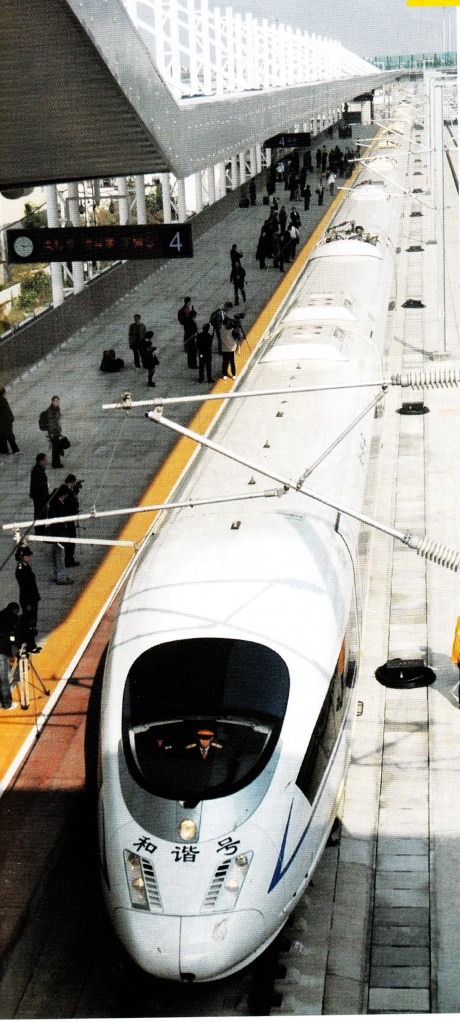
 The just-completed Beijing to Shanghai high-speed rail link, which takes less than five hours for the 800-mile trip, is the crown jewel of China’s current 5,000 miles of rail, set to grow to 10,000 miles in 2020. Compare that to decaying Amtrak.


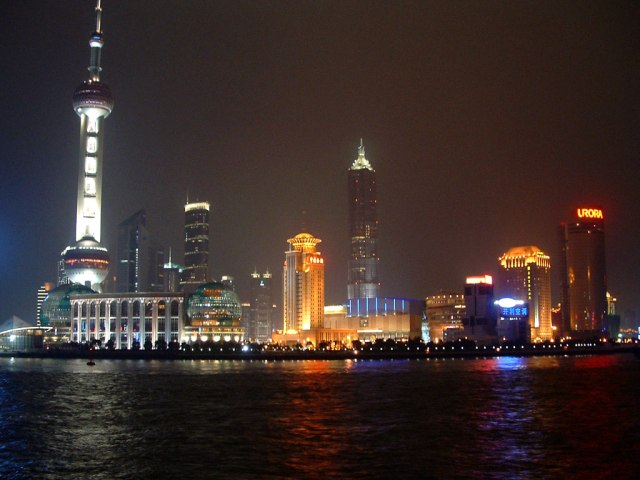
Shanghai-Pudong Skyline At Night

Government Leadership: Here the differences are staggering. In every meeting we attended, with four different customers of our company as well as representatives from four different arms of the Chinese government, our hosts began their presentation with a brief discussion of China’s new five-year-plan. This is the 12th five-year plan and it was announced in March 2011. Each of these groups reminded us that the new five-year plan is primarily focused on three things: 1) improving innovation in the country; 2) making significant improvements in the environmental footprint of China; and 3) continuing to create jobs to employ large numbers of people moving from rural to urban areas. Can you imagine the U.S. Congress and president emerging with a unified five-year plan that they actually achieve (like China typically does)?
 The specificity of China’s goals in each element of the five-year plan is impressive. For example, China plans to cut carbon emissions by 17% by 2016. In the same time frame, China’s high-tech industries are to grow to 15% of the economy from 3% today.


Government Finances: This topic is, frankly, embarrassing. China manages its economy with incredible care and is sitting on trillions of dollars of reserves. In contrast, the U.S. government has managed its financials very poorly over the years and is flirting with a Greece-like catastrophe.


Human Rights/Free Speech: In this area, our American view is that China has a ton of work to do. Their view is that we are nuts for not blocking pornography and antigovernment points-of-view from our youth and citizens.


Technology and Innovation: To give you a feel for China’s determination to become globally competitive in technology innovation, let me cite some statistics from two facilities we visited. Over the last 10 years, the Institute of Biophysics, an arm of the Chinese Academy of Science, has received very significant investment by the Chinese government. Today it consists of more than 3,000 talented scientists focused on doing world-class research in areas such as protein science, and brain and cognitive sciences.

We also visited the new Shanghai Advanced Research Institute, another arm of the Chinese Academy of Science. This gigantic science and technology park is under construction and today consists of four buildings, but it will grow to over 60 buildings on a large piece of land equivalent to about a third of a square mile. It is being staffed by Ph.D.-caliber researchers. Their goal statement is fairly straightforward: ‘To be a pioneer in the development of new technologies relevant to business.’
 All of the various institutes being run by the Chinese Academy of Science are going to be significantly increased in size, and staffing will be aided by a new recruiting program called ‘Ten Thousand Talents.’ This is an effort by the Chinese government to reach out to Chinese individuals who have been trained, and currently reside, outside China. They are focusing on those who are world-class in their technical abilities, primarily at the Ph.D. level, at work in various universities and science institutes abroad. In each year of this new five-year plan, the goal is to recruit 2,000 of these individuals to return to China.


Reasons and Cure: Given all of the above, I think you can see why I pose the fundamental question: Which is the developing country and which is the developed country? The next questions are: Why is this occurring and what should the U.S. do?
 Let’s face it, we are getting beaten because the U.S. government can’t seem to make big improvements. Issues quickly get polarized, and then further polarized by the media, which needs extreme viewpoints to draw attention and increase audience size. The autocratic Chinese leadership gets things done fast (currently the autocrats seem to be highly effective).


What is the cure? Washington politicians and American voters need to snap to and realize they are getting beaten and make big changes that put the U.S. back on track: Fix the budget and the burden of entitlements; implement an aggressive five-year debt-reduction plan, and start approving some winning plans. Wake up, America!”


Martin Jacques: Understanding the Rise of China

Google: Martin Jacques


Megsbus
heng He Vs Christopher Columbus
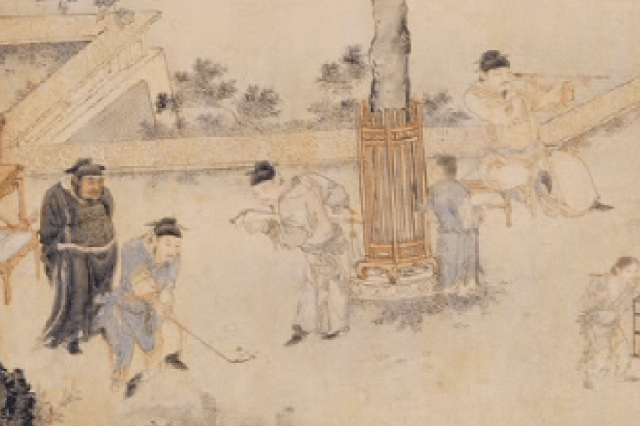
Ancient Golf in China

 Martin Jacques is the author of “When China Rules the World,” and a columnist for the Guardian and New Statesman. He was a co-founder of the think tank Demos.

This is one idea definitely worth sharing from TED.

What makes China tick?

Speaking at a TED Salon in London 2010, economist Martin Jacques asks: How do we in the West make sense of China and its phenomenal rise? The author of “When China Rules the World,” he examines why the West often puzzles over the growing power of the Chinese economy, and offers three building blocks for understanding what China is and will become.

Wonderful insight! Great lecture!

Quote:

“China is not like the West, and it will not become like the West as its economy expands over the next decade.”

“This is China , a civilization state rather than a nation state.”

Speaker:

Economist Martin Jacques, author of When China Rules the World, explores why those in the West have trouble understanding China ’s growing power.

http://www.ted.com/talks/martin_jacques_understanding_the_rise_of_china.html

(Copy & paste the above for the video presentation)

Click here for the Full Transcript:

Transcript – Understanding the Rise of China


Inward, Outward And Upward Looking

By P Chong

Tuesday, 6 July 1999

Of the nations in the world today, China stands out progressively tall and strong. It is as though the sleeping dragon is finally awakened. This appears to be the fear of the West, though an economically strong China is good commercially for all the trading nations in the West, politically China is deemed as great threat. It is feared that “once China stands up, it won’t topple or be toppled.”
In retrospect, China is undoubtedly the world’s greatest civilised nation over a continuous period of thousands of years – a civilisation undiminished & unbroken, unlike past civilisations like Egypt, Greece or the Romans. By any reckoning, China should have by now be far more advanced & superior than the rest of the world. Why not?

Of the many reasons why China did not progress beyond its initial lead in technology & discovery, the main cause of which can largely be attributed to its inward looking policy . . . viewing all territories beyond the Great Wall of China & its boundaries as barbarian nature. This nationalistic pride & closed door policy led to its seclusion, totally depriving itself from from the interchange of ideas and exposure to new scientific developments & industrial growth. While China lavished in its culture, philosophy & essentially non-materialistic form of development, it began to lag behind the West in terms of economic industrial growth. In preserving its civilisation from being tainted by corruption, disruption & deterioration, it never knew new growth, developments & discoveries elsewhere in the whole wide world. The “Middle Kingdom” realised too late the encroachment of other nations upon its shores & territories. Countries like Britain, Portugal & Japan were making inroads into China through modern superior arms of war instead of its age-old “kung-fu”.

To grow, to progress is to change. Sentiment must give way to progress. There is no room for inhibition to changes. Change needs to take place before growth ^& progress can be attained. It’s attitude more than aptitude that scales the altitude. Mr. Lee Kuan Yew, the great former prime minister of Singapore, is credited for the great strides achieved by the City State. His visionary ideas have no room for inhibition to change or any hindrance.

Now, what a change has come about as a result of Deng XiaoPing‘s visionary concept of “Xiang Qian Zou”. In Mandarin, it means “Forward Move”, but by replacing the middle word with similar pronunciation, it becomes “Moving Forward with Money”. This started a great frenzy for the Chinese striving for monetary progress in all spheres of work & life.

Capitalistic way of life does have its price. Greed always breed a profound loss of goodness in mankind. Simple honesty, truth, kindness & compassion are lost in the process. The dollar sign etched prominently on the foreheads of goal-getters. It is evident to an outside observer that the whole civilisation is transforming overnight. China, in its forward economic stride, has done away with its traditional large families, and its door is wide open to the corrupt western way of life. There is a price to be paid, for consequential results cannot be avoided.

We are not about to discuss the forward march of China & the loss of a whole generation of tradition, custom, simple courtesy & good manners, which come about as a result of its Cultural Revolution.

We want however, to draw a comparative study between China and the United States of America, which has only a history of some 200 odd years, and yet progressively more advanced. Why is this so? The irony of this is even more profound when we compare US with Great Britain – the tag of British “greatness” pales in significance. And to think America started as a colony of Britain! What then is the significant attributable factor?

This factor is spelt out very clearly when we look at the green bag note. It says very clearly: “In God We Trust”. It is this upward and outward attitudinal outlook that made all the difference between Britain & the US, and China & the US. The American look upward to God for all its needs & provisions since the first Pilgrim Fathers stepped on the shore of the new continent. Because of its explicit trusting the Lord, America has been greatly blessed and it prospered beyond the realms of the other nations with similar history or longer history.

Apart from this upward attitudinal outlook, it practises an outward outlook beyond its shore and adopt an open door policy in the many aspects of its economy. In so doing, it was to absorb and gain both from within and without the world the wealth of knowledge towards its rapid advancement.

On the personal front, the individual musty avoid being inward looking. The classic example is drawn from the Pharisees, the elite Jewish ruling council, highbrowed, stiff-necked & self-centred in character. They rejected Jesus as the Messiah (the Jews’ promised deliverer) and till today they are still awaiting His coming. Ever wonder re the p,light of the “wandering Jews”? Being persecuted and hated wherever they are? It is without doubt God’s punishment of the Jews for crucifying Christ on the cross! Not until the Jews find their roots in the Messiah Jesus, will their wandering stop!!

In Matthew 23:13, it reads: “Woe to you, teachers of the law and Pharisees, you hypocrites! You shut the kingdom of heaven in men’s faces. You yourselves do not enter, nor will you let those enter who are trying to.”

Verse 27:Woe to you, teachers of the law & Pharisees, you hypocrites! You are like whitewashed tombs,which look beautiful on the outside but on the inside are full of dead men’s bones & everything unclean. In the same way,on the outside you appear to people as righteous but on the inside you are full of hypocrisy and wickedness.”

Verse 39 concludes with this: “For I tell you,you will not see me again until you say “Blessed is he who comers in the name of the Lord.”

How prophetically true what Jesus said. Until & unless the Jews find repose in Jesus, their perils will not be over!!

In John 14:6, the terminology is always on the personal basis: “I am the way and the truth and the life.” Jesus has given us the road map guiding us upward to heaven, and to stay in the centre of God’s will. You need not worry about tomorrow and trust Jesus to guide you one day at a time, and to follow him even though you don’t know the way. No other road map is required.

Abram followed one day at a time. He walked by faith and not by sight. As in genesis 12: 1 -5, we read:

The LORD had said to Abram, “Leave your country,

your people and your father’s household and go to

the land I will show you.”

“I will make you into a great nation and I will bless

you. I will make your name great, and you will be

a blessing. I will bless those who bless you, and whoever curses you I will curse; and all the peoples on earth will be a blessed through you.”

So Abram left, as the LORD had told him; and Lot went with him. Abram was seventy-five years old when he set out from Haran. He took his wife Sarai, his nephew Lot, all the possessions they had accumulated and the people they had acquired in Haran, and they set out for the land of Canaan and they arrived there.”

Abram (whose name was changed by God to Abraham) is the classic example of the principle of “walking by faith, rather than by sight . . . one day at a time”. In walking with the LORD, ourselves must be erased, the LORD must be raised. There is a definite attitudinal shift from self-centrednerss to God-cent redness.

In John 15:5 it says: “I am the vine; you are the branches. If a man remains in me and in him, he will bear much ruit; apart from me you can do nothing.”

Thus the way to be is: inwardness to upwardness. Amen.

The above account is in essence the salient points of a religious message

first delivered in a Sunday church gathering in July 1999.


Dali – Yunnan, China

By P Chong                                                                                  16 March 2011

. . . where the ancient flourishes

right in modern mist!

Aerial View of Dali

The Traditional Dragon Dance

Hu Jintao, President of China, advocates “living harmoniously” and there’s no better place where the slogan is deeply rooted in the daily lives of the people. In Dali – an ancient town in Yunnan China, there’s a good cultural mix of different ethnic groupsHan Chinese, Bai & Naxi minorities and many others, all living in peace & harmony.

Ancient Dali lies within the ancient walls where the old way of life still flourishes, while modern Dali sprawls & spreads outside the protective walls – north, south, east or west.

Picturesque Erhai Lake Dominates the Region

. . . diversity in unity & unity in diversity.

Yunnan is noted for its very high level of ethnic diversity. It has the highest number of ethnic groups among all provinces and autonomous regions in China. Among the country’s fifty-six recognised ethnic groups, twenty-five are found in Yunnan. Some 38% of the province’s population are members of minorities, including the Yi, , Hani, Tai, Dai, Miao, Lisu, Hui, Naxi, Lahu, Va, Nakhi, Yao, Tibetan, Jingpo, Blang, Pumi, Nu, Achang, Jinuo, Mongolian, Derung, Manchu, Shui, and Buyei. All of them are educated in Mandarin & speak Mandarin fluently.

The current popular tune of “Darling, darling . . . darling na” (not sure of the song title & I am just going by the sound) flowed through the narrow cobble-stone streets as we wandered around. I learned that the soothing song was sung by a Naxi girl who first rendered it to be popular in the local tavern of Dali. My brother Mike bought me a copy of the CD seeing that I was so captivated by the tune.

I guess the beautiful catchy tune took the hearts of most visitors & tourists, who were mainly in their twenties or thirties, males & females, most of whom were armed with their hand-phones & digital cameras. There was only a handful of foreigners & oldies.

Young people reflect the rise of Chinese middle class & their mobility to travel & enjoy the pleasures of life long denied them. We found a couple of Australian tourists resting themselves by the shop front and upon chatting with them found that they had difficulties because of the language problem. Speaking & understanding Mandarin is necessary. Everybody speaks Mandarin. However, Mandarin or no Mandarin, people were generally friendly & helpful . . . smiling with a cheerful heart.

Dali against its snow-capped mountain. A street scene in a more outlying village of Dali.

More pictures:

Scenic Erhai Lake

Related Articles

When Others Stall . . . China Roars!

By P Chong                                                                                      10 March 2011

The race always go to the swiftest & the fastest. When your engine stalls, others will roar. There is no relenting . . . there is no waiting. There can only be winners or losers. That’s the name of the game. When you’re ahead, you’d race & surge on.

When I wrote “China‘s Leaping Achievements” in November 2009, which article still enjoys a great reading audience by topping the list up to the present, I hadn’t put in much details about how China build & grow from an impoverished economy to its present giant standing, overtaking Japan as the second largest economy & is right on the doorstep of the U.S.

Way back in the early 1960s when I was at the University of Malaya at Pantai valley, Kuala Lumpur, I had learned from our economic geography professor, Dr. Dwyer, one phrase of his famous expression: “The Chinese are the most assiduous in their economic pursuit . . . unshakeable & resilient “. According to him then no race in the world can ever even match or compare. A country maybe rich in its natural resources, but it’s the people that constitute the greatest of all resources, natural or otherwise. There are many countries in the world endowed with great natural resources but not getting anywhere and conversely, there are countries without such natural fortune making their marks in the world. Singapore, the City State, is undoubtedly the best example in this category.


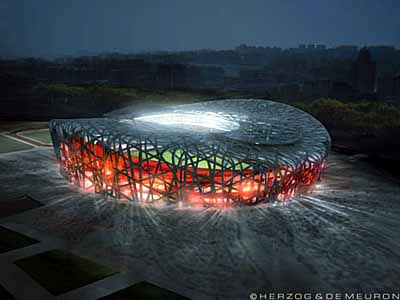
"The Nest" Stadium
China has always been an inventing nation right from ancient times. 
Printing, paper, fork, drum, silk, gunpowder, umbrellas, the plough, rice
 cultivation, wheels and a whole lot of other things . . . are originally from China. Its history 
is littered with war and famine, so you can expect the Chinese to be
 tough and been there and done that sort of thing. After thousands of
 years under the rule of dynasties and finally under Chairman Mao of Communist China. Deng Xiaoping, the architect of modern day China, began the nation
 building with these words “Xiang Qian Zou” – The Road To Riches.

Nation building involves fundamentally the national identity
using the power of the state by the unification of its
 people so that the state is politically stable and sustainable for future development. China addresses this problem very well and it
 has built a patriotic, hard working and educated workforce. The key to 
developing a nation’s wealth is developing your human resources . . . educating and building up the middle class. Science and technology hold up the base. In just three decades, China has shown the world an unprecedented growth.

China successfully prove what can be achieved when
 a Communist nation embraces capitalism. As a nation, they have 
synchronized the chaos into a force to be reckoned with. Even the West 
has accepted the fact that the Chinese are smarter, more hardworking,
 obliging and its immense pride to collectively build a nation.

Giant Pandas as often featured on the cover of China Today

From a nation of million bicycles, China has become a nation of cars. A few years ago there was a survey done by The Economist concerning
car ownership in China , India , France and USA . As predicted, USA has
 more than 1000 cars, France 762, China 11 and India 7 for every 1000
 people. Just only, last year China has become the biggest car market
 in the world!! According to China Daily in the first 10 months car
 sales were up 34% from last year … BMW has already fulfilled its
 target of 112,000 cars for this year in September, Mercedes sold over
101,000 units and Rolls Royce sold more of its cars in China than the
 US and last month Jaguar/Landrover has just open a new dealership in 
China.

Today’s Communist China is only Communist in name. 
The demand for luxury goods in China is growing at an exponential pace. Luxury items makers such as LV , Prada, Gucci, Coach and etc. 
reported more than 100% annual growth for the past few years. It has
 come to the point where Western products has to customize to suit the
 Chinese needs and taste like longer leg rooms at the back seat for
 Rolls Royce coz most of them are chauffeur driven so the bosses need 
extra leg room !!

The amount of research articles published 
by Chinese scientist is staggering. It is reported that China has jumped to number 2
 – up from 14th in 1995, in the number of articles published in the
 science and technology journals worldwide such as IEEE, Nanotech & Applied Physics. It is an open secret that the majority of the
 PhD students in the hard sciences enrolled in elite US universities 
(Ivy League) are Chinese. It is these PhD graduates that will do most 
of the research. It should be noted that a lot of the Microsoft
 patents came from its Beijing Labs.

By far China ’s most successful research institution is the National 
Institute for Biological Sciences or NBIS, which is responsible for
 half of China’s scientific publication. The Institute’s 23 main
 investigators, director and deputy director are all returnees from the 
United States. Quote one of its principal investigators : “ If I
 stayed in America the chances of making a discovery is slimmer, here
 people take risk, they give you money and you can essentially do 
whatever you want ”. (Refer information on www.economywatch.com.
) Patents are actually a measure of technological prowess and
 innovation. Nations that file the largest number of patents are the
 home to innovative corporations and Nobel Prize winners. It won’t be
 long before you will see Chinese Nobel Prize winners. No wonder there are so
 many first coming out of China nowadays.

China has the fastest Supercomputer (Tianhe-1A) in the world running at the speed of 2.5 
petaflops which is equivalent to the power of 175,000 high-end laptops.

The fastest bullet train belongs to the Chinese (CRH360) with a top 
speed of 262 miles per hour leaving the Japs and Germans far behind.
 And these are indigenous technology. With all the money throwing into the 
national car industry after 20 over years, we ended up being a ‘BETTER
 CAR ASSEMBLER’ than our neighbours.

China hold the whole world at ransom in July
 this year by banning all its Rare Earth Materials. Rare earth
materials are a collection of 17 minerals found at the bottom of the
periodic table. China controls 95% of the world supply. These rare
earth includes cerium, scandium, yttrium, lanthanum and etc are used 
in our daily lives such as handphones, laptops, camera lenses, flat
screen tv, x-ray machines, guided missiles systems, oil refineries
and etc. By banning, the exports of these materials China indirectly 
impede the growth and development of many things. Fortunately, there
 are 2 other companies in the world that will have the capability to
produce some to offset the Chinese ban. One is the Lynas Corp from
Western Australia which have a mine in Kuantan, Malaysia and it will
 start production by end of next year, while the other is Molycorp from
 California . How their combined output added up to around 40-50,000
tons which is still way below the global demand of 250,000 tons.
Unsurprisingly the shares of both of these companies jump multiple
folds since the July ban. Lynas was trading at some where 38cents in
July and the high of the year was $1.69 (ASX) and shares of Molycorp
are more than double now.

It is also a misconception that China’s success is due to its Cheap
Labour; yes, that was probably 15 years ago. However, the next
 megatrend will be the growth of the Chinese Research & Development.
 The Chinese will be able to apply the same cost advantage in its 
manufacturing towards Research & Development in no time. If you notice
 currently the global telecoms equipment sector is now dominated by 2 
Chinese companies (about 65% of new installations) notably Huawei. 
Western countries are buying this Chinese equipment not because it’s
 cheap but also it is good!! In a recent electric car, trade show in
 Shenzhen there is this Chinese R&D company that reinvented the
 battery. Their battery last twice longer, much more power, half the 
existing battery weight and 100% recyclable. This is going to change
the face of the global automobile market. With its low cost R&D,
 product development and manufacturing, which country can match China? 
It will continue to dominate the world for decades to come!!! In the
 End, it is the Communist China that won the battle of capitalism.!!

So when will China overtake US as the number one economy in the world?
As predicted China will overtake Uncle Sam ‘s economy in two years in
 terms of PPP (Purchasing Power Parity) It won’t be long as China’s 
opponent is embraced with an insolvent banking system, high 
unemployment rate , homeless population, high foreclosure rate and 
with 40 million people on food stamps and its Federal Reserve printing
 money out of thin air. Over here in China , its economy is growing at 
a 10% pace annually. 
And if you think, it’s easy for you to access the Chinese Market. Think again. If
 your company owns certain patents they will demand access to them and
furthermore train their people on how to use your technology so that
 they can reverse engineer it the moment you open shop. Just ask car
 manufacturer Peugeot on the difficulty and pain in working with the
 Chinese.

China is also quietly building up its military and I believe it is
 currently making use of the financial crisis to extend its
 geopolitical and economic sphere of influence in Asia and beyond. China is already refurbishing an ex Russian aircraft carrier (Varyag) 
due to completed in 2012 and building 2 other 50,000 to 60,000 ton 
carriers due to complete in 2015. When completed China will have what 
they called a ‘BLUE WATER NAVY’ . This means Chinese navy are capable
 of operating across deep waters of the oceans and also able to launch 
a nuclear attack from anywhere in the world. Moreover recent 
developments in the Chinese missiles technology caught most western
powers off guard. For example, a few years back China conducted a
successful anti satellite missile test. It used a modified DF-21 (Dong
Feng) ballistic missile mounted with the kinetic kill vehicle to 
intercept the satellite.

Another recent development is the Chinese ASBM or anti ship ballistic
missile the DF-21A which is designed to launch from land and can
 penetrate the most advance defence from any moving aircraft carriers.
The carrier battle group used to be the ‘untouchables’ will no longer
 hold and it will make the US aircraft carrier battle fleets a sitting 
duck. With these multiple warhead ballistic missiles homing into these 
battle groups, there is nothing they can do to stop it. Even if it
 explode in mid air, imagine a nuclear warhead explodes in the vicinity
of the fleet, it will just vaporize the entire fleet.

There are so much more happenings that are ceaselessly unending. To list them all would not be possible here. Some of the great & would-be achievements are inescapable:

1. China’s Great Engineering Feat: The Three Gorges Dam

2. China – World’s Biggest Megapolis with 42 Millions!

3. China’s Engineering Might: Bullet Trasin

4. World’s Longest Cross-Sea Bridge – The Pearl River Delta  Bridge

Read in my blog “Who Owns The U.S.?” together with the above 4 topics, you’ll be amazed & astounded beyond all reasons to realise just how great & mighty China is and will be in the very near future.

China’s Rich Cultural Heritage

By P Chong                                                                                                       1 March 2011

China’s 56 Ethnic Minorities

Multiculturalism as practised in China is unique & unprecedented. It reflects diversity in unity & unity in diversity. It means on one hand the pride of conservation & presentation and on the other acceptance & respect by one & all.

In the atmosphere of peace & harmonious living, the minority groups are separate and yet integrated. As a matter of fact, with their fluency in Mandarin, the national language of China, any visitor would say that they are well assimilated and fully integrated in the society mainstream.

China’s ancient operas, performing arts, and other cultural legacies now have legal protections. The top legislature, the National People’s Congress Standing Committee, passed a new law on Friday 25 February 2011 to protect the country’s intangible cultural heritage.

China's Ethnic Minorities

Sun Anmin, member of NPC Standing Committee, said, “China’s thriving culture industry in the past few decades is in a large part owed to the increased tapping of intangible cultural heritage. As such, I believe it is important to emphasize rational exploitation, and protection. So we can have both effective use and protection at the same time.”

With an ancient history and diverse culture, China has a wealth of intangible cultural heritage. Just what new forms they will take and how they will develop are in the hands who love them – both Chinese and foreigners. Xie Zheng, CCTV reporter, said, “The passage of the new law is a milestone in China’s protection of its intangible cultural heritage. After all, a people without heritage fails its cultural identity, and the world without cultural diversity will be one that is too dull.”

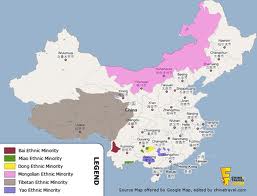
Distribution of the Ethnic Minorities

China is a big and united family made up of 56 ethnic groups. Geographically speaking, they are distributed in different parts of China with the resulting difficulty of experiencing each ethnic group‘s architecture, their festivals and tasting their snacks during one of your visits.

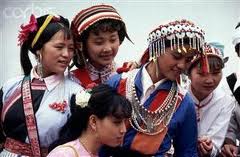
Bai Minority

But the China Folk Cultural Village, lying at the Overseas Chinese Town, Shenzhen, will help solve this problem. It is the first spot in China where you can learn of the folk cultures of China. More than 200,000 square meters have

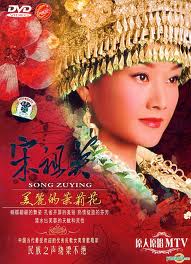
Miao Artist Song Zuying

Dai or Tai Minority

been made available to accommodate 24 peculiar cottages making up the cultural village to welcome visitors & tourists.

In the village, you will see the distinctive architecture of ethnic groups and can join in their brilliant festivals. Buying handicrafts or tasting local snacks is another way to experience the China Folk Culture Village.

Officially recognized, the following are the most numerous of the ethnic groups in mainland China:

  1. Han 漢族 1,230,117,207
  2. Zhuang 壯族 16,178,811
  3. Man 滿族 10,682,263
  4. Hui 回族 9,816,802
  5. Miao 苗族 8,940,116
  6. Uyghur 維吾爾族 8,399,393
  7. Tujia 土家族 8,028,133
  8. Yi 彝族 7,762,286
  9. Mongo 蒙古族 5,813,947
  1. Zang 藏族 5t,416,021 Source: Wikipedia (This page was last modified on 16 February 2011 at 07:40).

In our tour of Yunnan, we had the chance of meeting the Naxi 納西族 (308,839) and also the Bai 白族 (1,858,063). Many of the Naxi girls that we met are largely involved in driving taxis or running food stalls. Many are pretty but are conscious of their dark complexion. They speak perfect Mandarin and one that we met in the silk embroidery factory even has a college education and speaks good English.

The Naxi Ethnic Minority

Foreigners would love to marry these Naxis, for by tradition, they are the ones who work while the men are privileged to play. All responsibilities of life fall strictly upon the women. Naxi men are known to play & sing all day, drink, smoke & make merry . . . as though there’s no tomorrow!

Naxi women are traditionally forbidden to marry outside their cultural group. Modern educated Naxi girls however would rebel and much prefer to marry a Han man any time.

Miao MinorityTibetan Ethnic Minority


Guangzhou – Venue of 2010 Asian Games

By P Chong                                                                  26 February 2011

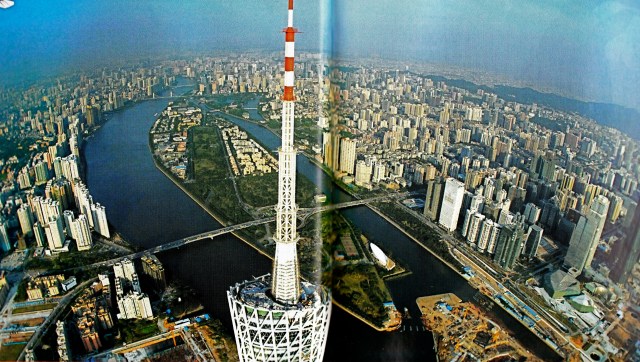
Panoramic Guangzhou
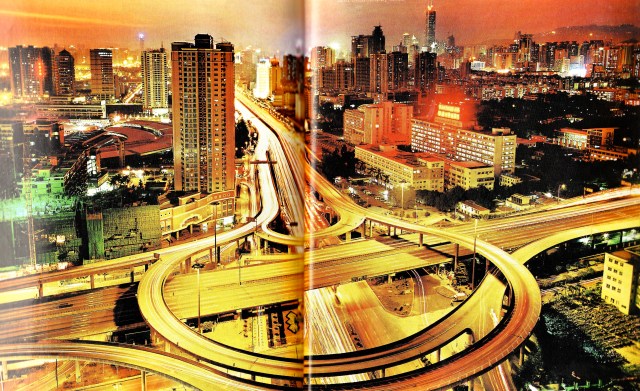
In the grip of nostalgia, I revisited Guangzhou in November 2010. I was first there in 1989 when it was no more than an“international sprawling village” with old derelict buildings, narrow twisted streets & lanes . . . so very crowded with both people & bicycles. Today, there is only one word to describe the scenes that greet the eyes – unbelievable! It’s a miraculous transformation!
Guangzhou Traffic Network
Guangzhou, known invariably as Flower City & City of Rams, is a historic-cultural city with a history of 2200 years. Today, it’s an economic power-house in the south of China. Its growth is phenomenal and as part of the conglomerate group of the nine cities to form the largest megapolis in the world, it will continue to spearhead the future growth of the Pearl River Delta region. (Please refer “China – World’s Largest Megapolis” on 25 February 2011).

Modern Guangzhou with 11.7 million population has everything that an international megacity has to offer – a sprawling network of highways, super bullet train network links, underground commuting network, super shopping malls, high-rise skyscrapers, parks & gardens, top-class hotels, entertainment, golf courses, theme park resorts . . . and rightly playing host to the 16th Asian Games and making it the largest & grandest ever.

CRH Bullet Train

As with all the major tourist places, first class hotels were sprouting up everywhere to usher in tourists in the 1980s. Guangzhou then boasted of its famous White Swan Hotel, located on the historical Shamian Island, the old concession zone during the late 19th century and early 20th century (where dogs and Chinese were forbidden). It overlooks the Pearl River and faces the White Swan Lake. Reached by its own private 635 meters causeway, the White Swan Hotel is only 10-minutes drive from downtown and 1-hour drive from New Baiyun International Airport.


Opened in 1983 and refurbished in 2002, it is still majestic though there are now many other 5-star hotels. The White Swan Hotel boasts of a total of 843 exquisitely decorated and well appointed guest-rooms. All rooms and suites are comfortably furnished and well-equipped with modern amenities. The restaurants in the hotel offer a wonderful variety of Chinese and Western food. Fitness and entertainment facilities in the White Swan Hotel include swimming pools, gymnasium, sauna and massage room, squash and table-tennis room and so on.

It is best known for its elegant design and high quality service. Its lobby is featured with a tropical waterfall and a display of many huge jade carvings. The hotel used to receive visiting foreign heads and government officials and was regarded as the landmark building of the city of Guangzhou in 1980s and 1990s. The hotel amenities even include a toy room sponsored by Mattel that provides toys for children of every age and gender.

Shamian used to be a place where foreign enterprises concentrated with a lot of western- style buildings. Now Shamian has become a beautiful city park with cafes and bars here & there.

Having stayed there during our first visit to China in 1989, it’s really reminiscent to be seeing it again after more than two decades.


Yunnan – “The Southern Clouds” in China

By P Chong

23 Feb. 2011


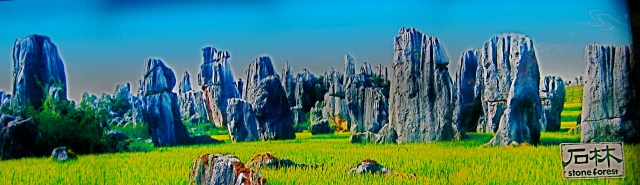
Stone Forest, Kunming

Yunnan is endlessly a place of fascination

Surpassing many well-trodden places

To delight the hearts & souls

With hills & valleys away from shores

With rivers & streams gurglingly flow

Through its streets both new & old

Beneath its natural clear blue sky

From its distant snow-capped mountains

To the lakes & canals of its cities & towns.


Yunnan - Tourist Map

Though occupying only about 4.1% of China‘s landmass, it contains 25 different ethnic minorities reflecting the most culturally diverse province in China & the national realm of harmonious living in unity in diversities.

From the UNESCO listed Stone Forest of Kunming, the Capital of Yunnan, an unique karst topography, depicting the concrete jungle of modern metropolitan China to the age-old towns of Dali or Lijiang, the traveller can feel the pulse of China’s economic surge while being reminded of a land unsurpassed in history & culture.

Electric Tourist Cart for Rounding Stone Forest. Entrance: Seniors FREE.

This plateau land in the south-west corner of China beckons to you, one & all, though for the seniors, I would suggest that you’re fit to truly enjoy the many natural spots of interests, without having to worry about aching feet or weary & painful backs. The are certainly lots of cobble-stone roads to trudge, laborious steps & stairs to ascend or descend, jostling crowds to mingle with . . . ceaseless streets with surprising turns of fun & joy.

Dali Against Its Snow-Capped Moutain (Cangshan)
Erhai Lake, Dali
City Wall & Tourist Taxi Van

For the ‘shopperholics’, the narrow streets are lined with quaint little shops filled with leather goods of sorts, souvenirs both old & new, clothing, jade, silverware & porcelain ware. The atmosphere is one of festivities, colours everywhere with red as the dominant choice for prosperity & good fortune.

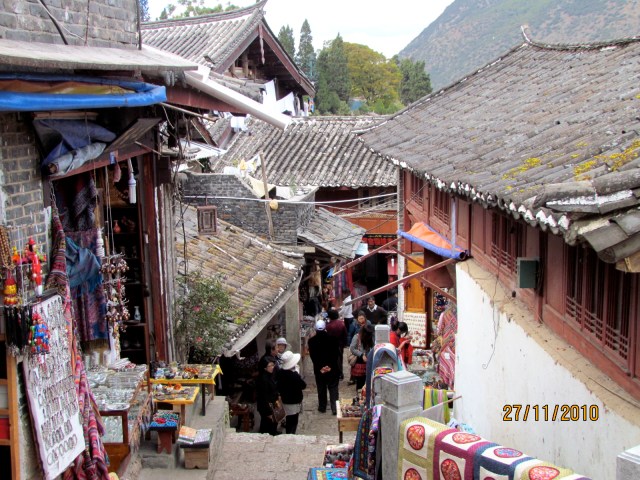
Street Scene

The crowd is predominantly young. I would say 99% of them with a sprinkle of senior members & foreigners. Thousands of these tourists are Chinese nationals. This is such a prominent feature everywhere you turn . . . young & vibrant, mobile, modern tech population group with time to spare & money to spend. Virtually everyone, male or female alike, is equipped with the mobile phone, the popular iPhone or other smart phones.

Both Dali & Lijiang have preserved their ancient enclosed or walled townships where visitors & tourists are encouraged to stay rather than in their developed new areas and experience of a life of an era gone by.


Local Snack Food Galore


Town Square - Cobble-Stone
Stone Forest, Kunming