A Benevolent Kind of “Thanksgiving” in China

Paul Chong / Monday, 1 December 2014

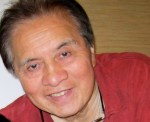
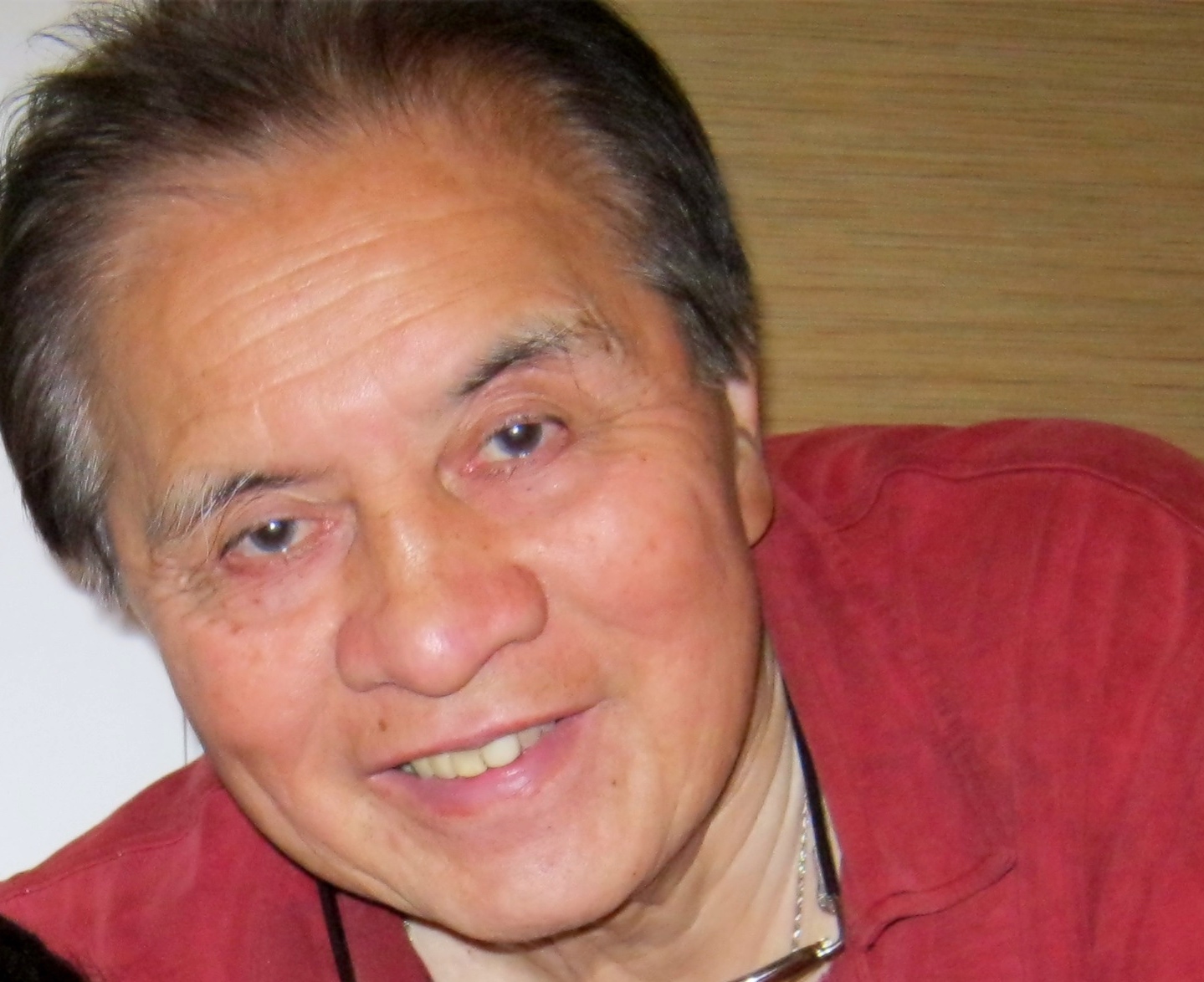
Xiong Shuihua - 54-Year Old Chinese Millionaire Businessman
Xiong Shuihua – 54-Year Old Chinese Millionaire Businessman

It’s that time of the year when American gather to celebrate their “Thanksgiving”. Across the world in China where such practice is alien, the story of a Chinese millionaire Xiong Shuihua performinghis kind & act of “thanksgiving” has gone viral.

It’s hard to believe such benevolence exists in this world of greed & corruption. To find such a character of a man would be comparable to finding a needle in the haystack. Shuihua never forget the kindness of the people who helped him in his days of poverty & struggle.

Now that he has made his fortune, he returns to his old village to give back to the society that helped him before.

It’s story like this that touches the hearts & mind of the community.

Daily Mail, Daily Telegraph & various media have splashed their headlines:
* Millionaire Chinese businessman bulldozes run down huts replacing them with flats for free . . .
* Chinese millionaire builds free luxury homes for entire village where he grew up

* Chinese millionaire providing free meals . . .

Summarily:
He has housed 72 families to repay them for their kindness in his youth.
A further 18 families who were particularly kind will be given villas to live in.
Elderly and low paid residents will also be given three meals a day for free.

th-1 th-2 th-3

Xiong Shuihua was born in Xiongkeng village in the city of Xinyu, southern China and said that his family had always been well looked after and supported by residents in his childhood.
So when the 54-year-old ended up making millions in the steel industry he decided to repay the favour – for free.

After making his millions, the business tycoon decided to return to the village and give everybody a place of their own to live.
The multimillionaire made his money first of all in the construction industry and later by getting involved in the steel trade.

Xiong Shuihua said he could afford the development as he had ‘earned more money than I knew what to do with.
He said: ‘I earned more money than I knew what to do with, and I didn’t want to forget my roots.
‘I always pay my debts, and wanted to make sure the people who helped me when I was younger and my family were paid back.’

Elderly local Qiong Chu, 75, said: ‘I remember his parents. They were kind-hearted people who cared very much for others, and it’s great that their son has inherited that kindness.’

th-4 th-5 th-6 th-7

– See more at: http://www.coloradonewsday.com/news/regional/85991-chinese-businessman-builds-luxury-flats-for-his-old-village-for-free.html#sthash.FKx4w39Z.dpuf

Airstrip Mystery on Spratly Islands

PAUL CHONG / SATURDAY, 29 NOVEMBER 2014

images

The Spratly Islands (Chinese name: Nansha islands), Vietnamese Name: Quần đảo Trường Sa, Filipino Name: Kapuluan ng Kalayaan) are a disputed group of more than 750 reefs, islets, atolls, cays and islands in the South China Sea.[6] The archipelago lies off the coasts of the Philippines, Malaysia (Sabah), and southern Vietnam. Named after the 19th-century British explorer Richard Spratly who sighted them in 1843, the islands contain approximately 4 km2 (1.5 mi2) of actual land area spread over a vast area of more than 425,000 km2 (164,000 mi2).

The Spratlys are one of three archipelagos in the South China Sea which comprise more than 30,000 islands and reefs, and which complicate governance and economics in this part of Southeast Asia. Such small and remote islands have little economic value in themselves, but are important in establishing international boundaries. No native islanders inhabit the islands which offer rich fishing grounds and may contain significant oil and natural gas reserves.

The Spratlys are one of three archipelagos in the South China Sea which comprise more than 30,000 islands and reefs, and which complicate governance and economics in this part of Southeast Asia. Such small and remote islands have little economic value in themselves, but are important in establishing international boundaries. No native islanders inhabit the islands which offer rich fishing grounds and may contain significant oil and natural gas reserves.

images-1

Satellite imagery indicates China is building an island islandthat could be the site for its first airstrip in the disputed Spratly Islands in the South China Sea, defence specialists IHS Jane’s reports., a few days ago.

The images of the reclaimed island on Fiery Crtoss Reef, taken on August 8 and November 14 (2014) show that over the last three months, Chinese dredgers have created a land mass 3Km long & 200m to 300m wide, large enough for a runway & apron.

As well as the land mass, which is almost the entire length of the reef, the dredgers are creating a harbour that could be large enough to receive tankers & major surface ships, it added.

The Spratly Islands, reefs midway between Vietnam & Philipines, are claimed by Brunei, Malaysia, The Philipines, China, Taiwan & Vietnam.The only habitable part of the reef is a concrete platform built & maintained by China’s military.

IHS Jane’s said the reclamation at the reef was the fourth such project China has undertaken in the islands in the past 18 months. No other can house an airstrip in its current form, IHS Jane’s said. (Source: The West Australian 27 November 2014).

China -Taiwan Reunification

Paul Chong / Saturday, 29 November 2014

Source: China Daily Mail

images
Unknown-1

Deng Xiaoping’s “One Country Two Systems”, as applied successfully in the case of Hong Kong’s return to Mainland China, could well be applied to Taiwan for the peaceful reunification with motherland China.
The situation with Taiwan is however quite different from Hong Kong.
Unlike Hong Kong, Taiwan is a fully democratic entity. It has an army but does not have membership in the United Nations, and China has refused to rule out the use of force to gain control of the island.

President Xi Jinping has popularised “The Chinese Dream is also the dream of the people on both sides of the Taiwan Strait – our dream of reunification.”

The goal is strategically simple – peaceful unification – through soft power, not armed force. “To attack the heart is the best. To attack a [walled] city is the worst,” quoting the wisdom of Sun Tzu’s “Art of War.”

In the past there was serious tension between the Chinese mainland and Taiwan. Mao even bombarded Taiwan’s islands near the mainland, and according to Henry Kissinger might have triggered a nuclear war.

Deng Xiaoping stopped the bombardment and tried to ease tension in order to attract Taiwanese investment. Seeing Taiwanese businessmen’s contributions to China’s economic growth, Deng switched to the policy of peaceful offensive supplemented by military threat.

This policy switch has been carried on by Deng’s successors. It seems quite effective according to Reuters’ report “Special Report: How China’s shadowy agency is working to absorb Taiwan”. It is really good that a military solution is becoming an increasingly unpopular alternative for Mainland China to reunify with Taiwan.

In fact, even if mainland China is able to take Taiwan by force, what is the use to get an island damaged by war with people hostile to mainland China due to the war?

From Reuters report, we see the possibility of peaceful reunification, as almost all the Taiwanese doing business and having married mainland wives or travelled there have become pro-Beijing.

It is mainly because the mainland has been able to achieve an unprecedented growth & prosperity and improve the rule of law and human rights.

Reuters says in its report, Taiwan’s “Mainland Affairs Council spokesperson Wu Mei-hung said United Front activity shouldn’t be interpreted in an ‘overly negative way’.”

It quotes her as saying “China has some political intentions, but Taiwan has its own advantages in terms of systems, core values and soft power. All of these, we hope, will impact China via exchanges.”

If you believe that China’s system is better then you may come to the conclusion that China will absorb Taiwan peacefully by its United Front efforts.
However, if you believe Taiwan’s system is better than you may think that Taiwan will absorb China peacefully via exchanges.

I believe the final reunited China will either be a mixture that absorbs the advantages of both systems, or allows each to maintain its own system where needed & accepted. Admittedly & sadly so, the recent political upheaval with the “Occupy Central Movement” in Hong Kong is presenting quite a problem. However, there is no question of having no solution whatever the situation.

China can draw out some great inspiration from the success of Ang Lee, a Taiwanese-born American film director, screenwriter and producer,. with his film “Crouching Tiger, Hidden Dragon”.

China’s strategy & approach to briskly Taiwan will continue to be peaceful & significant headway attained as with “Crouching Tiger, Hidden Dragon”.

Unknown images-1


As it stands, with the recent agreeable exchanges of trade, technology, tourist & social, the future looks bright indeed. This is definitely a step in the right direct direction . . . towards reunification.

The Cross-Strait relations between China & Taiwan has never been any better than today.

Najib: Straight A’s Malaysian Prime Minister

Paul Chong / Thursday, 27 November 2014

Unknown

Najib Abdul Razak

Altantuya

Altantuya – Mongolian Beauty Queen

The magic, romance & sentiment of that ever popular love song “Terang Bulan/Malayan Moon” dissipated the day it was adopted as the National Anthem of Independent Malaysia in 1957. None of us could sing any more of our love under the Malayan moon. The political, economic & social landscapes were changing. If changes occurring then were to be for the better for each & every citizen irrespective of colour, class or creed, the Malaysian Dream of peace & harmony would persist, as with fairness & justice.

Those of us, who have since fled Malaysia after the racial riot & upheaval of May 13, 1969, can only lament of the loss of our paradise. Things & events transformed rapidly with the ousting of our
inaugural princely Prime Minister Tengku Abdul Rahman (who had a passion for fun & that was how he took eleven years to complete his law degree in London). The historical watershed was May 13, 1969.

Tun Abdul Razak, the man who forced his hand on Tengku, was the father of the present Prime Minister Najib Abdul Razak (who was then but a freshman newly returned from UK). Tun Razak
set the course of no return for all the minority races – the Chinese & Indians. The New Economic Policy, designed to essentially help the Malays, was implemented in haste without public debate.
His demise, however, was a sudden surprise.

To cut short the whole story, the worst of the political head is Tun Dr, Mohammed Mahathir. His misdeeds, corruption etc. set the present trend of disastrous Malaysia. His twenty-two years at the helm made him a multi-billionaire & sons all billionaires too.

Najib Abdul Razak is his protege who has graduated with great “distinctions or A’s” . . . not in the scholarly or academic sense but master of CNN (Corruption, Nepotism & Najibism” besides other major sex & scandals.

Unknown-1

Summarily, Najib scored an A with Altantuya, the Mongolian beauty queen, whose body was blasted away to nothingness with high-security explosives, only obtainable from government-vault.
The mystery still left unsolved – everything swept literally under the carpet. Najib is secured as long as he’s the Prime Minister.

The second “A” is linked to the question of using the word “Allah”. It’s preposterous that the Malaysian authority maintain its usage is only reserved for the Malay Muslims. The Mahathir & Najib administration cling on to their strategies of power & control banking on religious polarisation.

The third ‘A” had to do with the re-jailing & retrial of Anwar, whose political fate hangs on the balance & whose dream of ever be the next Prime Minister will depend largely on a court system controlled by Najib. Anwar’s Sodomy trial & imprisonment is a politically motivated persecution executed by the ruling government.

Azizah, the wife of Anwar, provides Najib with his fourth “A”. Her political rise to fame rubbed hard on the UMNO-BN faces, who tried to block her from becoming the Mentri Besar of Selangor.

Last but not least, the recent Aircraft M-17 crash over Ukraine is forcing the UMNO-BN leadership
to come within the wider global radar screen. The jet crash of the Malaysian national carrier is revealing to the world how ridiculous things can get in the “Bolehland” – anything goes!

images

The new freshman Najib who returned from UK & who began learning the political craft from his ailing father Tun Abdul Razak, and of course also under the expert guidance of his mentor Mahathir, must seem to want to prolong his political career. Just how far can he go without being indicted is anybody’s guess.

At the recent APEC meeting held in Beijing, I hardly notice his presence.

LATEST UPDATE: The 1MDB financial scandal as reported by WSJ 2015. Will this smoking gun topple Najib?


Japan’s War Atrocities: “The Asian Auschwitz”

Paul Chong / Thursday, 27 November 2014

images-5images-3images-4Japan’s PM Abe

It’s preposterous for the Japanese to ever say that the Nanjing Massacre never happened nor would they apologise in respect of the “Comfort Women” whereby they treated women from China & Korean as prostitutes or sex slaves all for their own glorification. To deny history or worst still is to eradicate & change their history textbooks so that their younger generations would be completely ignorant of their atrocious past, is crime of the highest order & despicable to mankind. It’s time for reconciliation & as a gesture of goodwill to make compensation for their evil misdeeds.

images-2

Here’s something even more atrocious & horrible uncovered by Jeffrey Rindskop regarding the Japanese biological experiment activities. EVERY ASIAN SHOULD READ THIS.

Unit 731: The Horrors of the ‘Asian Auschwitz’ and Why You’ve Never Heard of It
November 10, 2014
By Jeffrey Rindskopf
The scientists of Unit 731 called their subjects “matures.” The term translates loosely to “logs” — a telling indication of how they were treated, as pieces of wood rather than living creatures.
Though now called the Asian Auschwitz, Unit 731 was originally known as the “Epidemic and Water Purification Unit,” a deceptively benign name. It was home to the some of the most horrific cases of human experimentation ever recorded.
The sprawling complex, nearly four square-miles in area, is thought to be responsible for roughly 200,000 deaths. Korean and Chinese nationals form the vast majority of the deceased, but the complex in the city of Harbin, now part of Northeast China, also held its fair share of Pacific Islanders, Russians, South East Asians, and Allied POWs.

Unlike its notorious European counterpart, the prisoners of Unit 731 were not held out of prejudice but out of convenience, to facilitate the world’s largest biological warfare program. They were human lab rats, and they died from causes as diverse as germ warfare tests, amputation, explosive weapons testing, and vivisection.
Those inside the compound often died of vivisection. One of the medical researchers involved at Unit 731 explained to Take a Moment the process of vivisection conducted on men, women and children, usually without anesthetic:
I was ordered to wash that person’s body with a deck brush before he or she was taken into the dissection room naked by a member of the special team. The first time, I trembled. One team member was listening to the heartbeat with a stethoscope. One was standing holding a knife. The moment the stethoscope was removed from the ear, a knife went into the body. I did not know, but according to doctors, this timing was very important, because if the timing was wrong, we could get blood all over us, and then we could get infected.
Japanese officials wanted to find out the best way to treat shrapnel wounds in wounded soldiers. This desire to keep their soldiers alive and fighting resulted in some of the most violent deaths of Unit 731. Prisoners were tied to wooden stakes beside a bomb placed at various distances. Researchers detonated the bomb and conducted surgery on those who survived, or else proceeded straight to autopsy.

images

The prisoners were often used as human targets — for flamethrowers and chemical weapons as well as bombs. They had organs removed while they were still alive, even awake, so experimenters could observe them before decomposition altered their state.
Some prisoners had their arms severed to study the effects of blood loss. Sometimes the limbs were reattached or put on ice  and thawed to observe the rot and gangrene that set in. Other victims were locked in gas chambers filled with chemicals weapons, or placed in giant centrifuges that spun until those inside perished. Scientists hung some upside down until they choked to death. They injected air into their arteries, or horse urine into their kidneys.
Japan’s widespread use of germ warfare began inside Unit 731. The experimenters had the deadly pathogens at their fingertips, but they sought new ways to deliver the pathogens to cause widespread death.
They were successful on several accounts, developing the defoliation bacilli bomb and the flea bomb. These bombs, often made of porcelain, held fleas carrying bubonic plague, anthrax, typhoid, and dysentery. Fleas were bred by the container-full.
The bombs were dropped on parts of China not yet occupied by Japan to contaminate crops and water supplies. Other times, diseases were spread by giving poisoned candies to children. Japanese scientists wearing hazmat suits might come to the infected towns to inspect the dead bodies to test their work and improve upon it in the future.
BBC estimates these biological weapons killed more than 300,000 confused civilians between 1938-1945.

Despite the devastation inside the walls of Unit 731, scientists never ran short of victims.
“There were always 2,000 or 3,000 logs [people] prepared. There were two burning places and there were always burning dead bodies,” said Shoichi Matsumoto, a Unit 731 bomber pilot.

The deaths at Unit 731 and from the resulting biological weapons never received the same press the crimes of Auschwitz and its “angel of death” Josef Mengele did. There were no Nuremberg Trials, and the perpetrators of the experiments were never brought to justice. Many of them, including Unit 731’s commander and sadist mastermind Shiro Ishii, were honored for service to their country.
Once the Japanese surrendered in 1945, the US government dominated Japanese affairs and discovered the extent of their human experiments. The adversarial dynamics of the cold were already setting in at that point. Officials understood that the findings were valuable, however horrific, since they could never conduct such experiments themselves, and must be kept from the Russians at all costs.
The US officials offered the Japanese scientists responsible a deal: immunity from prosecution in exchange for all experimental data. US General Douglas MacArthur wrote President Truman in 1947, saying “additional data, possibly some statements from Ishii probably can be obtained by informing Japanese involved that information will be retained in intelligence channels and will not be employed as ‘War Crimes’ evidence.”
Despite US efforts to keep the data collected from Unit 731’s singularly sadistic experiments from the Russians, Soviet officials learned of the research during their prosecution of 12 Unit 731 leaders. Those men were sentenced to time in a labor camp, and the USSR used their research to construct a biological research facility of their own in Sverdlovsk.
The 12 officials sentenced in Russia were exceptions. Some of the doctors of Unit 731 rose to prominence in Japan’s post-war medical world, abetted by US occupying forces. The Japanese government has never fully acknowledged the atrocities committed . . .

images-1


Unknown

Xi Jinping: “The Governance of China”

Edited & Posted by: Paul Chong Tuesday, 25 November 2014 Source: CRI Online

President Xi JinpingPresident Xi Jinping

Xi Jinping (born 15 June 1953) is the General Secretary of the Communist Party of China, the President of the People’s Republic of China, and the Chairman of the Central Military Commission. As Xi holds the top offices of the party, state & military, he is sometimes informally referred to as China’s “paramount leader“. As General Secretary, Xi is also an ex officio member of the Politburo Standing Committee, China’s de facto top decision-making body.

Son of communist veteran Xi Zhongxun, Xi Jinping rose through the political ranks in China’s coastal provinces – Fujian & Zhejiang . . . gone through the mills so to say. Was invariably chosen & groomed to become Hu Jintao‘s successor. He served as Vice-President of the People’s Republic of China between 2008 and 2013.

Taller than most of his predecessors, he’s a man of substance & vision. He knows where he’s leading China to & since his accession he’s been exerting his influence on a wider global scale with his brand of leadership – fearless but not dangerous.

His rhetoric is written in deeds . . . not just mere verbal convention. Here’s someone acting his role as a real leader with none to compare.

His book is to be read & we’ll be hearing more from & about him.

FOREIGN201411240930000520055223102

His newly-published book “Xi Jinping: The Governance of China” appears to be captivating readers since its introduction in the UK.

A collection of 79 speeches and some 45 photos of the Chinese president, the book is meant to provide readers with firsthand insight to the Chinese leadership.

Frank O’Reily, a retired academic, bought the book when it first came out in the UK last month. “President Xi was quoting from Confucius,” he said “reading without thinking makes one muddled, thinking without reading makes one flighty”. So it’s his opinion that in the west, we have so many comments about China but they never actually refer to the actual words or speeches of the Chinese leaders, they never refer to what they actually say or write.

O’Reily says as a retired academic, Xi Jinping’s book is a helpful tool for those hoping to learn more about China.

“Presumably these speeches were made in Chinese, most of them anyway if not all, but the translation is very clear and very natural. And then there’s an index at the back which makes it an excellent reference book as well as a straight read. And also there are excellent notes to the chapters, to speeches on history, literature, etc, all clearly explained.”

The Governance of China” was first introduced at this year’s Frankfurt Book Fair.

It’s since been published in ten languages, including English, French, Russian and Japanese.

Ru Jing with the UK branch of China’s Foreign Languages Press, the book’s publisher, says they’re seeing an increasing demand for book on China written in English.

“The book has attracted a lot of media attention since it was launched. On top of that, we’ve seen quite positive feedback from the market. For instance, you can find the book on almost all major amazon sites, and with decent sales figures.”

Guanghwa Bookshop is one of the main UK distributors for “The Governance of China”. Located in London’s China Town district, the bookshop is a hub for all things Chinese.

Cai Shaojuan, owner of the bookshop says she has received many enquiries about Xi Jinping’s book from both old and new customers. “Most of them are academics who are interested in Chinese politics, but there are also young readers who come to enquire.”

FOREIGN201411240930000386490215283

Guanghwa Bookshop is one of the main hubs promoting Chinese culture in London’s China town. [Photo: CRIENGLISH.com/DuanXuelian]

FOREIGN201411240930000386157778276

Foreign students studying Chinese calligraphy at the Guanghwa Bookshop in London’s China Town .[Photo: Courtesy of Guanghwa Bookshop]

In the present world of storm

Just about anything can go wrong

China has challenges ahead

With Xi Jinping fostering the break.

Chinese Female Soldiers: People’s Liberation Army


Paul Chong / Monday, 24 November 2014

. . . Brain . . . Brawn . . .  Beauty

FOREIGN201410130833000185628736921 FOREIGN201410130833000186268488985 FOREIGN201411200920000286330213871

. . . Brain, Brawn and Beauty

There’s a Chinese saying “Eyes can see but hands must not touch”.

With respect of personal privacy & to prevent the roaming eyes of wolves,

their names are withheld.

FOREIGN201411200920000275303184181Chinese female soldiers on show for the first time publicly.

Female soldiers appear in the honour guard of Chinese People’s Liberation Army for the first time. (Photo/ http://www.81.cn)

They are beautiful, attractive & attention grabbing.

Are they just for show or action?

They sure add glamour to the fighting spirit.

In fact, they are trained to kill!

Also the magazine Life of PLA has unveiled some of the most fascinating & beautiful females around (As seen above).

If they are as pretty as they look, they must be good in fighting too.

FOREIGN201411200920000283104785055

Female pilots flying J-10 fighters give a fantastic performance at the 10th Zhuhai International Air Show. (Photo/ KJ.81.CN)

FOREIGN201411200920000309723660107

The Liaoning aircraft carrier welcomes nearly 100 female soldiers. (Photo/ Xinhua)

Life’s Kaleidoscope


Paul Chong/Sunday, 23 November 2014

Screen Shot 2014-11-23 at 3.53.20 am

Screen Shot 2014-11-23 at 3.49.27 am 2014 Nanjing Youth Olympic trailer500 people dancing in the sky. (YouTube)

Life is one great rich & exciting experience, an adventure, a journey or play. It’s wonderfully exhilarating with its ever changing scene.

We must extend ourselves in life, be engaging, for life gives us

back far more than what we put in. Like operating a computer,

results will depend upon the data you put it. No input . . . no output.

Our individual success would mean the ultimate of the whole.

So what is life, if full of care . . . we have no time to stand & stare”. You probably remember this little poetic line from your school days. Life’s kaleidoscope has a constantly changing pattern or sequence of objects or elements . . . a kaleidoscope of colours. I remember making one of those toys for our school annual art exhibition.

Time is even stronger than kings who are constantly fighting each other. The passage of time uncovers lies and lets people see the truth.

Everybody study Geography in school (Malaysia) where we learn about the earthly physical & climatic aspects mainly. But when you step into the university, the field of geography is vastly expanded to encompass not only geomorphology, but also geology, anthropology, historical & political geography, human & economic geography, meteorology . . . its terminology lengthening & becoming more numerous.

Life’s but a walking shadow, a poor player, that struts and frets his hour upon the stage and then is heard no more; it is a tale told by an idiot, full of sound and fury, signifying nothing.” so said William Shakespeare. It’s a passing dream you might say that affords not of your standing there & stare. As an actor, you play your role & play it well to attain life’s accolades or oscars. The idiotic sound & fury will all vanish into nothingness.

All the world’s a stage, and all the men and women merely players. They have their exits and their entrances, and one man in his time plays many parts…** As You Like It Act II, sc. Vii (William Shakespeare).

William Shakespeare

William Shakespeare (April, 1564 – April 23, 1616) was an English playwright and poet.

 2014 Nanjing Youth Olympic trailer500 people dancing in the sky (YouTube)

 http://youtu.be/8oqPR5-GLuA 

The field of human endeavour never fail to amaze as shown by this video where the performance of each individual contributes successfully to the building of the “dynamic aerial human pyramid” in the spirit of teamwork. Likewise, “Chinese Dream” calls for the success of the sum total of each & every individual’s performance.

Screen Shot 2014-11-23 at 3.51.53 am

This is then the magnificent aspect of life’s kaleidoscope.

Gross individualism or self-centredness must not supercede collectivity.

Ultimately, everyone of us make our exit in life.

Strike it with fire & zeal while we still have it.

VETI-GEL Stops Your Bleeding Instantly

Source:  TED . . . ideas worth spreading

Screen Shot 2014-11-21 at 11.04.59 am

Joe Landolina: This gel can make you stop bleeding instantly

Joe Landolina is a TED Fellow and the inventor of a gel (VETI-GEL) that can instantly stop traumatic bleeding — without the need to apply pressure. He recently built a state of the art manufacturing facility in Brooklyn, New York to bring the product to market.

Screen Shot 2014-11-21 at 11.03.52 am

Forget stitches – there’s a better way to close wounds. In this talk, TED Fellow Joe Landolina talks about his invention – a medical gel that can instantly stop traumatic bleeding without the need to apply pressure. (Contains medical images.)

Play Video

http://www.ted.com/talks/joe_landolina_this_gel_can_make_you_stop_bleeding_instantly?utm_source=newsletter_daily&utm_campaign=daily&utm_medium=email&utm_content=button__2014-11-20

HIS TRANSCRIPT:

“I want you guys to imagine that you’re a soldier running through the battlefield. Now, you’re shot in the leg with a bullet, which severs your femoral artery. Now, this bleed is extremely traumatic and can kill you in less than three minutes. Unfortunately, by the time that a medic actually gets to you, what the medic has on his or her belt can take five minutes or more, with the application of pressure, to stop that type of bleed.

Now, this problem is not only a huge problem for the military, but it’s also a huge problem that’s epidemic throughout the entire medical field, which is how do we actually look at wounds and how do we stop them quickly in a way that can work with the body?

So now, what I’ve been working on for the last four years is to develop smart biomaterials, which are actually materials that will work with the body, helping it to heal and helping it to allow the wounds to heal normally.

So now, before we do this, we have to take a much closer look at actually how does the body work. So now, everybody here knows that the body is made up of cells. So the cell is the most basic unit of life. But not many people know what else. But it actually turns out that your cells sit in this mesh of complicated fibers, proteins and sugars known as the extracellular matrix. So now, the ECM is actually this mesh that holds the cells in place, provides structure for your tissues, but it also gives the cells a home. It allows them to feel what they’re doing, where they are, and tells them how to act and how to behave.

And it actually turns out that the extracellular matrix is different from every single part of the body. So the ECM in my skin is different than the ECM in my liver, and the ECM in different parts of the same organ actually vary, so it’s very difficult to be able to have a product that will react to the local extracellular matrix, which is exactly what we’re trying to do. So now, for example, think of the rainforest. You have the canopy, you have the understory, and you have the forest floor. Now, all of these parts of the forest are made up of different plants, and different animals call them home. So just like that, the extracellular matrix is incredibly diverse in three dimensions. On top of that, the extracellular matrix is responsible for all wound healing, so if you imagine cutting the body, you actually have to rebuild this very complex ECM in order to get it to form again, and a scar, in fact, is actually poorly formed extracellular matrix. .

So now, behind me is an animation of the extracellular matrix. So as you see, your cells sit in this complicated mesh and as you move throughout the tissue, the extracellular matrix changes. So now every other piece of technology on the market can only manage a two- dimensional approximation of the extracellular matrix, which means that it doesn’t fit in with the tissue itself.

So when I was a freshman at NYU, what I discovered was you could actually take small pieces of plant-derived polymers and reassemble them onto the wound. So if you have a bleeding wound like the one behind me, you can actually put our material onto this, and just like Lego blocks, it’ll reassemble into the local tissue. So that means if you put it onto liver, it turns into something that looks like liver, and if you put it onto skin, it turns into something that looks just like skin. So when you put the gel on, it actually reassembles into this local tissue. So now, this has a whole bunch of applications, but basically the idea is, wherever you put this product, you’re able to reassemble into it immediately.

Now, this is a simulated arterial bleed – blood warning – at twice human artery pressure. So now, this type of bleed is incredibly traumatic, and like I said before, would actually take five minutes or more with pressure to be able to stop. Now, in the time that it takes me to introduce the bleed itself, our material is able to stop that bleed, and it’s because it actually goes on and works with the body to heal, so it reassembles into this piece of meat, and then the blood actually recognizes that that’s happening, and produces fibrin, producing a very fast clot in less than 10 seconds”.

So now this technology — Thank you. (Applause)