The Romance of Don Quixote

Source: socialwrite.com – Don Quixote

Earl Nightingale, renowned as the dean of motivation, once said, “We become what we think about”. Your inward grace is your outward grace & reversely also true.

What kind of story do you live? Heroic or cowardly? Do you have a sense of destiny or futility? What do you think is your destiny? The destiny of this Earth? Your fate? Do you look at life as a challenge? The story you tell yourself — the myth within which you live your life — strongly affects your feelings and the ultimate outcome of your life. It can change and it can change you!

You live by a story. Have you ever thought of it that way? Each of us has a story, and we are the main character in that story. Your life could probably be pieced together into a coherent story with which you live by even if you’ve never really thought about it yourself.

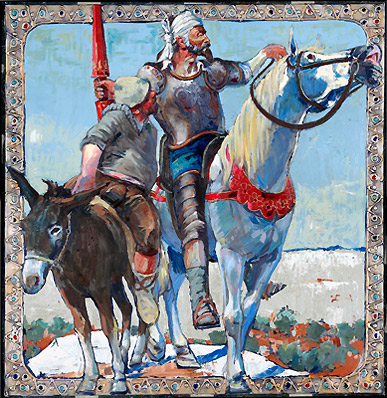
Man of La Mancha, a musical made in 1972, is based on the story Don Quixote by Miguel de Cervantes. Its an entertaining story, but it’s also profound. You’ll find two two different persons in the same story having contrasting life outlook.


Don Quixote sees the world as a quest, as an adventure, and he sees a poor kitchen maid as a lady of unsurpassed beauty and chastity. He dreams the impossible dream, he fights the unbeatable foe, he looks at life as a challenge to do good in the face of evil and make the world a better place. He wants to dedicate his victories to the kitchen maid, his Lady.

She is bitter about life, full of anger.

Why do you do these things?” she asks him.

What things?”

She bursts out in frustration, “Its ridiculous, the things you do!”

He answers simply, “I come in a world of iron to make a world of gold.”

The worlds a dung heap,” she says, “and we are maggots that crawl on it.”

The Love Test Story


Grand Central Terminal

A case of a love that developed through correspondence . . . each a stranger to the other. Over time, every word they wrote to each other was like a seed onto a fertile heart. Of course, they should finally meet . . . but without any picture of each other except Miss Hollis to bear a rose and John a book for identification at Grand Central Terminal . . .

John Blanchard stood up from the bench, straightened his Army uniform, and studied the crowd of people making their way through Grand Central Station. He looked for the girl whose heart he knew, but whose face he didn’t, the girl with the rose.

His interest in her had begun thirteen months before in a Florida library. Taking a book off the shelf he found himself intrigued, not with the words of the book, but with the notes pencilled in the margin. The soft handwriting reflected a thoughtful soul and insightful mind. In the front of the book, he discovered the previous owner’s name, Miss Hollis Maynell. With time and effort he located her address. She lived in New York City. He wrote her a letter introducing himself and inviting her to correspond.
The next day he was shipped overseas for service in World War II.

During the next year and one month the two grew to know each other through the mail. Each letter was a seed falling on a fertile heart. A romance was budding. Blanchard requested a photograph, but she refused. She felt that if he really cared, it wouldn’t matter what she looked like. 
When the day finally came for him to return from Europe, they scheduled their first meeting – 7:00 PM at the Grand Central Station in New York. “You’ll recognise me,” she wrote, “by the red rose I’ll be wearing on my lapel.” So at 7:00 he was in the station looking for a girl whose heart he loved, but whose face he’d never seen.

I’ll let Mr. Blanchard tell you what happened:

A young woman was coming toward me, her figure long and slim. Her blonde hair lay back in curls from her delicate ears; her eyes were blue as flowers. Her lips and chin had a gentle firmness, and in her pale green suit she was like springtime come alive. I started toward her, entirely forgetting to notice that she was not wearing a rose. As I moved, a small, provocative smile curved her lips. “Going my way, sailor?” she murmured.

Almost uncontrollably I made one step closer to her, and then I saw Hollis Maynell. She was standing almost directly behind the girl. A woman well past 40, she had greying hair tucked under a worn hat. She was more than plump, her thick-ankled feet thrust into low-heeled shoes. The girl in the green suit was walking quickly away. I felt as though I was split in two, so keen was my desire to follow her, and yet so deep was my longing for the woman whose spirit had truly companioned me and upheld my own. And there she stood. Her pale, plump face was gentle and sensible, her grey eyes had a warm and kindly twinkle. I did not hesitate. My fingers gripped the small worn blue leather copy of the book that was to identify me to her. This would not be love, but it would be something precious, something perhaps even better than love, a friendship for which I had been and must ever be, grateful. I squared my shoulders and saluted and held out the book to the woman, even though while I spoke I felt choked by the bitterness of my disappointment. 
”I’m Lieutenant John Blanchard,and you must be Miss Maynell. I am so glad you could meet me; may I take you to dinner?”

The woman’s face broadened into a tolerant smile. “I don’t know what this is about, son,” she answered, “but the young lady in the green suit who just went by, she begged me to wear this rose on my coat. And she said if you were to ask me out to dinner, I should go and tell you that she is waiting for you in the big restaurant across the street. She said it was some kind of test!”

It’s not difficult to understand and admire Miss Maynell’s wisdom. The true nature of a heart is seen in its response to the unattractive.

“Tell me whom you love,” Houssaye wrote, “And I will tell you who you are.”

The Devoted Son . . . The Father’s Love

A Painting by Jim Warren

Here’s an inspirational & touching story of an old man for his devoted son . . . spiritually uplifting with a familiar ring to it too . . . and like the greatest story ever told, this story must have been told & retold in untold numbers.

Years ago, there was a very wealthy man who, with his devoted young son,
 shared a passion for art collecting. Together they travelled around the
world, adding only the finest art treasures to their collection.
Priceless works by Picasso, Van Gogh, Monet, and many others adorned the
 walls of their family estate. The widowed elderly man looked on with
 satisfaction as his only child became an experienced art collector. The 
son’s trained eye and sharp business mind caused his father to beam with 
pride as they dealt with art collectors around the world.

As winter approached, war engulfed their nation, and the young man left
 to serve his country. After only a few short weeks, the elderly man
received a telegram that his beloved son was missing in action. The art
collector anxiously awaited more news, fearing he would never see his
son again. Within days his fears were confirmed. The young man had died 
while rushing a fellow soldier to a medic. Distraught and lonely, the old man faced the upcoming Christmas holidays with anguish and sadness.
The joy of the season – a season that he and his son had so looked forward
to in the past – would visit his house no longer.

On Christmas morning, a 
knock on the door awakened the depressed old man. As he walked to the 
door, the masterpieces of art on the walls only reminded him that his
 son was not coming home. He opened the door and was greeted by a soldier
 with a large package in his hand.

The soldier introduced himself to the old man by saying, “I was a friend
of your son. I was the one he was rescuing when he died. May I come in
for a few moments? I have something to show you.” As the two began to
talk, the soldier told of how the man’s son had told every one of his – and 
his father’s love of fine art work. “I’m also an artist,” said the
soldier, “and I want to give you this.”

As the old man began to unwrap
the package, paper gave way to reveal a portrait of the man’s son.
Though the world would never consider it a work of genius, the painting
 featured the young man’s face in striking detail.

Overcome with emotion, the old man thanked the soldier, promising to
hang the portrait above the fireplace. A few hours later, after the
 soldier had departed, the old man set about his task. True to his word,
 the painting went above the fireplace, pushing aside thousands of dollars
worth of paintings. And then the old man sat in his chair and spent
Christmas gazing at the gift he had been given.

During the days and weeks
that followed, the man learned that his son had rescued dozens of wounded soldiers before a bullet stilled his caring heart. As the stories of his son’s gallantry continued to reach him, fatherly pride and satisfaction began to ease his grief, as he 
realised that, although his son was no longer with him, the boy’s life
 would live on because of those he had touched.

The painting of his son
 soon became his most prized possession, far eclipsing any interest in
the priceless pieces for which museums around the world clamoured. He told 
his neighbours it was the greatest gift he had ever received.

The following 
spring, the old man became ill and passed away. The art
world was in anticipation, since, with the old man’s passing, and his only
 son dead, those paintings would be sold at an auction. According to 
the will of the old man, all of the art works would be auctioned on
Christmas Day, the way he had received his greatest gift.
 The day finally arrived and art collectors from around the world gathered
 to bid on some of the world’s most spectacular paintings.
 Dreams could be fulfilled this day; greatness could be achieved as some
 could say,” I have the greatest collection.”

The auction began with a
painting that was not on any museum list . . . It was the painting of the 
old man’s son. The auctioneer asked for an opening bid, but the room was
silent.

”Who will open the bidding with $100?” he asked. Moments passed as no 
one spoke. From the back of the room came, “Who cares about that
painting? It’s just a picture of his son. Let’s forget it and get on to
 the good ones.” More voices echoed in agreement.

“No, we have to sell
 this one-first,” replied the auctioneer. “Now who will take the son?”
 Finally, a friend of the old man spoke. “Will you take $10 for the 
painting? That’s all I have.”

“Will anyone go higher?” called the
 auctioneer. After more silence he said, “Going once, going twice . . .
 Gone!” The gavel fell. Cheers filled the room and someone shouted, “Now
 we can get on with it and bid on these treasures!”

The auctioneer looked at the audience and announced that the auction was 
over. Stunned disbelief quieted the room. Then someone spoke up and
 asked, “What do you mean it’s over? We didn’t come here for a portrait
of some old man’s son! What about all of the other paintings? There are
 millions of dollars worth of art work here. We demand an explanation!”

The auctioneer replied, “It’s very simple. According to the will of the
father, whoever takes the son, gets it all.”

Just as the art collectors discovered on that day. The message is still
 the same . . . the love of the Father . . . a Father whose son gave his life
 for others . . . And because of that Father’s love . . . Whoever takes the Son
gets it all.

John 3:16 says:

For God so loved the world that he gave his one and only Son, that whoever believes in him shall not perish but have eternal life.”

A Little Kindness . . . Impact of Goodness

For a person in need of solace or comfort, it doesn’t take much to help out. All that it takes is a little gesture, a little kindness & it will go a long way. Here’s a little story to illustrate the point . . .

The park bench was deserted as she sat down to read beneath the long, straggly branches of an old willow tree. Disillusioned by life with good reason to frown, for the world was intent on dragging her down. And if that weren’t enough to ruin her day, A young boy out of breath approached her, all tired from play. He stood right before me with his head tilted down and said with great excitement, “Look what I found!” In his hand was a flower, and what a pitiful sight, with it’s petals all worn, not enough rain, or to little light. Wanting him to take his dead flower and go off to play, she faked a small smile and then shifted away. But instead of retreating he sat next to her side and placed the flower to his nose and declared with overacted surprise, “It sure smells pretty and it’s beautiful, too. That’s why I picked it; here it’s for you.” The weed before her was dying or dead. Not vibrant of colors, orange, yellow or red. But she knew she must take it, or he might never leave. So she reached for the flower, and replied, “Just what I need.” But instead of him placing the flower in her hand, he held it mid-air without reason or plan. It was then that she noticed for the very first time that weed-toting boy could not see: he was blind. She heard her voice quiver, tears shone like the sun as she thanked him for picking the very best one. You’re welcome, he smiled, and then ran off to play, unaware of the impact he’d had on her day. She sat there and wondered how he managed to see a self-pitying woman beneath an old willow tree. How did he know of her self-indulged plight/ Perhaps from his heart, he’d been blessed with true sight. Through the eyes of a blind child, at last she could see the problem was not with the world; the problem was her. And for all of those times she herself had been blind, she vowed to see the beauty in life, and appreciate every second that’s mine. And then she held that wilted flower up to her nose and breathed in the fragrance of a beautiful rose. And smiled as she watched that young boy, another weed in his hand about to change the life of an unsuspecting old man further down the path on his own park bench.

Yes, a little kindness . . . a great impact of goodness

A soothing word, a gentle hand

A listening heart & patience spent

Will calm the roar in the end.

Why Grandpa Or Grandma Gets So Easily Confused

Source:thewatercoolercompany.com

From the chart above, it’s obvious we are all water creatures. Water makes up 60% of your body, 70% of your brain, 80% of your blood, apart from the effects it has on your physical being as a whole. While it’s possible to go without food for a month or so, your body can’t survive one week without water.

It’s imperative to watch our daily intake of water to replenish that which is lost through perspiration & urination. It is a fallacy to believe that just because you don’t perspire as much as when you are having your work-out exercise or feel thirsty, you don’t have to drink.

With grandpa & grandma, it’s easy to forget the importance of drinking sufficient water daily. As we age, our body’s capacity for holding water decreases, so all the more water intake is important. It’s no joke to note that with grandpa & grandma, who constantly not feeling thirsty, stop taking liquids.

It’s not tumour in the head or Alzheimer’s that lead to old people getting confused easily, but the lack of water replenishment. Dehydration sets in quickly. Dehydration tends to be severe and affects the whole body. It can cause mental confusion, an abrupt fall of blood pressure, increased heart rate “rapid heart beat”, angina (chest pain), coma and even death. In the best age, which begins at 60 years, we have little more than 50% water in the body. This is part of the natural aging process. Therefore, the elderly have lower water reserves.

Elderly dehydrate easily not only because they have less fluid reserve, but also because they are less likely to perceive a lack of water in their body. Even if the senior is healthy, it degrades the performance of chemical reactions and functions of the entire body.

But there is another complication: even dehydrated, they feel no desire to drink water, because their internal balance mechanisms do not work very well.

It is important for grandmas and grandpas: voluntarily make a habit of drinking liquids. By liquid it is understood we mean water, juices, teas, coconut water and milk. Soup, jelly and fruits rich in water, such as melon, watermelon, pineapple, orange and tangerine also work. The important thing is, every two hours, put some liquid inside. Remember this!

If they are rejecting liquids, overnight, they can become confused, irritable, staring out into space and demonstrate a lack of attention to surroundings. It is almost certain that these symptoms are caused by dehydration as medically pointed out. You are advised to: “Get liquids into them and quickly seek medical assistance.”

To maximize its effectiveness to the human body, it is recommended to take water in the following manner:

  • 2 glasses of water after waking up – helps to activate internal organs
  • 1 glass of water 30 minutes before meal – helps digestion
  • 1 glass of water before taking a bath – helps to lower blood pressure
  • 1 glass of water before sleep – to avoid stroke or heart attack.

I Am Life’s Most Precious . . .

By P Chong                                          Tues. 22 June 2010

Beverley Landscape in Western Australia


I am the basis of all wealth

To enjoy me be sure of your health

I am the heritage of the wise & thrifty

It’s acquired with measures both prudent & stingy.

I am the poor man’s joy & comfort

To the rich it’s a prize & thing of worth

I am the right hand of capitalism

The silent partner of countless realisation.


I am the solace of widow, comfort of the old

The corner stone of security, a fortune worth in gold

I am passed on from generation to generation

As a thing of greatest worth & jubilation.


I am the choicest fruit of toil

And credit respects me with joy

Yet unassuming & humble I am

Only the wise will know & possess me as I am.


I grow & increase in value through the years

The economic cycle bids me no tears or fears

Dormant as I am, my worth keeps on increasing

Without fear of ever failing or ceasing.


Time, an enemy to many, is my friend

And increasing population makes me grand

I defy fire & all elements earthly

For nothing can ever destroy me really.


My possessors learn to believe in me

Invariably they somehow becoming envied

While all the things wither, decay & die

I gain in value, strength, youth & survive.


Minerals like gold & silver come from me

I am the basis of all economic power & myth

I produce the food you eat to live

Unthinkingly, you are standing on me.


Yet so common am I that you pass me by

What am I?

I am L A N D . . . L A N D . . . L A N D!

John

By P Chong                                                                  Sunday 13 June 2010

The Disciple Whom Jesus Loved” ~ JOHN 21:20-23

John, you were meant to be gracious

So dear and loved by Jesus

You leaned on His bosom at the Last Supper

At the cross you stood steadfast and faithfully suffered

And the care of Jesus’ mother you were entrusted

First to believe in Jesus’ Resurrection

Also first to fix in the Lord’s recognition.

Before, like brother James, you were impetuous and fiery

As “sons of thunder” you were ugly

A fisherman from Galilee, you were son of Zebedee

Who was rich & prosperous with employees

Forsaking trade and riches

You chose to be with Jesus

And credited with the Fourth Gospel precious.

The sweetest sound to any man is his name

All the more sweeter if John is your name!

Feed Your Faith, Starve Your Fear!

By P Chong Thursday, 10 June 2010

Skydiving Over The Ocean

Feeding your faith will be the positive move, and yet it seems so easy just to do exactly the opposite by feeding your fear. Cowards always take the road of least resistance, because it’s the easiest thing to do. Tough decisions demand courage, perseverance, strength & tenacity . . . never to say die until you’re dead.

Often the line of demarkation between success & failure is so indistinguishable.

It could be just one degree more to boil over to harness all that steam & energy.

We all love to hear success stories, of heroes & great men with great achievements. How often we fail to realise the pitfalls & failures accompanying such ultimate successes. Could you imagine that the famous Walt Disney was actually fired by s newspaper editor who told him, “You’re not creative enough”! Had he accepted that verdict, we would have missed all his wonderful creations.

Years ago, Richard Bach wrote a story about a seagull. He was turned down by eighteen publishers. He was undeterred & persevered knocking on doors until finally in 1970 Macmillan published his story. Within five years his book “Jonathan Livingston Seagull” had sold more than seven million copies and became an international best seller.

Abraham Lincoln’s life was one of failures until he succeeded to be elected as the President Of the United States of America. I could go on with a whole list of great men, but let’s move on from the secular to the spiritual aspect.

Let’s touch on the life of the apostle Paul, whose life took a dramatic turn when he was struck down from his horse on his way to Damascus and stricken blind. Paul’s enemies called him “a pestilent fellow” (Acts 24:5). Literally they said, “He’s a plague!” But that did not stop him! Yes, he was the prosecutor who became a great preacher of Christianity. The plague just kept breaking out everywhere he went. By the year AD110, one out of twelve people in Asia had become a Christian. Nothing could stand in his way.

This is what we mean by “Feed Your Faith, Starve Your Fear!” When confronted with both, which is often the case, act upon positively & starve all fear. They say there’s nothing to fear except fear itself. If you persistently face fear in the face, a hundred times, a thousand times, there comes a time when there’s no more fear to be faced. You become bolder as time progresses and you cease to fear not. Therein lies the difference between the brave & the coward.

No, in all these things we are more than conquerers through Him who loved us.” Romans 8:37. We are more conquerers, we are overcomers who refuse to let fear dominate them.

God says: “Don’t be afraid for I am with you. Do not be dismayed, for I am your God. I will strengthen you. I will help you. I will uphold you with my victorious right hand.” ~ Isa 41:10

With God on your side, what more do you need?

With A Song In My Heart


Many of you would probably remember the famous

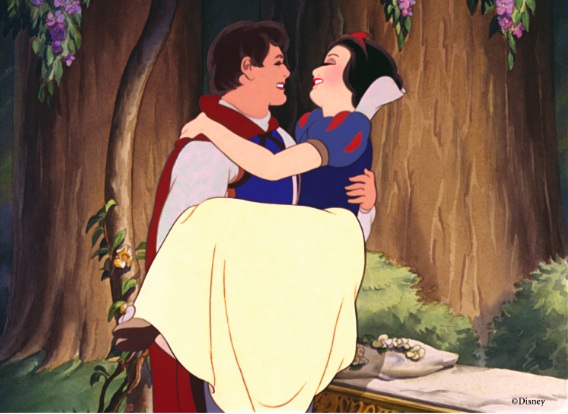
Walt Disney’s “Snow White & The Seven Dwarves”.

Prince Charming was serenading to her this song:

Now that I’ve found you, hear what I have to say. One song, I have but one song. One song only for you. One heart, my heart keeps singing of that one song only for you!” Kind of romantic, isn’t it?

When I was recovering in the Royal Perth Hospital in July 1990 from duodenal ulcer, I wrote this short poem, though the circumstances were quite different.

WITH a song in my heart

I’ll treat thee special from the start

I’ll think of thee, I’ll dream of thee

Ever lovingly, ever so tenderly.

What I have, I thee give

Without condition nor I to receive

Take me as I am, poor in standing

With a heart of love ever giving.

You are special, you are great

I have yet to know of anyone of late

Seems like fate that we should meet

Another time, another place would be sweet.

The song will forever be ringing

With emotion true I’ll be singing

When you hear me coming

Stretch your arms for my welcoming.

Paul Chong

Friday, 13 July 1990

RPH Ward 7B 17G

Life Is But A Dream


Like the rainbow in the sky . . . there & then fleetingly gone


IS LIFE but a dream?

We are not here as it seems

Our physical being is but fleeting

Indicating nothing of meaning.

Search me not for the answer

Nor others for consensus

Life is strange indeed

We’ll never know by any deed.

Who has the answer?” you may ask

All our answers are but an impossible task

Look up to the sky, lift up your hands

Cast your mind heart & soul and you’ll understand.

How insignificant we human beings are

When you begin to look afar

All that you wonder come from Him

It’s only logical we go to Him.

Paul Chong

Originally Penned

Thursday, 9 August 1990

@ 5.50 am