Ginger is an herb, which originated in China and later, spread to India, Southeast Asia, West Africa and the Caribbean. It is basically the rhizome of the monocotyledonous perennial plantZingiber officinale. It has been in use since ages, both as a spice as well as an herb. The nutrients present inside ginger, especially its volatile oils – gingerols and shogaols, accord a number of health benefits to its users. Infact, ginger has also been found to be effective in fighting against some fatal ailments like cancer. In the following lines, we have provided information on nutritional value and health benefits of eating ginger.
Nutritional Value of Ginger
Ginger has been known to comprise of the following nutrients:
Peng Liyuan, the celebrated folk singer, is becoming China’s First Lady through her microphone. Whereas Jackie was a lesser known figure prior to her meeting up with President John Kennedy, Peng Liyuan is a celebrity in her own right. She’s glamorous, cultured, well educated with a master degree in folk music. It was her voice & singing that first wooed the heart of Xi Jinping, the next President-to-be of China.
She’s totally different from all the First Ladies you’ve ever known or heard of.
She’s China’s own & absolutely exceptional.
Until 2007, when Xi Jinping was promoted to top Party leader in Shanghai, his wife Peng Liyuan was a fixture at government-sponsored events, CCTV Festival Extravaganza which are the country’s largest and most conspicuously events watched by hundreds of millions. Ms. Peng was admired as much for her soprano vocal as she was for the way she exercised them in “shimmering chiffon gowns, with crimson-glossed lips”.
This slideshow requires JavaScript.
Her profile is summarily mentioned here:
* Ms. Peng, whose name means “Beauteous Beauty” in Chinese, has been known as a faithful “soldier of the arts.” in a state news agency profile page.
* She is China’s first folk-song master-degree recipient; youngest civilian general in the Chinese army’s musical troupe; honorary professor at Shanghai Teachers’ College.
* Her travels include trips to “various revolutionary districts, impoverished mountainous regions, and minority neighborhoods.”
* Ms. Peng has also been put forward as a celebrity ambassador for issues of public health including AIDS,requiring her to lobby foreign governments to help cure such dreadful disease & others.
* A friend and photographer once took pity on young Peng and snapped her first picture, immortalizing the young star for whom camera lenses would, soon enough, become a constant companion. That was late 60s or early 70s when she first set her eyes on a camera.
* The glamorous starlet initially dismissed the future President as a xiang ba lao, a country bumpkin with coarse skin who wasn’t much to look at, an impression that isn’t entirely unfounded, according to an article in the Zhanjiang Evening News in 2007 that was widely copied on the Chinese Internet but has since been mostly deleted.
* Even her final verdict came with honest qualifiers: “Isn’t [he] the one I’ve been looking for? Unsophisticated but really intelligent.” As for Mr. Xi, he was quoted as telling her that he knew she would be his wife within 40 minutes of meeting her.
She has also described how she was introduced to Mr. Xi through a mutual friend when he was working as the deputy mayor of the eastern port of Xiamen in 1986. Mr. Xi had been married once before, to the daughter of a Chinese ambassador to Britain, but that only lasted three years when her own desire to study abroad overtook Xi’s political ambition, and they had no children.
Political analysts say Ms. Peng, who is now 49, is already helping to bolster and soften Mr. Xi’s public image in a country that, stimulated by social media, has become increasingly hungry for news about its leaders and their personal lives.
She has already broken the mould by talking about her relationship with Mr. Xi prior to his promotion to the Politburo Standing Committee in 2007.
“When he comes home, I’ve never thought of it as though there’s some leader in the house,” she once told a state-run magazine. “In my eyes, he’s just my husband. When I get home, he doesn’t think of me as some famous star. In his eyes, I’m simply his wife.”
She has however taken a few tentative steps into the limelight again in recent years, fuelling expectations that she will be the first spouse of a Chinese leader to play an active “first lady” role after her husband takes power in October or November.
Last year, as mentioned, she became a Goodwill Ambassador for Tuberculosis and HIV/AIDS for the World Health Organization – a job that requires her to help lobby governments around the world to take action to prevent and cure the two diseases.
And after the devastating earthquake in Wenchuan, Sichuan Province in May 2008, she staged special performances in affected areas and announced publicly that their daughter, Xi Mingze, who was then 16 at the time, had volunteered to help relief efforts – another first for a Chinese leader’s family.
Come this fall, when Peng’s First Lady identity eclipses her superstar status, we must await to see the transformation in our dazzling star. Would she remain a noble, dignified mother only & a faithful wife?
The question is “Will she do anything exceptional to further boost the image of China? Or like her three other predecessors retreat into the background & remain a mystery?”
Pingyao, an ancient city dating back 2700 years, was inscribed to the UNESCOWorld Heritage site list in 1997. It is one of the 4 most well preserved ancient city / town in China. The others being LiJiang 丽江in Yunnan, Yangshuo阳朔in Guangxi and Weizhou 微洲in Anhui. Pingyao boast a most complete and well maintained city wall.
In its hey days during the Qing Dynasty of the 1800s, this was also known as the “Wall Street” of China. Banking has its roots here in Pingyao. In fact, Pingyao spawned the famous term “汇通天下“ literally meaning….Remittance across all borders. Yes, what we are now familiar with of Bank Drafts, Electronic TT and in this cyberspace age of “Internet Banking” to a great extent has its roots in Pingyao…..
The city walls and gates of Pingyao are laid out in the shape of a turtle, the traditional Chinese symbol for longevity, though you’re more able to see the similarly shaped battlements as you explore the ancient banking capital’s interior and old town. Full of temples, traditional architecture and watchtowers, you’ll be enthralled with the town’s medieval history and feel. If you’re as keen as Pingyao’s founders on living a long time, perhaps you can benefit from Chinese tradition; find a store or dispensary that sells herbs and extracts for health and long life. Such shops in Pingyao, like elsewhere in China, are stuffed with extracts of ginseng, ma huang, gingko biloba and all manner of other natural products claiming to benefit longevity and virility. Or perhaps have a local meal chock-a-block with garlic – another magic ingredient with medicinal benefits. (Gecko’s)
Increases in tourism have put pressure on the ancient walled city of Pingyao. During the tourist high-season, the amount of visitors to the city can reach up to 3 times its maximum capacity per day.
Since 2007, non-profit organizationGlobal Heritage Fund (GHF) has been working with the Pingyao County Government to protect the city against various problems such as mass tourism and uncontrolled development. GHF’s stated goal for the project is to better preserve the cultural heritage of Pingyao ancient city in more comprehensive and systematic approaches as part of an integrated planning, conservation and development program. The Pingyao Cultural Heritage Development Program aims to preserve the vernacular architecture, revitalize and stimulate the traditional arts and establish special historic areas. (Source: Wikipedia, the free encyclopedia)
If you are not too serious an art collector, but would
like to pride yourself for having some “recognizable” oil paintings
by renown artists of an era gone by such as Leonardo di Vinci,
Vincent Van Gogh, Pablo Picasso or Gu Kaizhi (344 – 406 AD), one of the most famous artists of Chinese history, you have come upon the right place in China or perhaps the world.
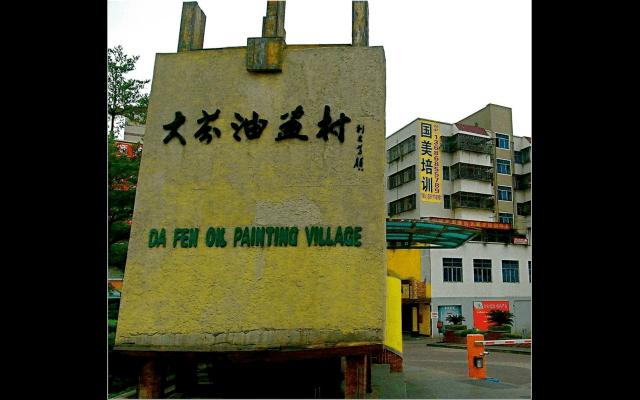
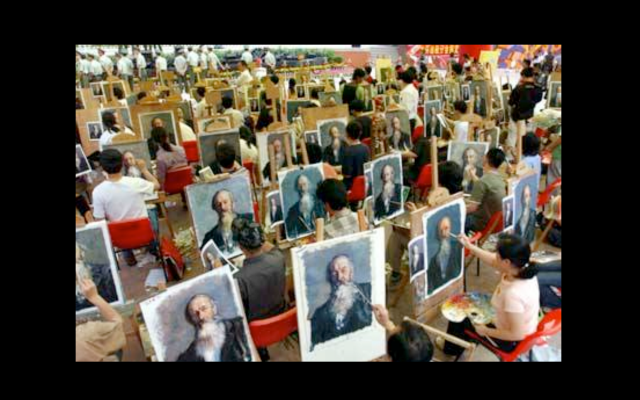
The place is Dafen, a modern suburb of Shenzhen in southern China, with 10 million inhabitants northeast of Hong Kong, where you can enjoy affordably world classed hand-painted oil paintings of famous art & masterpieces. It has approximately 620 galleries and over 5,000 artists doing the creation, imitation, collection and export of oil paintings.
Southern China is the world’s leading center for mass-produced works of art. One village of artists exports about five million paintings every year — most of them copies of famous masterpieces. The fastest workers can paint up to 30 paintings a day.
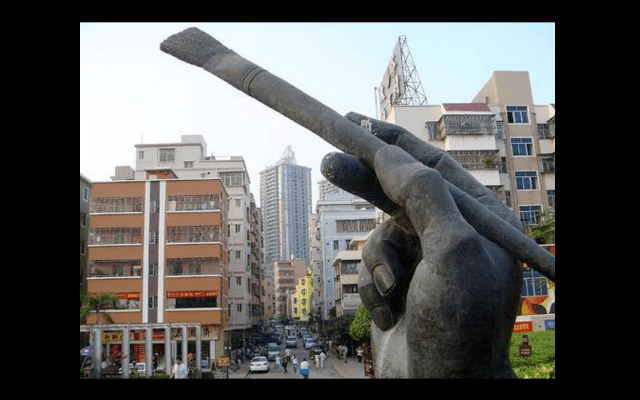
A giant hand raises an impressive paintbrush into the sky at the entrance to the art village. The bronze sculpture of Gu Kaizhi outside the gates of Dafen in southern China leaves no visitor in doubt as to what the people do here and it has achieved unexpected fame and relative prosperity as “The McDonalds of the Art World”.
Dafen, with its artsy economic miracle, is running out of space. It’s a replica of Michelangelo’s David, flanked by flowerpots in front of the new “Dafen Louvre” where entrepreneurship is debated against bad taste. With creative skill & imagination Dafen can produce to your satisfaction any art masterpieces at a price you can afford.
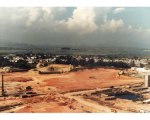
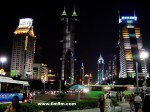
Shenzhen was voted by ForbesChina in 2010 as the most innovative city in mainland China. It virtually started from scratch.
Shenzhen in the 1970s was but a small village. Its metropolitan cityscape is the result of the vibrant economic growth made possible by rapid foreign investment since the institution of the policy of “reform and opening” establishment of the SEZ in the late 1970s. Both Chinese and foreign nationals have invested billions in the Shenzhen SEZ. More than US$30 billion in foreign investment has gone into both foreign-owned and joint ventures, at first mainly in manufacturing but more recently in the service industries as well. Shenzhen is now reputedly one of the fastest-growing cities in the world.
Shenzhen continued to top the list of the most innovative cities on the Chinese mainland this year, followed by Suzhou and Shanghai.
Shenzhen continued to top the list of the most innovative cities on the Chinese mainland this year, followed by Suzhou and Shanghai, according to the latest list of the 25 Chinese mainland cities with the strongest innovation capabilities released Monday by Forbes China.
with the municipal GDP of above RMB 43.6 billion yuan (US$6.84 billion) in 2010
also the number of patents newly applied for (per capita and total number)
the proportion of sci-tech expenses to local fiscal expenditures (including expenses on trial development of new products, intermediate experiment allocations and subsidies for important scientific research projects).
In 2010, the value-added of Shenzhen’s high-tech industry rose 17.1 percent to RMB 305.9 billion yuan, while the total output value of high-tech products made in Shenzhen hit about RMB 1.02 trillion yuan, with 60.1 percent contributed by products with independent intellectual property rights.
The Yangtze River Delta region retained its predominant status this year, with 15 cities edging into the list. Jiangsu province alone has 11 cities included. Five cities from the Pearl River Delta moved up into the list, while no cities from Western China appeared there.
Statistics show that China’s smaller cities are amazingly eye-catching for their innovation capabilities with more than half cities on the list being county-level and prefecture-level cities. Of the top ten, there are 4 county-level cities: Wujiang, Kunshan, Changshu and Zhangjiagang.
I first visited Beijing in May/June 1989 when I led a tour party of 10 there. The most memorable thing about that trip was the infamous Tiananmen Square demonstration which disrupted our sightseeing of the place. Tiananmen which means “Peaceful Heaven Gate” & which demonstration if not cracked down by the then Paramount Ruler, Deng Xiaoping would have spelt a different China we see today. It would be reminiscent of the last days of the weak Qing Dynasty which saw some eight foreign countries or more carving out Chinese motherland for themselves & looting away China’s precious treasures & heritage.
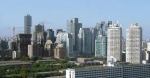
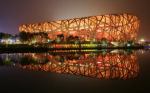
Beijing CBD
Now what a difference 22 years made? I saw then a city of millions of bicycles transformed to a city of millions of vehicles. Everywhere high rise buildings tower the sky, multiple lane thoroughfares, highways, express ways, traffic jams and as one of my Aussie friends said, “I have never seen so many Chinese.” Then in 1989, any significant modern structure was that of modern 5-star hotel, such as Kunlun Hotel where we stayed.
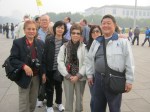
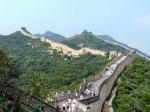
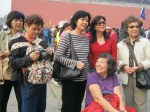
With increasing affluence & growth of capitalism, tourism is a great revenue source from foreign tourists as well as the locals. Wherever we went in our recent October 2011 tour, be it the Tiananmen Square, Forbidden City, Temple of Heaven, the Great Wall, Shopping Malls or Centrers, Summer Palace . . . there were jostling crowds & seas of heads. In a way, I was kind of disappointed as I was really looking to a more leisurely holiday.
The tour covering Beijing, Chengde & Tianjin, sponsored by the Chinese government, is designed to encourage the overseas Chinese to return to motherland China to see for themselves the phenomenal leap of progress that China has made in the last 3 decades. China may be Communist in name, but capitalism with Chinese characteristics is evident everywhere. The popularity of the tour is evident by some 34 luxurious coaches averaging 45 – 50 passengers.
When Deng Xiaoping coined the words “Xiang Qian Zou” (basically meaning Forward March), he changed the same sounding word “Qian” to mean money. The “Road to Riches” has since taken on with frenzy pace. Never has the world seen such rapid changes & progress anywhere in the last 30 years or so!
Presumably, the Chinese government has the ancillary support of some of the major corporations & manufacturers like the Chinese Tea industry, silk manufacturers, jade & pearl industry . . . in offering such cheap & good valued tours initially at AUD99 per head and then increasing to AUD198 excluding the AUD10 tip per day for the tour guide. The tour period is 7/8 days.
The tour would have been par excellent if more time was accorded to sight-seeing rather than taken to all those named factories where we spent unlimited time listening to sales presentations & demonstrations. As a matter of fact, in a previous similar tour of Shanghai, I found the tour guides were real professionals & skillful in their sales pitch. By the time you got to the jade or silk factory you were already succumbed to buying!
The food provided was good & the 5-star hotel accommodation at Radisson (Blue) Hotel excellent. One night accommodation plus the breakfast is worth every cent paid for. The day began at 6.00AM and so packed with activities that we didn’t get to bed till 10 or 11PM.
Parting is such sweet sorrow. All too soon, the tour came to an end, as with the mountain resort in Chengde & the ultra modern Tianjin with its impressive high rise. Friendships were made & though we parted, memories would linger on from the hundreds of digital snap shots we took.
The report, which defined the wealthy as people with at least $US1 million in net assets (excluding their homes, collections, consumer and durable goods), said the wealth of Asia-Pacific rich surpassed Europe as early as in 2009 and increased 12.1 percent to US$10.8 trillion last year, compared with Europe’s US$10.2 trillion.
In the Asia-Pacific region, real estate and equities investment still made up the primary choices for the rich last year, with 27 percent choosing housing market, far higher than the global average of 19 percent.
The report also predicted that the Asia-Pacific wealthy will beef up stock and fixed-return investment while reducing holdings of cash and deposit from 2011 through 2012.
While economy stumbles globally
The rich & famous have cash to splash around still.
Known among his friends as the “Singing Doctor”, he prescribed
medicine with a smile, and sang with his heart. His deep melodious voice was soothing to the ears and more so to the hearts of women who literally worshipped him with sheer admiration. He rendered both Mandarin & English songs with ease & charm . . . that handsome look with his boyish smile ever so radiant & bright!
Sadly, we shall no longer have his company nor to have him entertain us with rendition of songs by Michael Ball such as “Love Changes Everything” or his favourite song on Shanghai Bund in Cantonese. He passed on some days short of his sixtieth birthday defeated by that dreadful cancerous disease of the colon.
He sang as though there were no tomorrow . . . impressing on the importance of the present. In all the years that I have known him, he never turned me down to be present to sing, whether it was a home karaoke dinner or a public charity performance. All the time unknown to me he was fighting to beat this dreadful disease.
Below: A happy Dr Yap at our party to celebrate Tom’s birthday (1 October 2010)
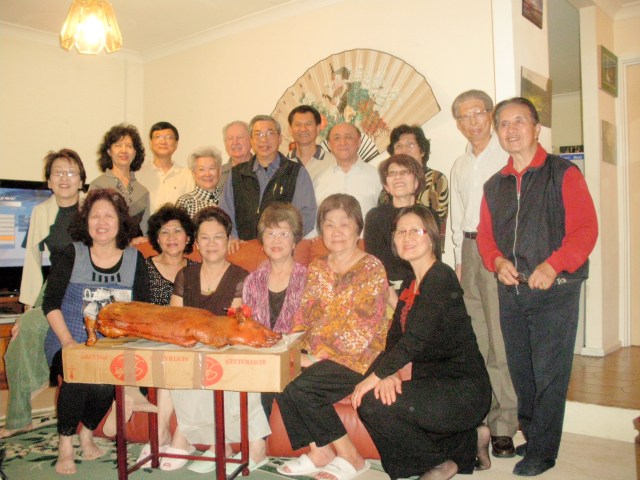
At the last function (29 September 2010) attended by him in my house, he was in real high spirit, giving no indication of his being ill as you can observe from all the illustrated pictures. We had a roasted suckling pig and nobody was handy with slicing off the crunchy skin of the pig. He rolled up his sleeves saying “No problem” for in his father’s house in Ipoh, Malaysia, they always had this three times a year.
Dr Yap exhibiting his slicing skill with the pigling (Picture: Above & below)
A shock to all of us, he was in China when he passed away . . . seeking his last hope of living.
Gone but not forgotten, In Heaven he lives on. No longer forlorn, he’s telling us that life’s still worth the living, and living it to the full. Sing with a merry heart & make others merry! Don’t be sad when life is bad. Sing unto Him with a merry heart. Play your part out with a mighty shout: “Glory be to God!”

































 Paul Chong's Blog